It is the first time since 1996 that Washington describes Colombia in its anti -narcotics struggle. Gustavo Petro said that the United States takes the measure, despite the efforts and after “dozens of dead, police, soldiers of common people, trying to prevent cocaine from arriving”
The United States withdrew on September 15 the allied certification in the fight against drugs to Colombia, the largest world cocaine producer, confirming diplomatic stagnation between both governments.
Certification is an evaluation that since 1986 makes Washington every year about the anti -narcotics efforts of about twenty producing and distributing countries in exchange for resources. In the case of Colombia, it represents an aid of about 380 million dollars annually.
First time since 1996
“The United States gives us after dozens of dead, police, soldiers of common people, trying to prevent cocaine from arriving,” President Gustavo Petro reacted in Bogotá.
Colombia joins Afghanistan, Bolivia, Burma and Venezuela, countries that, according to the official statement, have “failed demonstrable during the last 12 months both in complying with their obligations under international agreements to fight drug trafficking and take the required measures” according to US legislation.
It is the first time since 1996 that Washington describes Colombia in its anti -narcotics struggle. The other countries have been pointed out by governments for years both Democrats and Republicans.
Gustavo Petro indicated
“The cultivation of coca and cocaine production have reached record levels under the presidency of Gustavo Petro, and their failed attempts to seek agreements with narco -terrorist groups have only exacerbated the crisis” considers the presidential determination signed by President Donald Trump.
“Colombia’s breach of its drug control obligations during the last year falls only to its political leadership,” he adds. In the text, Trump ensures that he will consider changing the designation if the Petro’s leftist government takes “more aggressive.”
«Colombia has been a great partner throughout history. Unfortunately, they now have a president who, in addition to being erratic, has not been a good ally when facing drug cartels, ”added the Secretary of State, Marco Rubio, a staunch critic of the leftist leaders of Latin America, during a visit to Israel.
«I think we have arranged allies, if it depended on the army, on the police. We have been working for decades, ”Rubio told journalists, expressing his hope that Colombia can be accredited again in the future.
*Also read: Trump announces an attack on second “narcolanc” in the Caribbean, he left three dead
“The dependency is over”
Washington’s descertification is a Desaite for the Petro government in full fight against posters such as the Gulf clan and guerrillas dedicated to traffic such as the ELN, and the dissidents of the FARC, which departed from the 2016 Peace Agreement.
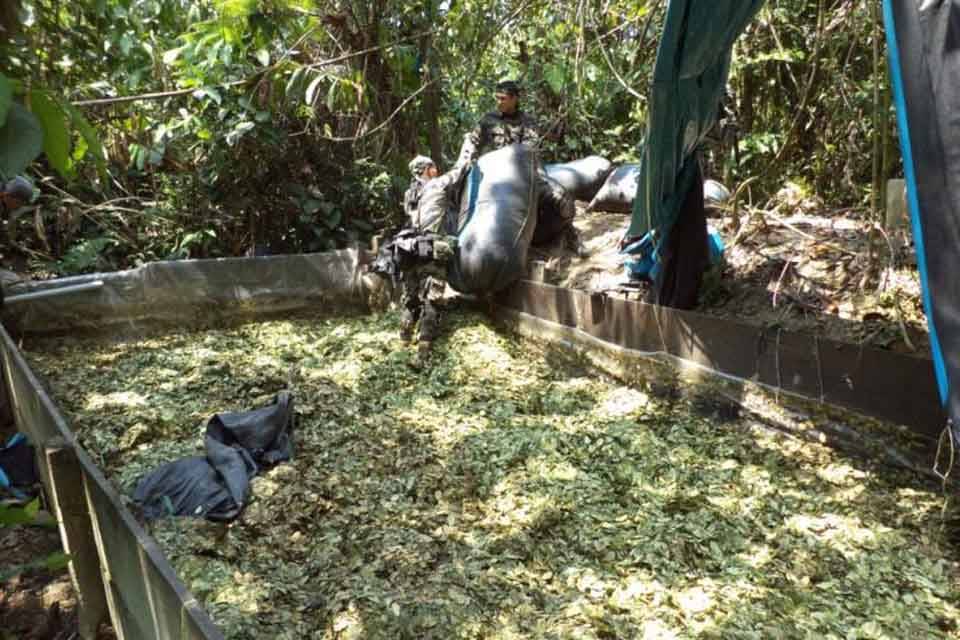
Bogotá considers that he continues to do enough. So far from 2025 Colombia has seized 700 tons of cocaine and has destroyed the record of 4,570 clandestine laboratories, according to the Ministry of Defense. But the last 2023 balance of the UN indicates that there are about 253,000 hectares of narcocultures in the country, and that at least 2,600 tons of cocaine are elaborated.
«The dependence of the United States Colombian military forces is over (…). Colombia’s army is better if he buys his own weapons, ”said Petro. Official sources also highlight that Colombia had already suffered an important cut with the end of the USAID aid funds.
The descertification does not imply the cancellation of all the aid, but Trump has before him a range of measures. Between 2000 and 2018 the United States delivered more than 10,000 million dollars to Colombia, according to the US Congress, for military, social and narcocultive eradication. Washington is Bogotá’s main commercial and military partner.
*Journalism in Venezuela is exercised in a hostile environment for the press with dozens of legal instruments arranged for the punishment of the word, especially the laws “against hatred”, “against fascism” and “against blockade.” This content was written taking into consideration the threats and limits that, consequently, have been imposed on the dissemination of information from within the country.
Post views: 101