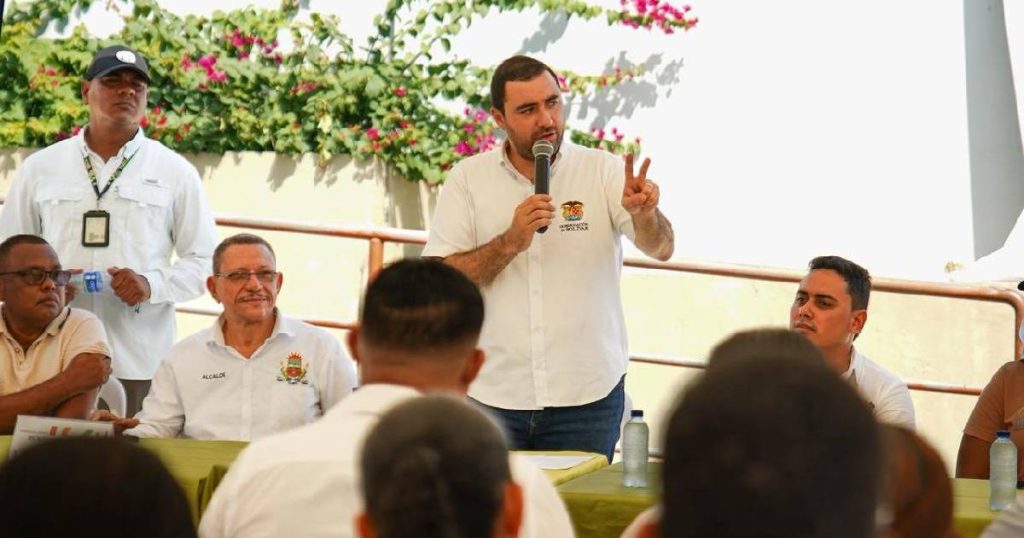
Panamanian businessman Ramón Carretero Napolitano, related to Raúl Guillermo Rodríguez Castro, alias El Cangrejo, was also sanctioned.
MIAMI, United States. – This Thursday, the United States sanctioned three nephews of Venezuelan ruler Nicolás Maduro, a businessman close to the regime and six shipping companies linked to the oil sector, and identified six ships as blocked property, in an offensive aimed at “the corrupt and illegitimate Maduro regime” and the alleged terrorist organization. Poster of the Suns.
The measure was announced by the State Department and formalized by the Treasury Department’s Office of Foreign Assets Control (OFAC), which detailed that the sanctions reach the nephews of the first lady Cilia Flores – Efraín Antonio Campo Flores, Franqui Francisco Flores de Freitas and Carlos Erik Malpica Flores -, the Panamanian businessman Ramon Carretero Napolitano and six shipping companies with ships that transport Venezuelan crude oil.
According to the State Department statement, “today, the United States sanctions four individuals and six entities, and identifies six vessels, for supporting the corrupt and illegitimate Maduro regime in Venezuela.” The text adds that, “as leader of the foreign terrorist organization (FTO) Cartel de los Soles, Maduro continues to destabilize our region” and accuses the ruler and his entourage of having “disdained the will of the Venezuelan people and devastated the country’s economy.”
The Treasury described the operation as an attempt to cut off financing for Maduro’s “narcoterrorist” network. “Nicolas Maduro and his criminal associates in Venezuela are flooding the United States with drugs that are poisoning the American people,” Treasury Secretary Scott Bessent said in a statement.
“These sanctions reverse the Biden Administration’s failed attempt to reach an agreement with Maduro, which allowed his dictatorial and brutal control at the expense of the Venezuelan and American people. Under the leadership of President Trump, the Treasury Department is holding the regime and its circle of cronies and companies responsible for their continued crimes,” the official added.
The ““narcosnephews”
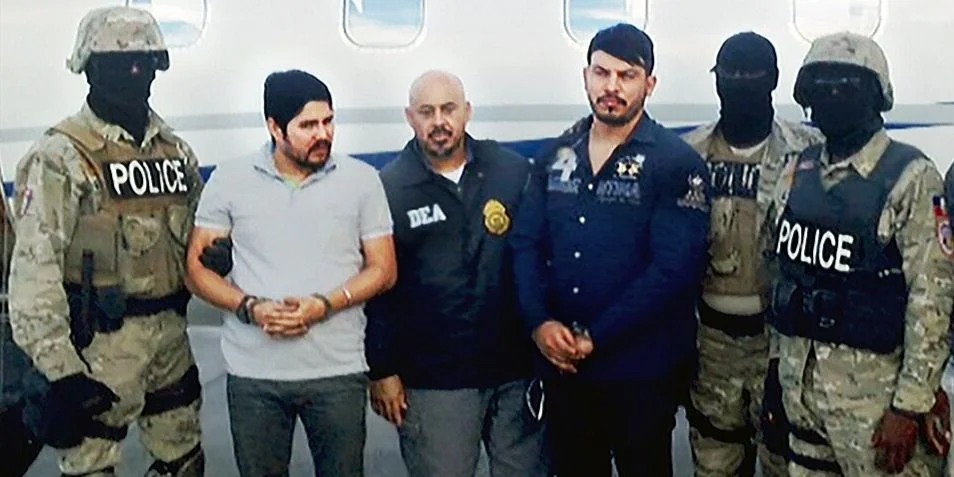
Two of those sanctioned, Efraín Antonio Campo Flores and Franqui Francisco Flores de Freitas, popularly known as the “narco-nephews,” had been convicted in 2016 in the United States on charges of drug trafficking, after being arrested in 2015 in Port-au-Prince, Haiti. during an undercover operation by the US Drug Enforcement Administration (DEA).
Both were released from prison in October 2022, when Joe Biden’s Government granted them clemency as part of a prisoner exchange that allowed the release of seven US citizens detained in Venezuela. After the exchange, the nephews returned to Venezuela and, according to OFAC, “they have continued their drug trafficking activities,” which is why they are now back on the list of sanctioned people.
The third sanctioned nephew, Carlos Erik Malpica Flores, former senior official of the Venezuelan Government and former vice president of the state oil company PDVSA, had already been included on the Treasury blacklist in 2017, but was eliminated in 2022 “to promote the resumption of negotiations” with a view to a political agreement that ultimately did not materialize. The Treasury notes that Malpica is now “redesignated” under Executive Order 13692 for being a “current or former official of the Government of Venezuela.”
With these inclusions, the three nephews join Maduro, Cilia Flores, their son Nicolás Maduro Guerra and three of Flores’ sons — Walter, Yosser and Yoswal Gavidia Flores — on the List of Specially Designated Nationals (SDN), all previously sanctioned by Washington.
A businessman allied to the regime and six shipping companies under sanction
In addition to the nephews, the Treasury sanctioned Ramón Carretero Napolitano, described as a Panamanian businessman who has maintained “lucrative contracts with the Maduro regime” and various businesses with the Maduro-Flores family, including joint ventures. According to OFAC, Carretero has facilitated shipments of petroleum products on behalf of the Venezuelan Government and is designated under Executive Order 13850 for operating in the petroleum sector of the Venezuelan economy.
The action extends to six companies that move Venezuelan crude oil and the vessels they operate: Myra Marine Limited, owner and manager of the White Crane oil tanker; Arctic Voyager Incorporated, owner of the Panamanian-flagged vessel Kiara M; Poweroy Investment Limited, owner of H. Constance, also Panamanian; Ready Great Limited, owner of the Lattafa; Sino Marine Services Limited, manager and operator of the Hong Kong-flagged Tamia; and Full Happy Limited, owner and manager of the Monique, flying the Cook Islands flag. All of the vessels are identified as “blocked property” and, according to the Treasury, have manipulated or masked their location signals while loading and transporting Venezuelan oil, primarily to Asia.
The statement recalls that PDVSA was sanctioned in 2019 under the same Executive Order 13850 for operating in the oil sector and that these new designations are part of the resumption of actions against the evasion of sanctions regarding Venezuelan crude oil.
The new sanctions are announced a day after the president of the United States, Donald Trump, revealed the seizure of a large oil tanker off the coast of Venezuela, an operation that is part of Washington’s military and economic pressure against Caracas. Various press reports have identified the ship as the Skipper, a supertanker that had been previously sanctioned and that, according to tracking data, was headed to Cuba with a cargo of between 1.1 and 1.8 million barrels of Venezuelan crude oil.
These movements in the Caribbean occur while the United States deploys an important military device in the region, within the framework of what the Trump Administration presents as a strategy against drug trafficking.