OFAC ruled that any contract for Venezuelan crude oil must specify “that the laws of the United States” govern these documents, and any dispute resolution must take place on US soil. The license was published hours after the Venezuelan parliament, with a Chavista majority, unanimously approved a reform of the Organic Hydrocarbons Law
The Office of Foreign Assets Control (OFAC), a department of the United States Department of the Treasury, issued this Thursday “General License No. 46” that allows certain activities related to the extraction, sale, export, supply, storage, marketing or transportation of oil of Venezuelan origin.
The OFAC license authorizes direct transactions with the state-owned Petróleos de Venezuela (PDVSA), the Venezuelan government or mixed companies where PDVSA maintains a stake of 50% or more.
These transactions include the management of maritime transport and logistics services, such as the chartering of vessels, obtaining marine insurance and protection and indemnity (P&I) coverage, as well as the management of port and terminal services, “including with port authorities or terminal operators that are part of the Government of Venezuela.”
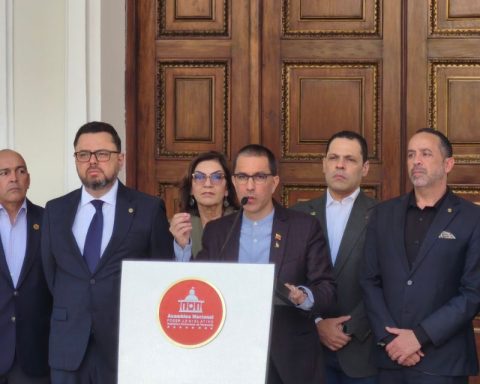
The OFAC license was published hours after the Venezuelan parliament, with a Chavista majority, unanimously approved a reform of the Organic Hydrocarbons Law. The changes to the text include an expansion of fiscal and parafiscal benefits, flexibility in the economic conditions of the projects and reduction of parliamentary control over the constitution of mixed companies, which opens greater spaces for the participation of private operators.
*Read also: National Assembly unanimously approves the oil reform: learn about the changes here
The reform, which was delivered this Thursday to Delcy Rodríguez in a march of oil workers, is part of the agreements that the Donald Trump administration is pressuring on the Chavista administration, after the attacks of January 3 and the capture of Nicolás Maduro.
The Treasury Department also authorized that “commercially reasonable” payments can be made “in the form of swaps for crude oil, diluents or refined petroleum products.”
However, OFAC ruled that any contract must specify “that the laws of the United States” govern these documents, and any dispute resolution must take place on US soil.
Likewise, payments to sanctioned persons must be made to the “Foreign Government Deposit Funds, as specified in Executive Order 14373 of January 9, 2026, or to any other account as directed by the United States Department of the Treasury.”
The License excludes payments in debt exchanges, gold or digital currency or digital tokens “issued by, for or on behalf of the Government of Venezuela, including the petro”, as well as transactions with vessels blocked or sanctioned by the US.
Transactions with people, companies or entities that are managed under the laws of Russia, Iran, North Korea or Cuba were also not authorized. The prohibitions also included entities that are controlled, directly or indirectly, by Chinese companies.
OFAC also established that “any person who exports, re-exports, sells, resells or supplies oil of Venezuelan origin to countries other than the United States” must submit a detailed report specifying:
- The parties involved;
- The quantities, values and countries of final destination;
- The dates on which the transactions were carried out; and
- Any tax, fee or other payment made to the Government of Venezuela.
- The reports described in paragraph (c) must be submitted ten days after the execution of the first such transaction and every 90 days thereafter while such transactions are in progress.
*Journalism in Venezuela is carried out in a hostile environment for the press with dozens of legal instruments in place to punish the word, especially the laws “against hate”, “against fascism” and “against the blockade.” This content was written taking into consideration the threats and limits that, consequently, have been imposed on the dissemination of information from within the country.
Post Views: 161