President Donald Trump’s administration is considering imposing a total blockade on oil imports to Cuba as part of a range of new tactics to force a regime change on the island, the US magazine reported Politicalin its digital version this Friday.
In one exclusive signed by Ben Lefebvre and Eric Bazail-Eimil, The outlet stressed that “energy is the choke point to kill the regime,” according to a source with knowledge of the discussions.
A plan under evaluation inside the White House
Three people familiar with the conversations, cited by Politicalpointed out that the idea of preventing any shipment of crude oil to Cuba has been promoted by critics of the regime within the administration and has the support of Secretary of State Marco Rubio.
Although a final decision has not been made, the proposal is among the options that could be presented to President Trump. Political He stressed that “deposing the country’s communist government—in power since the 1959 Cuban revolution—is 100 percent a 2026 event in the administration’s vision.”
From Venezuela to Mexico: supply in the spotlight
Until recently, Cuba was largely dependent on Venezuelan oil shipments, which in recent months had shipped an average of about 27,000 barrels per day to the island.
As he told portal BBC World Cuban economist Omar Everleny, from the initial levels during the Chávez governments, went to averages “of 58,000 barrels per day, then to 38,000 and finally, in 2025, they never exceeded 30,000 and in some months they fell to 18,000.”
Cuba needs about 110,000 barrels a day to function normally and produces approximately 40,000 on its own, so it depends largely on the crude oil it receives from abroad, the British media reported.
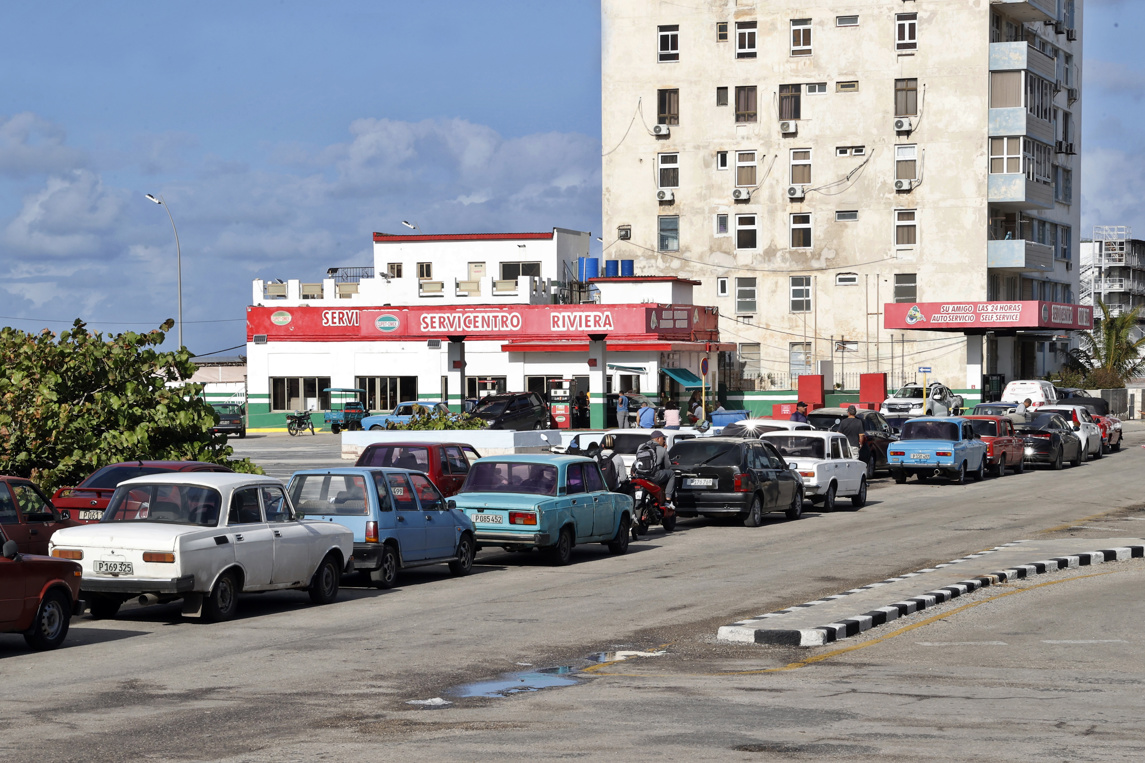
However, US sanctions and the capture of President Nicolás Maduro in January have cut off that flow and Mexico became the main supplier of crude oil, but with about 17 thousand barrels per day, delivered through payment contracts or for humanitarian aid. That volume cannot fully cover the growing energy shortage.
According to data from the International Energy Agency, Cuba imports around 60% of its oil consumption. The interruption of Venezuelan shipments is already increasing the extent and massiveness of the blackouts; even in Havana, while Mexican shipments barely cushion the crisis.
Risk of humanitarian crisis
“A total blockade of oil imports to Cuba could then cause a humanitarian crisis,” he warned. Politicalciting officials who oppose the measure.
Cuba has had three consecutive years of decline in its Gross Domestic Product. After the falls of 2.0% in 2023 and 1.1% in 2024, it is estimated that in 2025 the drop reached between 4% and 5%.
“This is not just another crisis,” but rather “the accumulation of distortions, adversities, difficulties and own errors, exacerbated by an extremely aggressive external siege,” President Miguel Díaz-Canel admitted in December before the National Assembly.
Voices within the Trump administration warn that a total blockade could trigger a humanitarian crisis in Cuba. The loss of foreign currency from the resale of Venezuelan crude oil and the lack of fuel have strangled the economy, but an absolute cut could further aggravate the shortage of food and basic goods.
Defenders of the plan argue that the action would be covered by the FREEDOM Act of 1994, known as Helms-Burton, which codifies the US embargo against Cuba. Political noted that “the effort would be justified under the FREEDOM Act of 1994, better known as the Helms-Burton Act.”
Mexico under pressure
Mexico’s role as an oil supplier to Cuba has placed Claudia Sheinbaum’s government at the center of tension. According to sources consulted by the British press agency Reutersthe Mexican administration evaluates whether to continue with shipments due to fear of retaliation from Washington.
Sheinbaum has publicly defended supply contracts as international aid and sovereign decisions, but concerns are growing within his cabinet that the policy could antagonize Trump amid the review of the North American trade agreement (USMCA).
On Wednesday, the president defended the supply as a state policy based on historical solidarity with the island, as well as on the constitutional principles of Mexican foreign policy. “If Mexico can help generate better conditions for Cuba, we will always be there,” concluded the Mexican leader.
Sheinbaum recalled that the relationship between Mexico and Cuba has been constant throughout different governments, regardless of the political color. He recalled that administrations as varied as those of Enrique Peña Nieto, Carlos Salinas de Gortari and Ernesto Zedillo maintained cooperation with Havana, including PAN governments “although a little less,” he said. “It is support for the Cuban people, regardless of whether or not you agree with their regime,” he reiterated.
“Very little is sent,” he explained, without the Mexican Government so far having detailed the figures on deliveries.
The controversy comes in the middle of a delicate moment between Mexico and the United States, in which energy support for Cuba has been interpreted as an uncomfortable gesture towards Washington. “‘THERE WILL BE NO MORE OIL OR MONEY FOR CUBA! ZERO!”, the US president wrote a few days ago on his social network. The US Secretary of Energy, Chris Wright, assures that his country has not asked Mexico to cut off oil supplies to the island, according to CBS.
The offensive against Cuba is part of Trump’s broader strategy to reaffirm American dominance in the Western Hemisphere. After Maduro’s capture, the president has intensified pressure on Havana and warned that “there will be no more oil or money for Cuba.”
The tightening of sanctions coincides with a more aggressive discourse towards Mexico, which Trump accuses of being governed by cartels. Mexican officials have expressed concern about the presence of US reconnaissance drones over the Gulf of Mexico, following the route of ships transporting fuel to Cuba.
Cuba’s population fell 24% in four years, according to an independent study
effervescent Miami; Havana resists, ages and loses demographics
Cuban exiles in Miami, who for decades have promoted the fall of the government on the island, celebrate the possibility of a total blockade. “Not a cent, not even oil, should ever reach Cuba,” declared Republican Senator Rick Scott.
Rubio, for his part, has been a constant defender of harsh measures against Havana, convinced that the loss of Venezuelan support opens a window of opportunity for political change on the island.
Historically, Havana has survived sanctions and embargoes, even after the fall of the Soviet Union in 1991, which led to a 32% drop in GDP, an unusual scenario in peacetime.
Analysts warn that, although the regime has shown resilience, a total oil blockade could put it in an unprecedented situation. At the same time, the possibility of a sudden collapse raises fears of a regional migration crisis.
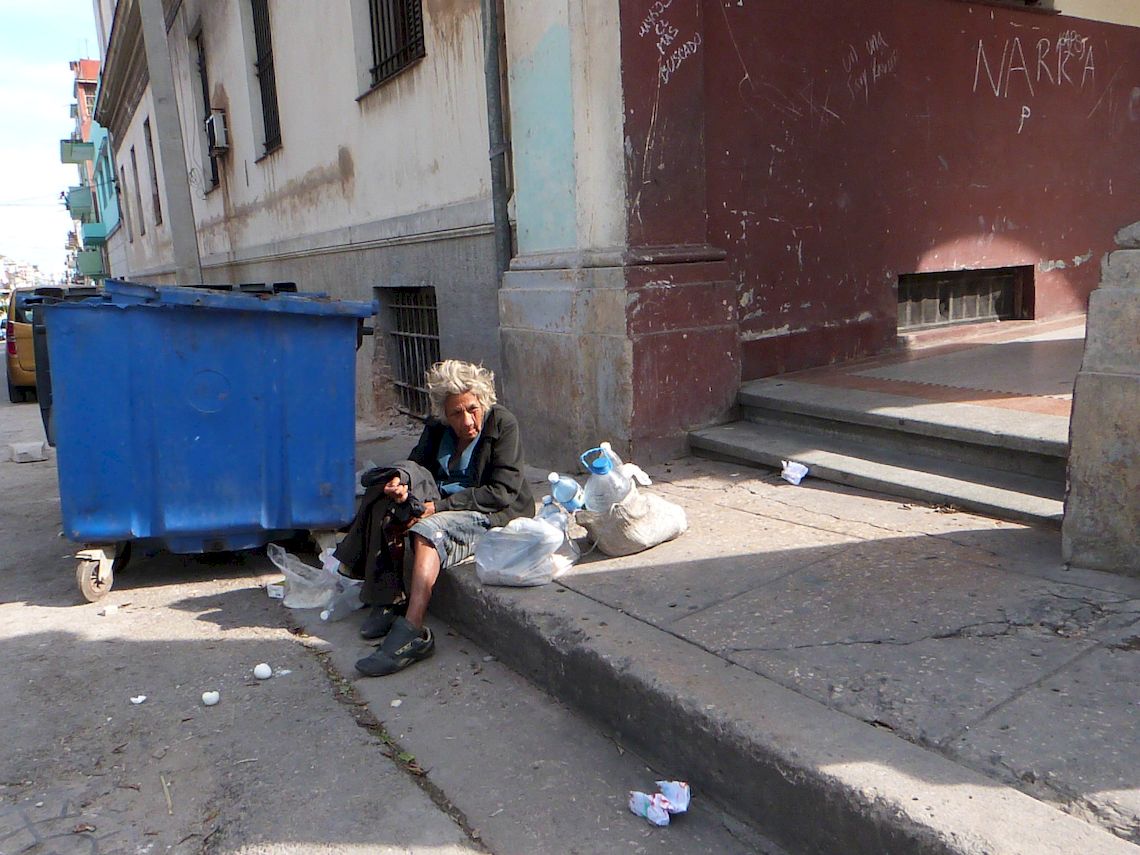
Without a radical energy blockade, a migratory tsunami has already occurred. The Cuban demographer Juan Carlos Albizu-Campos estimated last year that 2.75 million people have emigrated since 2020, including about 788,000 in 2024, to which is added that Cuba is among the first oldest countries of the Western Hemisphere, with more than a quarter of the island’s residents aged 60 or older, with all the socioeconomic burden that that implies.