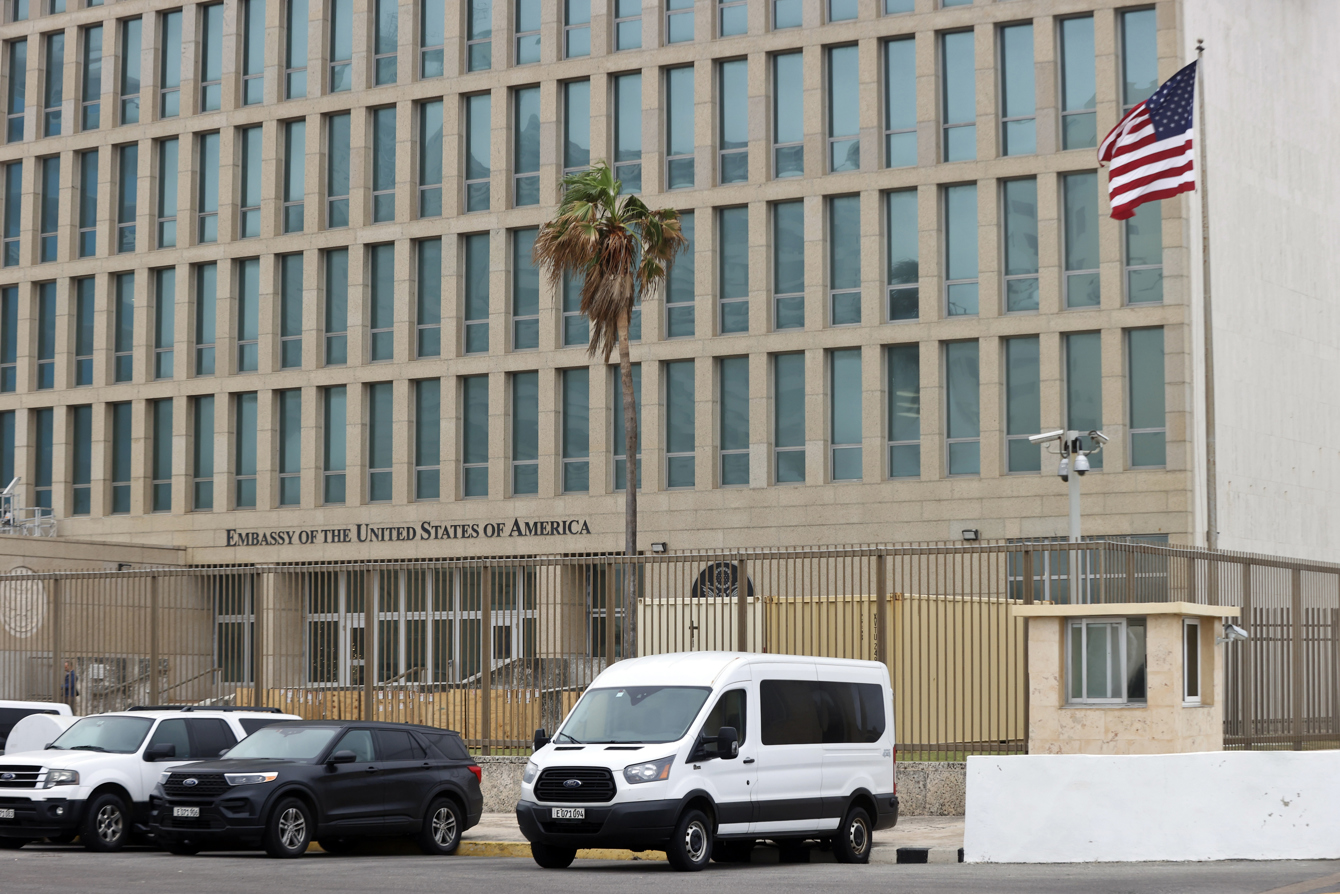
The US embassy in Cuba announced in the first days of January the entry into force of a “partial” suspension of visas for Cuban citizensas part of a measure adopted by President Donald Trump. Also added is the deposit of deposits for certain types of visas.
As reported by the diplomatic headquarters through its social networks, the decision of the “partial visa” responds to Presidential Proclamation 10998, entitled “Restriction and limitation of the entry of foreigners to protect the security of the United States”, regulations that extend to dozens of countries in addition to Cuba and which began to be applied on January 1, 2026.
According to the disclosed informationthe United States fully or partially suspended the issuance of visas to nationals of 39 countries, as well as to persons applying for visas using travel documents issued or endorsed by the Palestinian Authority, effective from the beginning of 2026.
The State Department explained that the order extends a previous suspension applied to citizens of 19 countries under Presidential Proclamation 10949, which remains in effect until modified by the new restrictions, he said. The New Herald.
“Presidential Proclamation 10949 remains in full force until modified by the restrictions of Presidential Proclamation 10998. We protect our nation and its citizens through rigorous screening and verification procedures, focused on security,” the State Department said, justifying the measure.
It also affects citizens of Venezuela, Angola, Antigua and Barbuda, Benin, Burundi, Ivory Coast, Dominica, Gabon, Gambia, Malawi, Mauritania, Nigeria, Senegal, Tanzania, Togo, Tonga, Zambia and Zimbabwe.
The restriction extends to various categories of nonimmigrant visas, including the most in-demand B-1/B-2, as well as student and exchange visitor visas (F, M and J).
Pursuant to Presidential Proclamation 10998, the United States is fully or partially suspending visa issuance to nationals of 39 countries and to individuals applying using travel documents issued or endorsed by the Palestinian Authority as of January 1, 2026. Learn more at… pic.twitter.com/wsWiRgi9tD
—TravelGov (@TravelGov) January 5, 2026
In addition, obligation of deposits
The American Government It also included Cuba along with Venezuela on a list of 25 new countries whose citizens must deposit bonds of up to $15,000. to request entry into the United States, as specified this week by the State Department.
The change, which the agency echoes EFEwill take place starting January 21 and the expanded list includes nations such as Algeria, Angola, Gabon, Nepal, Senegal, Zimbabwe and Uganda.
Any citizen or person traveling with a passport issued by one of those countries and who is eligible For a B1 or B2 visa you must deposit a deposit of 5,000, 10,000 or 15,000 dollarsan amount that will be determined at the time of the interview with the candidate.
The B1 visa allows travel for business reasons and the B2 authorizes entry for tourist, personal or medical purposes. In total, the list now totals 38 countries, most of them in Africa.
The State Department specified on Tuesday that the bond does not guarantee the issuance of the visa and noted that if someone pays the fee without the indication of a consular worker, that money will not be refunded.
As a condition of the bail, those who have deposited it must enter and leave the country through Washington Dulles International Airport, John F. Kennedy in New York or Logan in Boston.
The security rationale
The proclamation signed by Trump on December 16 maintains that American policy seeks “protect its citizens from foreigners who intend to commit terrorist attacks, threaten national and public security, incite hate crimes or use immigration laws for malicious purposes.”
The announcement came shortly after a deadly shooting at Brown University in Providence, Rhode Island, the alleged perpetrator of which was a Portuguese citizen who entered the US through the diversity visa (DV) program.
In that same context, the Trump Administration stopped the visa lottery that allows foreigners to legally enter the country and opt for permanent residencea route popularly known as green card and used for years by thousands of applicants, including Cubans.