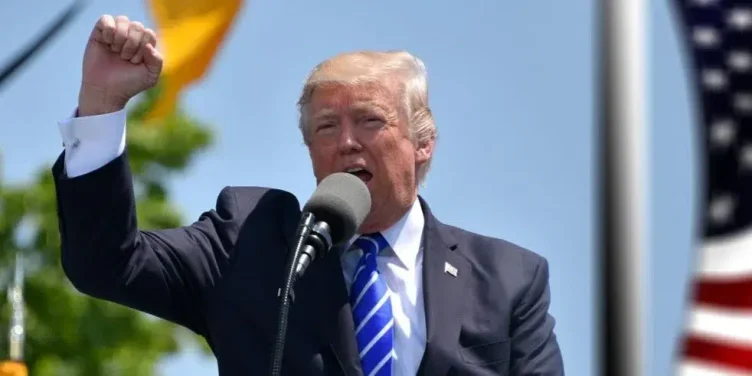
MIAMI, United States. – The recent executive order of the president of the United States, Donald Trump – who, after the ruling of the Supreme Court, reverses his another previous decree on additional tariffs on products from countries that provide oil to Cuba – does not imply the end of energy pressure on the island’s regime.
This is what they stated to the EFE agency two specialists in Cuban affairs, who maintain that Washington has other legal tools to continue the siege, even after the Supreme Court ruling that limited the use of the International Emergency Economic Powers Act (IEEPA) to impose taxes.
Last week, in response to the Supreme Court’s decision, Trump signed a presidential order that annuls the punitive tariffs established under the IEEPA, a mechanism that had been one of the axes of the executive order of January 29. That provision threatened to impose taxes on crude oil suppliers to Cuba. However, the declaration of “national emergency” regarding the Island—based on the alleged “unusual and extraordinary threat”—remains in force.
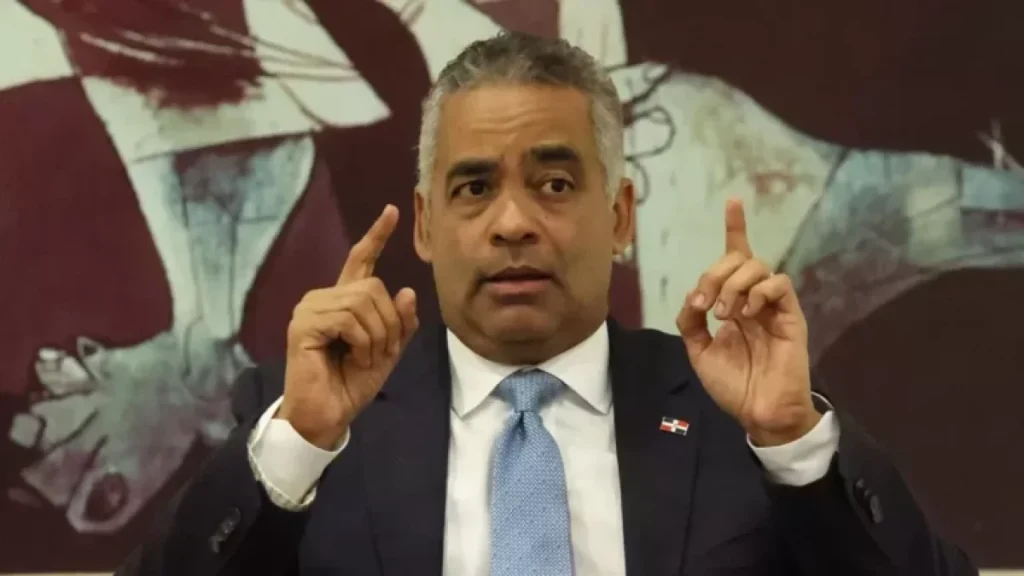
According to the EFE report, the president of the US-Cuba Trade and Economic Council, John Kavulich, warned that the original executive order has not been completely neutralized. “I dare not say that [la orden ejecutiva de 29 de enero] It’s a paper tiger. “If it has teeth, it is still a tiger, it can still be scary,” he told that agency.
In his opinion, “the Government of Cuba would make a huge mistake if it understood that the Supreme Court’s decision is a protective shield.”
Along the same lines, the Cuban-American lawyer Pedro Freyre, partner of the Akerman law firm and specialized in litigation linked to Cuba, considered that Washington could resort to other mechanisms. “The White House reversed the implementation of that mechanism, but left the door open to other possible actions. Knowing how they do things in this administration, I think I can assure that they are going to use other tools,” he told EFE.
According to the analysis collected by the Spanish news agency, among the alternatives that could be considered are possible banking measures promoted by the Treasury Department or secondary sanctions against actors participating in the supply of fuel. So far, the US Administration has not publicly detailed what specific instruments it could activate.
Kavulich pointed out that the Republican president’s style of action is usually based on the deterrent effect of his warnings. “It is the tactic of fear,” he explained when describing a strategy that, in his opinion, seeks to make the threat produce results without having to be fully executed.
The expert also proposed hypothetical scenarios that would test Washington’s reaction, such as the purchase of oil by Cuba at market prices in a non-sanctioned country, transported on a ship with proper documentation and not part of the so-called “ghost fleet.”
Likewise, he considered that an eventual shipment of Russian crude oil escorted by a military ship would be revealing, although he expressed skepticism about that possibility by stating that “Cuba is not that important to anyone” in the current international scenario.
Regarding the political dynamics in Washington, both specialists agreed that the priority declared by the US Administration focuses on a change in policies on the Island rather than a change in leadership. “The Administration has been very emphatic in demanding a change of policy in Cuba. Not necessarily a change of regime, but a change of policy,” Freyre stressed to EFE. Kavulich summed up that vision with the phrase: “We will accept the same people staying [en el Gobierno] if they make better decisions.” And he added: “It is the Venezuela model.”
The impact of the energy blockade has been significant in the context of the prolonged Cuban economic crisis. The fuel shortage has caused extreme rationing, blackouts of more than 20 hours a day in large areas of the country, serious damage to hospitals and public transportation, greater accumulation of garbage due to failures in collection, and paralysis of economic activities.