The United States Department of State announced today the start of a series of direct humanitarian shipments to Cuba as part of the $3 million in disaster assistance committed by the Trump Administration following the devastating passage of Hurricane Melissa in October 2025.
According to the official statement from Secretary of State Marco Rubio, a first humanitarian flight from Florida transported necessary relief supplies to Holguín, and will be followed by a second flight on January 16 to Santiago de Cuba. Shipments will also be made on a commercial vessel that will deliver additional assistance in the coming weeks and will dock in Santiago de Cuba.
“These shipments reflect our ongoing commitment to the Cuban people as they continue to recover from the devastation,” Rubio said in his message. “While the storm has passed, humanitarian needs remain pressing and recovery efforts continue.”
Help content
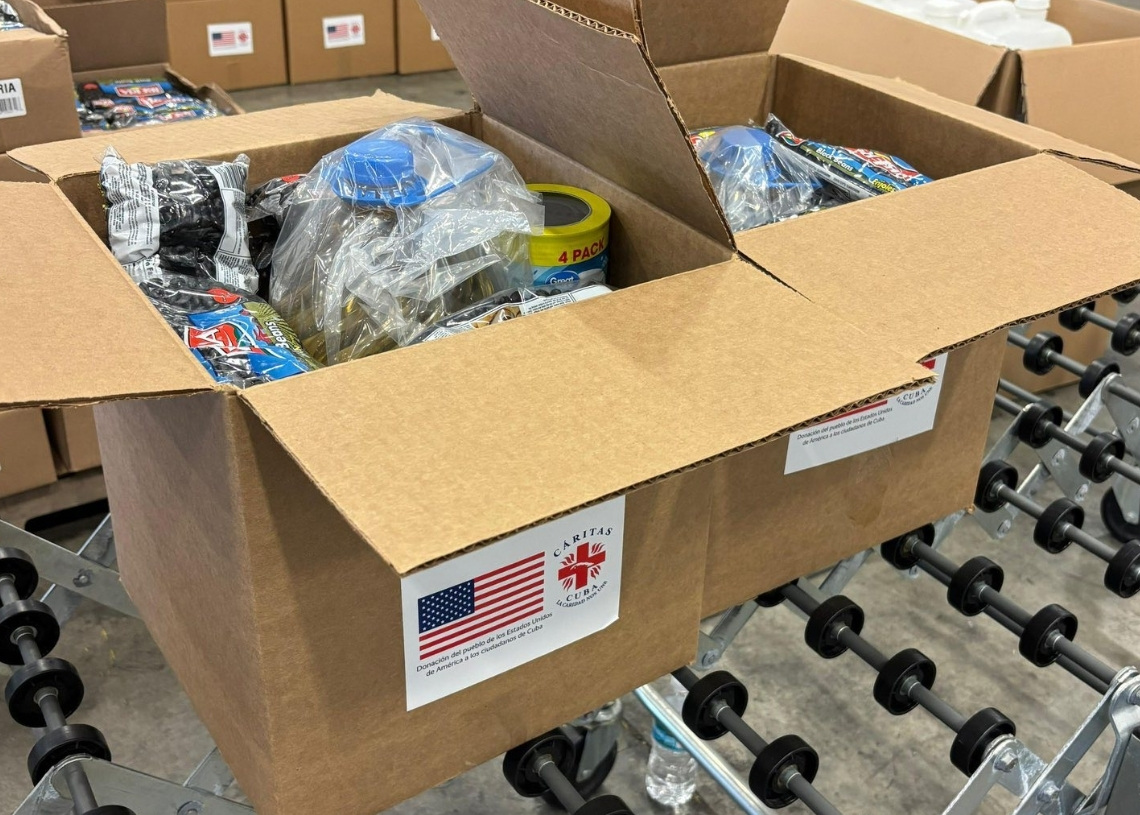
The shipments include food, hygiene kits and other essential items to help Cuban families in their recovery. The first delivery that arrived in Cuba on Wednesday It consisted of 528 food kits and 660 hygiene kits.
The supplies are part of a broad effort that includes, according to the State Department, rice, beans, oil or sugar, water purification equipment, kitchen utensils, blankets and solar lanterns.
It is estimated that approximately 6 thousand families (about 24 thousand people) in the provinces of Santiago de Cuba, Holguín, Granma and Guantánamo could benefit from this aid.
Distribution through the Catholic Church and Cáritas
In what represents a distinctive element of this operation, Washington established a delivery mechanism that avoids Cuban government channels. The State Department noted that “we have taken extraordinary measures to ensure that this assistance reaches the Cuban people directly, without interference or diversion by the illegitimate regime.”
The distribution will be carried out in close collaboration with the Catholic Church in Cuba and Cáritas Cuba, an organization that since 1991 has operated as one of the few independent non-governmental entities on the island, with a network of more than 600 parish and community Cáritas.
According to reported Caritas Cubathe initial distribution will focus on Holguín communities such as Cacocum and surrounding areas that suffered serious consequences from the storm, and the goods will be provided free of charge and directly. The organization indicated that the distribution will be carried out in accordance with its principles of protection, dignified treatment of beneficiaries, transparency and a message of hope.
Since the beginning of November last year, the Conference of Catholic Bishops of Cuba had reported that the “necessary steps” were being taken to channel this aid offered by the United States government.
Disaster management: what it is and how it is managed in Cuba
Hurricane Melissa
He Hurricane Melissa It hit eastern Cuba on October 3, 2025 as a category 3 hurricane with winds of 200 km/h and rainfall of up to 400 ml.
Melissa left in its wake severe flooding that isolated several isolated rural communities and caused significant damage to buildings, roads, crops and infrastructure in vulnerable areas that had already been affected by the Hurricane Oscar the previous year.
Thanks to the evacuation of more than 750 thousand people and other protection actions, no fatalities were reported in this event.
A total of 116,100 homes, of which more than 93,000 in the province of Santiago de Cuba, received damage of varying magnitude.
In addition, more than 600 state medical infrastructures, more than 2,000 educational centers, some 100 thousand hectares of crops and transportation, telecommunications, electricity and water supply infrastructure were affected.
The United Nations coordinator on the island, Francisco Pichón, declared shortly after Melissa passed that “the needs far exceed the country’s capacity.”
The UN, immediately after the hurricane hit, launched an action plan for the recovery of eastern Cuba with the objective of raising 74.2 million dollars to cover care for more than 1 million people, around 10% of the Cuban population.