Havana/As advanced by the Bloomberg agency yesterdaythe United States has issued a clarification on the announced authorization for private companies to import fuel. In an official statement published this Wednesday, the Office of Foreign Assets Control (Ofac) of the Treasury Department announced that it could apply a favorable licensing policy to authorize the resale of oil of Venezuelan origin to Cuba, as long as the operations are intended to support the Cuban people and exclude entities linked to the regime. The measure, presented as a technical adjustment within the sanctions regime, opens a long-awaited regulatory loophole in the midst of the acute energy crisis that the Island is going through.
According to the guide FAQ 1238 published by Washington, possible transactions must benefit the private sector or have humanitarian purposes and may not involve the Armed Forces, intelligence services or entities included in Cuba’s Restricted List. The stated objective is to alleviate shortcomings without providing financial oxygen to the state apparatus.
The announcement comes at a particularly critical time for the Cuban energy system. In recent weeks, the Island has suffered a collapse of fuel-dependent services. Washington has also tightened trade conditions: Venezuela’s allies – including Cuba – will have to pay market prices for crude oil, which introduces new doubts about Havana’s ability to finance regular imports.
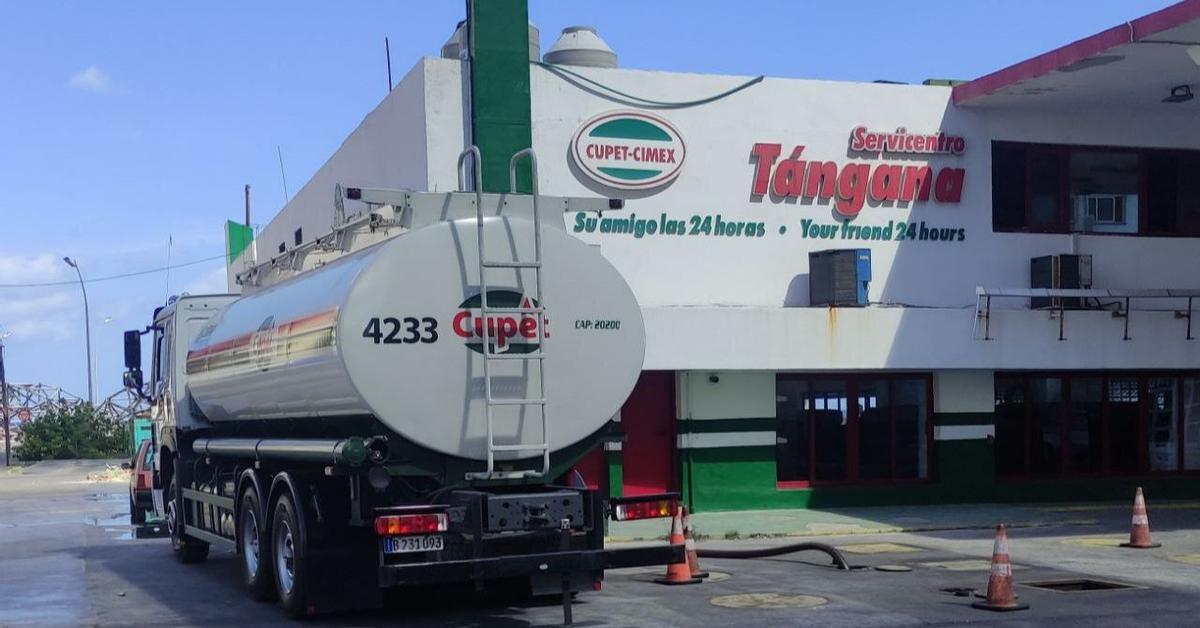
“All maritime terminals in Cuba, as well as local distribution terminals and tanker trucks, are owned by Cupet.”
For energy expert Jorge Piñón, however, the measure has a much narrower practical scope than it would seem. The analyst emphasizes to this newspaper that the very architecture of the Cuban oil sector makes large-volume operations difficult.
Piñón warns that “all maritime terminals in Cuba, as well as local distribution terminals and tanker trucks, are owned by the Cuba-Petroleum Union (Cupet), the state company that monopolizes the import, refining and distribution of fuels on the Island.” In his opinion, this operational reality severely limits any scheme that seeks to move large volumes of fuel without benefiting the State.
The expert concludes that the regulatory design practically excludes importation through conventional means. “Therefore, I think that this excludes the purchase and marketing of fuels from Venezuela in large quantities, which would have to arrive in Cuba in tankers,” he said.
In Piñón’s opinion, the real margin could be reduced to much smaller scale shipments. “It would therefore be in small quantities, 25,000 liters transported in isotanks,” he noted, in reference to the modular containers used for specialized cargo.
This interpretation coincides with the fine letter of US policy, which insists that operations must demonstrate a direct benefit to the Cuban people and not to state structures. In practice, Cupet’s almost absolute control of the logistics chain – from port reception to internal distribution – turns this requirement into a very restrictive filter.
The new OFAC measure seems to respond more to a logic of political calibration than to a fundamental change in the pressure strategy
Although the measure could facilitate specific operations for private actors or humanitarian purposes, several analysts consider that it will hardly resolve the structural fuel crisis on the Island.
Cuba has depended on Venezuelan supplies for decades, but shipments have been falling steadily in recent years. The stoppage of shipments since the end of 2025 – with the exception of a tanker that arrived from Mexico in January – has aggravated the inability of the electrical system to maintain stability, with visible effects on transportation, thermal generation and economic activity. This became even more serious after the capture of Nicolás Maduro and the subsequent executive order of Donald Trump. Although the Supreme Court ruling weakened the tariff mechanism that supported the oil blockade, the declaration of national emergency with respect to Cuba remains in force.
In this context, the new measure by Ofac seems to respond more to a logic of political calibration than to a fundamental change in the pressure strategy. Washington is trying, on the one hand, to show sensitivity to humanitarian deterioration and avoid a possible migration crisis. On the other hand, it maintains the financial siege on the business-military network that controls fuel on the Island.