The Trump Administration is preparing new guidelines to clarify that energy companies can sell oil and fuel to private companies and Cuban individuals, without the need for a specific license and within the current legal framework. This was revealed by a US official cited by BloombergNews this Tuesday.
The central fact is that the Departments of Commerce and the Treasury will issue formal guidelines for exporters and re-exporters, emphasizing that the current energy ban applies exclusively to sales to the Cuban government, not to the private sector or ordinary citizens.
The measure seeks to clear up doubts in the US energy industry about which transactions are legal, at a time when fuel shortages in Cuba have reached critical levels.
The decision, apparently, according to the note Bloomberg, It is part of a broader effort by the White House to draw a distinction between the Cuban government and the people.
Entrepreneurship in Cuba: how to survive in the toughest year?
Humanitarian crisis in sight
Since the capture of Nicolás Maduro in Venezuela on January 3 and pressure on Mexico to suspend its fuel shipments, Cuba has been deprived of its two largest sources of imported oil.
The humanitarian impact of the oil blockade against the island has been documented by the United Nations.
Three UN experts and rapporteurs said that “there is no justification under international law to impose economic sanctions on third states for participating in legitimate exchanges with another sovereign State,” they stressed.
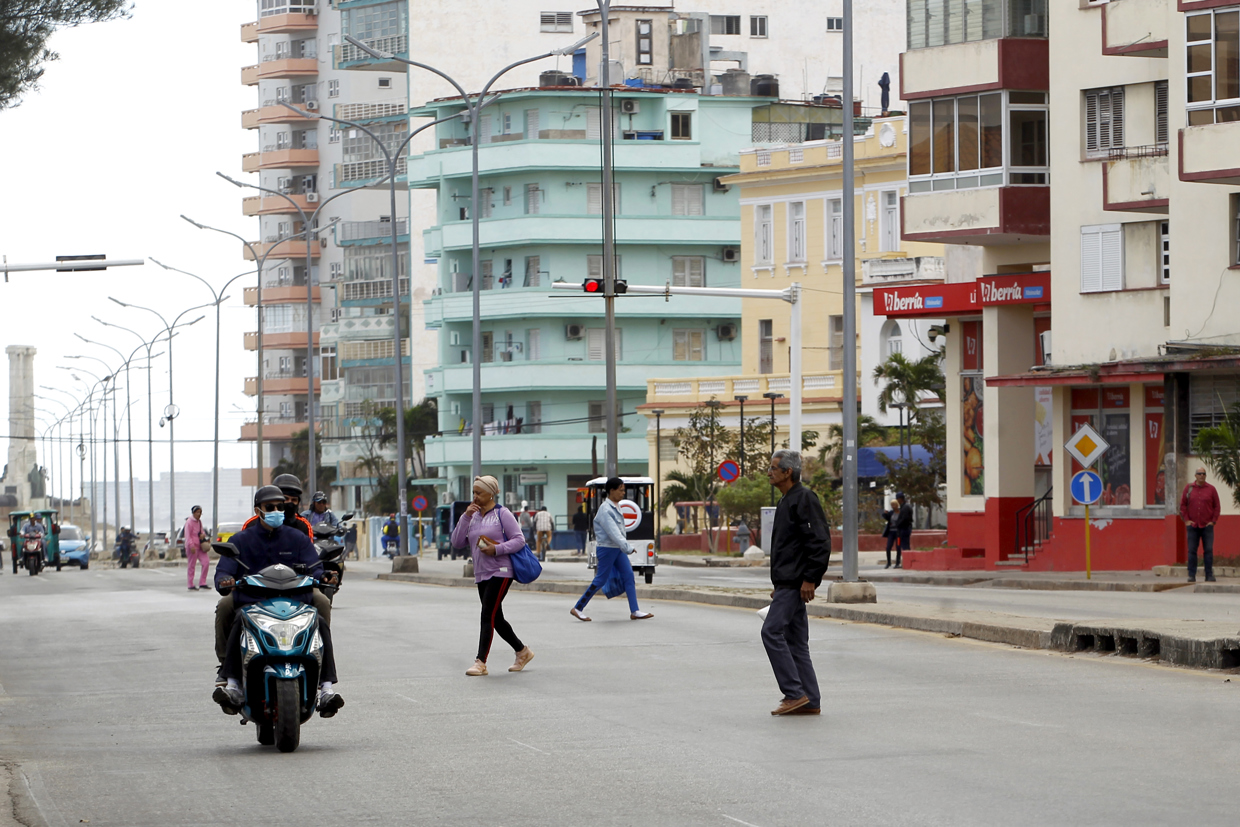
The fuel shortage is critically increasing the precariousness in hospitals, the distribution of drinking water and food. Schools, maternity hospitals and nursing homes face special risk, according to the UN.
“Cuba is already experiencing severe power outages due to previous US sanctions, with blackouts lasting more than 20 hours in many areas, affecting the refrigeration of food and supplies and contributing to public health crises,” they denounced.
The lack of gasoline limits the ability to distribute food, not only by the Government, but also by private parties themselves.
The quarter is not the same: the fuel shortage begins to raise the tide of prices
Faced with these warnings, Washington has apparently opted for the path of regulatory clarification rather than sanctions relief.
“A possible way forward”
In what was interpreted as a change of approach with respect to previous statements about Cuba, the Secretary of State Marco Rubio He also told Bloomberg on February 15 that An economic opening in Cuba could be “a possible way forward”.
“I think that, without a doubt, your willingness to begin to open up in this sense is a possible way to move forward,” Rubio assured Bloomberg when asked if there was any type of solution for the Cuban Government at a time when the Trump Administration maintains an oil blockade of the island.
“Leave aside for a moment the fact that there is no freedom of expression, no democracy, no respect for human rights. Cuba’s fundamental problem is that it has no economy, and the people who are in charge of that country, who control that country, do not know how to improve the daily lives of their people without giving up power over the sectors they control,” held.
“It is important that the Cuban people have more freedom, not only political freedom, but also economic freedom,” Rubio stressed.
Marco Rubio on Cuba: “Opening” the economy is “a possible way to move forward”
“They want to control everything”
The Secretary of State asserted ten days ago that the Cuban authorities “want to control everything” and “they do not want the Cuban people to control anything.” Furthermore, he said that the island’s rulers “do not know how to get out of this situation” and have not “accepted” the “opportunities” offered from Washington.
“To the extent that they have been offered opportunities to do so, they do not seem to be able to understand or accept it in any way. They would rather be in charge of the country than allow it to prosper,” he said, although without detailing whether he was referring to recent negotiations or previous moments in bilateral relations.
In the middle of last week, Axios announced, from several sources familiar with the matter, that Marco Rubio would have had conversations with the grandson and current caretaker of the former Cuban president Raúl Castro.
“I wouldn’t call them ‘negotiations,’ but rather ‘discussions’ about the future,” a senior Trump administration official was quoted as saying. Axios.
“Our position – the position of the US government – is that the regime has to go,” the senior official told Axios, “But what exactly that will look like is up to President Trump and he hasn’t decided yet. Rubio remains in talks with his grandson.”
For its part, The Cuban Government maintains that it is open to dialogue without pressure. Last Monday, Foreign Minister Bruno Rodríguez presented before the Council of Human Rights of the UN that his government is willing to “defend with vigor and courage” Cuba’s right to self-determination.on, although it maintains its willingness to resolve through diplomatic channels their differences with USA.
Fuel import
Historically, almost all the fuel that entered the island was purchased by the State. Only until a few weeks ago did the Cuban Government authorize imports by MSMEs and only to carry out their activities. The remarketing of fuel that already began to enter the island last week is prohibited.