The US Government announced the sending of a new humanitarian aid to Cuba valued at six million dollarswhile keeps the oil fence towards the islanda policy that, according to experts and international organizationscan lead to a humanitarian crisis.
According to the agency EFEthe Administration of President Donald Trump reported this Thursday on the additional aid, which is added to the three million dollars sent in January to assist families affected by Hurricane Melissa.
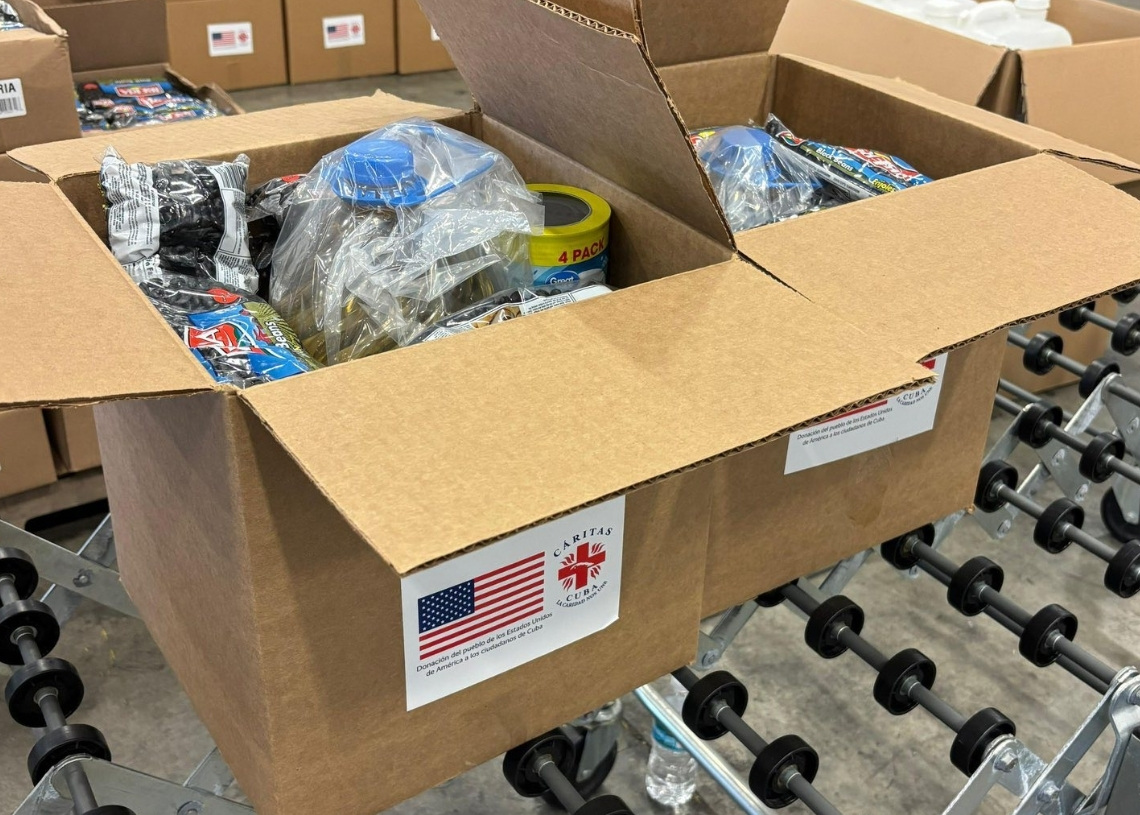
The new assistance includes tens of thousands of units of commodities, such as hygiene kits and non-perishable foods (pasta, rice, canned tuna, and beans)which will be sent from Miami and distributed through local parishes, mainly in the east of the country.
The acting Undersecretary of State for Foreign Assistance, Humanitarian Affairs and Religious Freedom, Jeremy Lewin, assured that the humanitarian needs in Cuba are not related to the oil blockade imposed by Washington, a speech with which Washington tries to minimize the effects of the sanctions against Cubans.
According to the official, The crisis responds to the internal management of the Cuban Government and not to US restrictions on energy supply.
“A large part of the humanitarian need to which we respond is that people do not have access to food,” said Lewin, who added that the Cuban Government “has billions of dollars” but does not use them to guarantee the supply of food to the population.
He also noted that the products will be delivered pre-packaged to make “regime interference” difficult.
The US “is willing” to send more aid to victims of Hurricane Melissa, according to the Embassy
Cuba’s response
From Havana, the response was immediate. The Vice Minister of Foreign Affairs of Cuba, Carlos Fernández de Cossío, described Washington’s announcement as “hypocritical”in a context marked by pressure from the United States on oil shipments to the island.
“Quite hypocritical to apply draconian coercive measures that deny basic economic conditions to millions and then advertise soup and cans of food for a few,” Fernández de Cossío wrote on the social network X.
The United States Government closed the flow of Venezuelan oil to Cuba on January 3, after the capture of the president of Venezuela, Nicolás Maduro, and on January 29 it announced a presidential order to apply tariffs to those who supply fuel to the island.
Remove hypocritical to apply draconian coercive measures denying basic economic conditions to millions & then announce soup & cans for a few.
US announces $6M in aid for Cuba as island’s leader accuses it of imposing an ‘energy blockade’https://t.co/yQy3BrNLSE— Carlos F. de Cossio (@CarlosFdeCossio) February 5, 2026
Lewin rejected that oil restrictions are amplifying the humanitarian crisis and argued that the island continues to be affected by Hurricane Melissa, in addition to accusing the Cuban State of hoarding available fuel. pointed out cnn.
“The idea that any change in oil in recent weeks is responsible for what is happening in Cuba is simply not true,” he said, quoted by US television.
The acting Undersecretary of State added that the new assistance would be usable “even during fuel shortages,” while questioning that Cuban President Miguel Díaz-Canel is focused on making “scandalous statements” against the US “instead of providing food to his citizens.”
The White House insists that the US and Cuba are negotiating and demands caution from Havana
The US oil siege
This Thursday Díaz-Canel confirmed that Cuba has not received fuel from abroad since December due to American pressures and warned that the oil blockade will have serious consequences for the country.
The US military operation in Caracas, which culminated in the capture of Maduro, meant for Havana not only the loss of a key ally, but also the end of a vital energy supply.
Experts cited by EFE they estimate that Cuba needs around 110 thousand barrels of oil per day to cover its energy demandof which Venezuela contributed about 30 thousand barrels per day in 2025.
While Washington insists on separating humanitarian aid from its policy of economic pressure, the Cuban Government maintains that the oil blockade aggravates the internal crisis and questions the coherence of offering limited assistance while restricting the basic conditions for the functioning of the country and its people.
Several countries have condemned the US measure, also alleging that it could lead to a humanitarian crisis, including allies of Havana, such as Russia, China, Mexico and Venezuela itself.