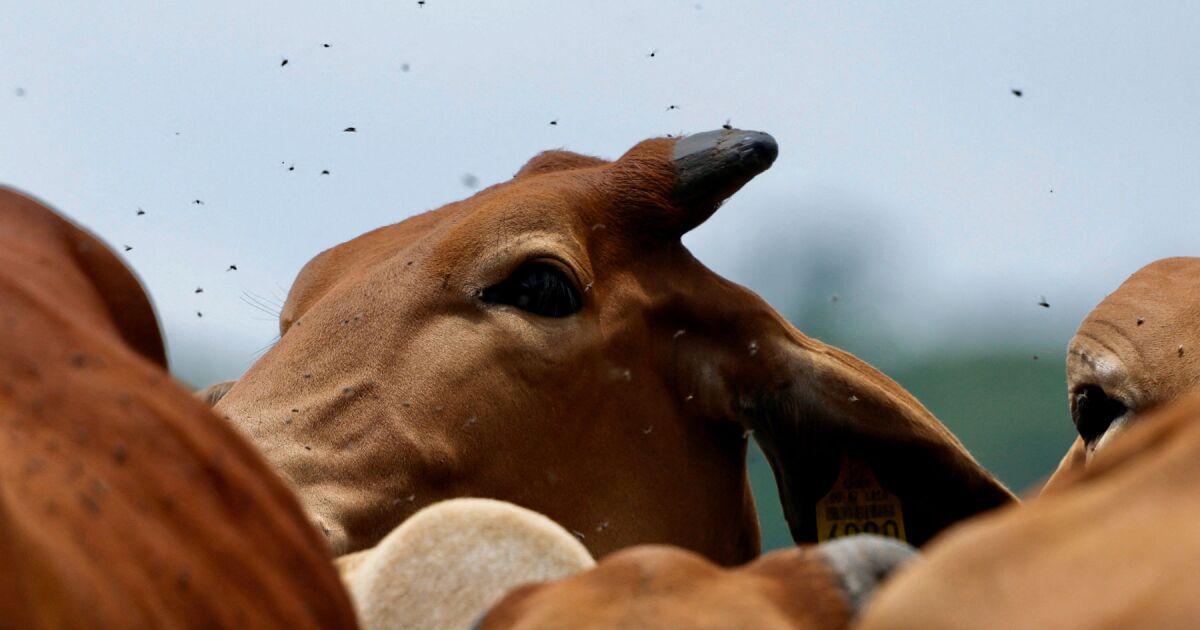
Rollins blamed the recent detection of cattle cheeper worm less than 113 kilometers from the border with the United States to the fact that Mexico has not stopped cattle movements, and that the traps for flies destined to reduce the wild population of flies of the cattle driver, which infest it and can kill it.
The boreride worm has not yet crossed the southern border of the United States, according to the authorities, but it is a multimillionaire risk for the meat industry of that country.
Since May, the United States keeps the border practically closed to Mexican cattle imports.
The outbreak has increased the tension between the two before a review of the commercial agreement between the United States, Mexico and Canada (T-MEC) and has stirred its livestock sectors.
Later on Thursday, in a statement, the Mexican Health Agency, Senasica, said that it has established a traps system to detect flored worm fluent in coordination with the United States Department of Agriculture (USDA).
In the same document, he clarified that the boreride worm in northern Mexico was detected thanks to a protocol established with the US government and has implemented a double inspection system for cattle to the north of the country.
On September 21, the USDA said that he had knowledge of the case in Nuevo León, border with Texas.
In a matter of hours, the USDA had sent staff to the region, Rollins said Thursday at the Ag Outlook Forum in Kansas City, in the state of Misuri.
“Unfortunately, what we found is that Mexico has not applied the adequate control of cattle movement in the infected regions and is not putting the flying traps daily as it promised, which makes it difficult for our real -time detection capabilities. This is unacceptable,” Rollins said.
He added that the reopening of the border to the cattle trade is subject to the total compliance with the agreed surveillance protocols.
The spokesmen of the Secretary of Mexican Agriculture and President Claudia Sheinbaum did not respond to requests for comments.
Sheinbaum said Wednesday that Mexico had not been notified by the USDA of any change in the expectations of a border reopening before November, and that the control of the movement of cattle within Mexico is complicated.
The United States has invested 21 million dollars in an installation in southern Mexico to produce sterile flies that are released to reduce the population of wild flies that mate.