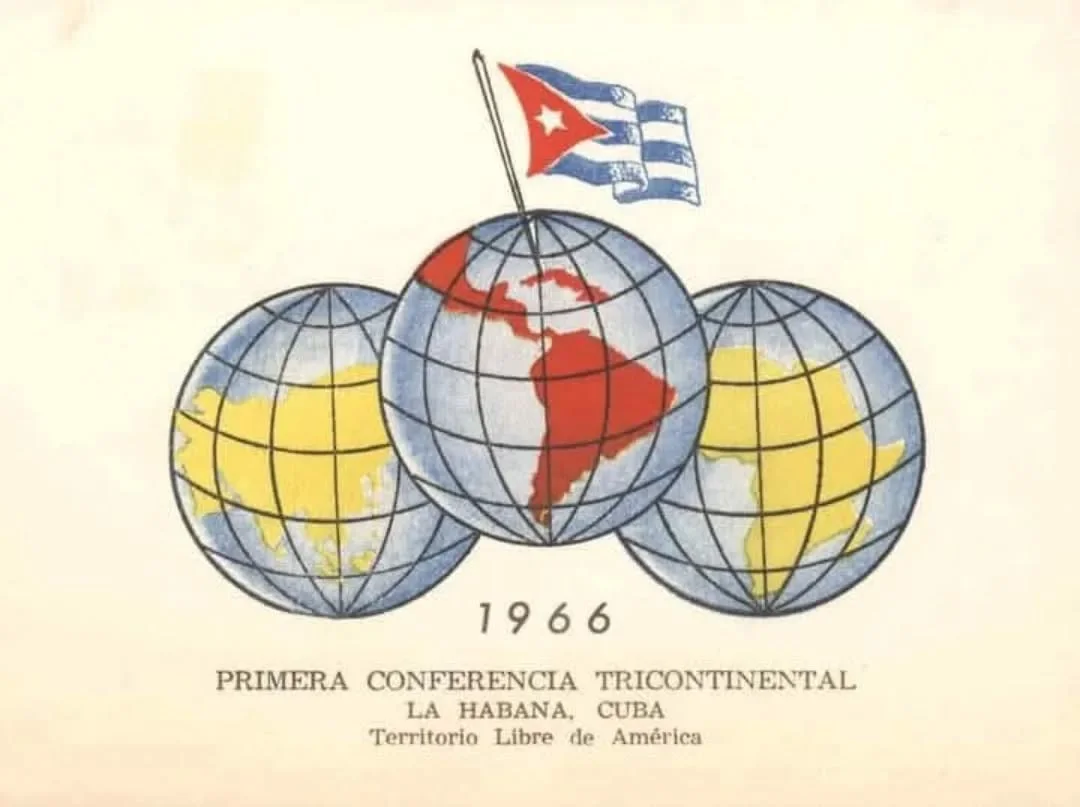
The 1966 Tricontinental Conference was an attempt by Castro to take control of the Non-Aligned Movement (NAM).
MIAMI, United States. – In 1966, after seven years of implementing drastic changes in Cuban society and its economy and articulating a deep antagonism towards the United States, a Fidel Castro Emboldened, he called for the First Tricontinental Conference to be held in Havana.
Castro’s call was inspired by the principles and activities of the Non-Aligned Movement (NAM), created in 1961, and the Organization of Solidarity of Afro-Asian Peoples (OSPAA), created in 1957.
Between January 3 and 16, 1966, some 500 delegates from 82 countries in Asia, Africa and Latin America met in what would turn out to be Fidel Castro’s first attempt to militarize the anti-colonial and anti-imperialist struggle of the so-called Third World. Delegations from Africa represented 28 countries, including the African National Congress (ANC) of South Africa; 27 were from Asian countries, including Korea and China, and another 27 were from Latin America, including Argentina, Brazil and Chile. Observers from the USSR and the United States also participated.
Some experts claim that Castro turned Havana into the epicenter of global anti-imperialist subversion. Although Ernest Che Guevara He was physically absent from the Conference, since he had resigned from his positions months before and was in Tanzania organizing his next guerrilla adventure in Bolivia. The Argentine was present through his image on the Conference posters and through his slogan about creating “two, three, many Vietnams.” His ideology provided the context of inspiration and determination at the Conference.
Among the 500 participants were the senator and future president of Chile, Salvador Allende; Amílcar Cabral, leader of the African Party for the Independence of Guinea and Cape Verde; Cheddi Jagan, from Guyana; Nguyen Van Tien, of the National Liberation Front of South Vietnam; Aruna Asaf Ali, activist from India; and Josina Abiathar Muthemba Machel, leader of FRELIMO of Mozambique.
The Tricontinental Conference was also an attempt by Castro to take control of the Non-Aligned Movement, a maneuver that was not fully successful in light of the presence of great leaders such as Gamal Abdel Nasser, president of the United Arab Republic; Josip Broz Tito, president of Yugoslavia; Jawaharlal Nehru, Prime Minister of India; Kwame Nkrumah, president of Ghana; and Sukarno, president of Indonesia.

As a result of the conference, the Organization of Solidarity with the Peoples of Asia, Africa and Latin America (OSPAAAL) was founded. Based in Havana, it was directed by the then Minister of Construction and former militant of the July 26 Movement, Osmany Cienfuegos, one of Fidel Castro’s closest and most trusted collaborators.
The Tricontinental also served to catapult Fidel Castro as a leader of the anti-imperialist armed struggle in the Third World, specifically against the United States. On January 16, 1966, at the closing of the conference, Castro declared:
“We believe that this conference will undoubtedly occupy a place in the history of nations fighting for their freedom in the revolutionary movement. We also believe that the contacts that have been established, the links that have been created between the world movements fighting against imperialism and the organizations that have been created will play an unquestionable role in the revolutionary struggle.”
The ideological, propaganda and political success of the Tricontinental Conference led to a dangerous path that Fidel Castro would later follow: the establishment in Cuba of training camps where the world’s terrorists would be prepared. This included ETA, from Spain; the IRA, from Ireland; the Montoneros, from Argentina; the Tupamaros, from Uruguay; the M-19, from Colombia; the Sandinistas, from Nicaragua; the Rebel Armed Forces of Guatemala; the Palestine Liberation Organization (PLO) and every group in the world that professes armed struggle against “Yankee imperialism.”
Those trained in these camps received instruction in Marxist theory; use of weapons and explosives; accurate reading of maps and photographs; production of false documents; identity theft; issuance of false passports; encrypted communications; methodology of guerrilla warfare, both urban and rural; espionage and counterespionage; sabotage, assault and terrorism; kidnapping of people; hostage taking; hijacking of boats and planes; interrogation and torture techniques; logistics and political strategy.
The dangerous repercussions of the Tricontinental Conference continue today. The Cuban regime maintains the Tricontinental center: Institute of Social Research, as well as the OSPAAAL. Its global networks continue to be faithful to Castro’s vision:
“…The duty of every revolutionary, as established in the Havana Declaration, is to make the revolution… in deeds and not in words; not to be revolutionary only in theory, but revolutionary in practice… sooner or later, all or almost all peoples will have to take up arms to free themselves…”.
Although the era of armed struggle has diminished to some extent, the international networks of violence and criminality that Cuba organized at the Tricontinental Conference, especially against the United States, continue to represent a threat to American and global national security.