I was about to finish my last course at the Rafael Morales pedagogical school. Accompanied by Gorki Barcelán bitter, I went to the house of our history professor of Cuba, Nilda Moreno Abreu, who, with Second Leiva Casay, historian of the city of Morón, influenced my vocation for the studies of the past.
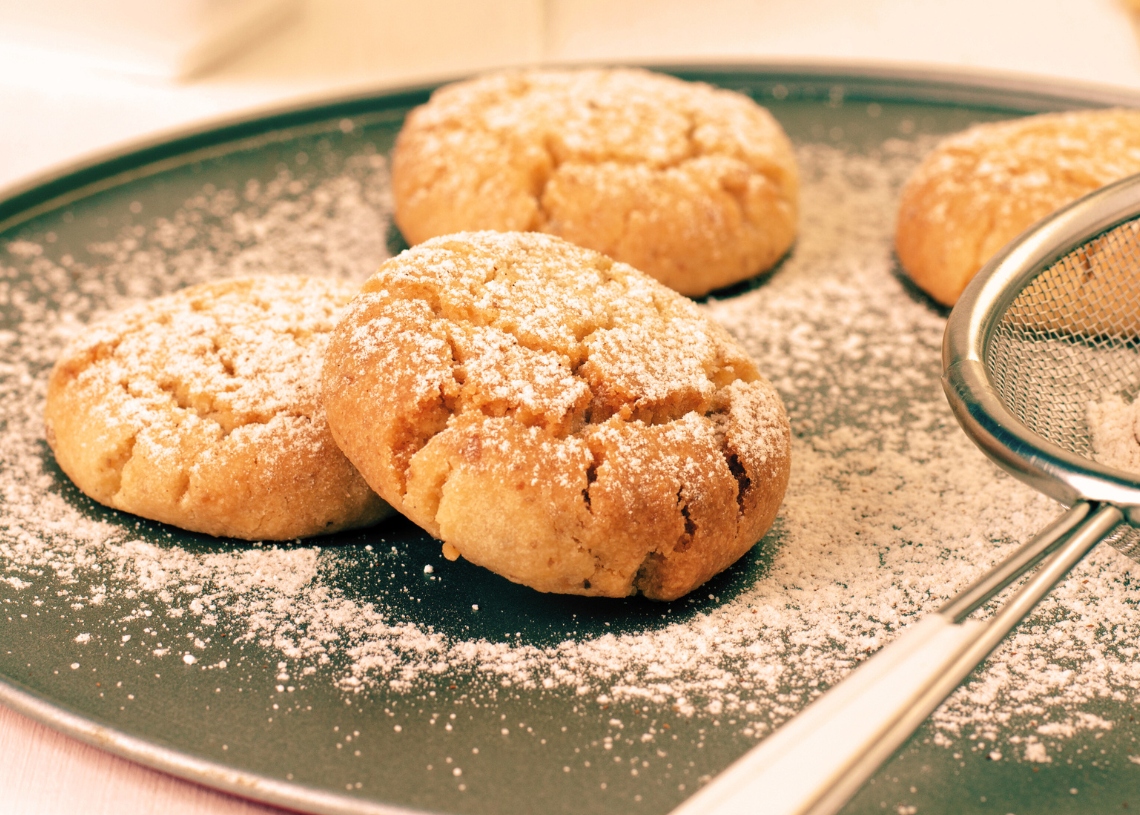
Nilda, That 1989 night, after giving us delicious Tortica de Morón, he brought as a gift several volumes of the Complete works by José Martí. Recently, a post published by another appreciated professor of that time, Rolando Barroso, reminded me of the event, for those mental associations that sometimes occur to us.
Roly resides in the United States, where Memorous Cubans and entrepreneurs make sweets under the Torticas de Morón brand. He had bought a bag with these foods and showed the photo, proud and nostalgic. I, who are also far from Cuba and surely as nostalgic as my geography teacher, I dedicate a tribute to one of the identity symbols of the town, located to the north, in the province of Ciego de Ávila.
“Simple” Recipe
In a humble house, a guano roof, with boards and ground floor, located in the current Gonzalo Marín street, Serafina Echemendía lived, known as fine. It was common to see it in the patio, where the mud oven was, under an old ranch. The sweets and bread of Caracas that she elaborated “were preferred for their cleaning, purity and exquisite,” recalled the historian Benito Llanes Recino in one of his chronicles.
Another researcher, Hector Izquierdo Acuña, says: “It is said that the recipe was simple, and the products for its elaboration were few: flour, sugar, salt and solidified lad that, as they count, was the ingredient that contributed the exquisite flavor and softness to that renowned sweet. It could also added a pinch of guava jam.”
By notes disseminated in the press I have been able to specify that in the first decade of the twentieth century the torticas had transcended and were known at the national level. That is, they were not created in 1927, as has been disclosed so far. To illustrate it, I quote the article “Country films”, written by Juan B. Ubago and published in the morning edition of the Marina Diarioon June 20, 1909:
“Other officials are constantly anxiety for different concept, such as Mr. Modesto Mollete, who was appointed to perform the Court of First Instance of Morón.
-Excellent! Concha said, Mrs. Mollete, who is very sweet.
– Morón! I’m going to eat torticas!
A few days later, Mollete was transferred to [sic] Jaruco and told his wife:
“You will not eat torticas, but you can eat a good bread, the bread of Jaruco.”
The truth is that in the 20s they were valued as struts in the commercial life of the town. In its cases and things section, which he published in the Marina Diariothe playwright, journalist and actor Sergio Acebal, on February 9, 1924, referred in a jocular tone:
In Morón, more than one million
of companies became rich
With the famous Torticas
They are called from Morón.
And in the March 20, 1925 edition, the same newspaper, in “Postcards of the Oriental Park”, referring to the competences carried out in the Marianao racecourse, he said: “Neal yesterday had a phenomenon for winning three events and a second place. His earnings this week will allow him to provide “Chewing Gum” and Morón Torticas for the rest of the year. ”
The mentioned newspaper frequently promoted the recipe. For example, on January 22, 1926, he reviewed:
“Nothing easier or shorter than this sweet. It is enough to mix equal parts of white sugar, castilla flour (a cup of each one, for example) and enough butter to form the dough. The tootics are formed and put in the oven for a long time, without letting them brown. If you wish they can cover them [sic] sesame or almonds, whether chopped in bits or an integer about each tortica. To the dough you can add lemon scratches or anise granites to give flavor, but it is not necessary. This sweet is done in a few minutes. “
Creator’s identity
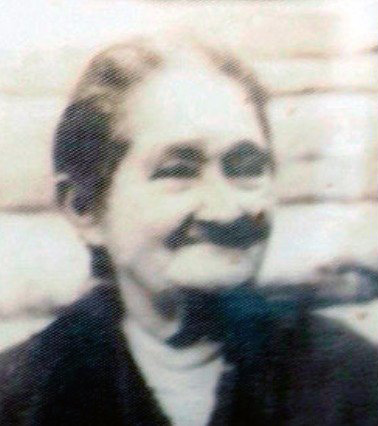
About the identity of the Serafina there is an interesting story, revealed by Hector Izquierdo Acuña. His true surnames were Valdés Gómez. The initial information that led him to the investigation was provided in November 1992 by Celia Echemendía Echemendía, granddaughter of the pastry, who described Fina as a woman “of short stature, thick, white and with blond hair. He had a very pleasant character and her eyes were clear.”
During the dialogue he told him that, when the grandmother married with the musician Ladislao Echemendía Quesada, the people awarded him the husband’s last name.
The historian was doubtful and began to investigate the baptismal games in the parish house. But he didn’t find what he was looking for. However, he did find the probative document of marriage to Ladislao, in the church of La Candelaria de Morón, held on March 20, 1868, and while reading he discovered that “Serafina was the daughter of the Royal Casa Cuna de la Havana, founded by Bishop Jerónimo Valdés, when he took the resolution to allocate a house to welcome the abandoned children and who, in passing, offered her. There Serafina’s last name: Valdés. Why Serafina in that institution? The answer is lost and it is little less than impossible to know if she was a girl born ‘fruit of sin and prohibited loves’, and abandoned to her doors or, like many, deposited there by the poverty of her parents. Maybe we will never know. ”
Serafina died at eleven o’clock on the night of July 12, 1932 at her home, on Máximo Gómez, number 53, when she was 86 years old.
“Snack”
The expansion of the consumption of Morón Torics at the national level also had in his favor the work of street vendors. The journalist Ciro Bianchi, in his chronicle “Cariocas by bottles”He said:
“Those street vendors also contributed sound to the city. The tamalero passed with their tamales that chopped and did not bite because he carried them with and without spicy. The seller of wind pork rinds. One, of Torticas de Morón, said:“ Oh! How rich the Torticas de Morón, to Quilo are … Oh! How rich Morón’s torics are temptation … ”
Due to their low price, for decades, the torticas were the “tentempié” of those who had no comfortable resources or the shortage of gastronomic offers. The actor Daniel García Rangel, in his book Juan Primito Memories He narrated this anecdote happened when he was a student in Havana, in 1972:
“I remember that when I passed through the Calixto García hospital, going for the school to take one of those day my school cafeteria ”.

The culinary creation of Serafina Echemendía transcended the national borders. Today many compatriots, beyond the sea, look for the torticas of Morón and taste them overcome the physical act. “They are delicious, I bought them in different Bakery [sic]but what goes, never as the taste of those of Cuba. But by longing I eat them, ”he acknowledged Evelyn Hernández on a Facebook comment.
Another Internet user, Patricia Cuesta Rivalta, expressed: “In my mind I have the best of the then Dulceía la Luz, Ave Tarafa and Calle Patria, in the corner of my house … only in my mind …”.
The prolonged economic crisis In Cuba, the production of the sweet has affected the shortage and high cost of its ingredients. For a long time, the lard was replaced by vegetable oil and, sometimes, they do not have this to add to the dough. Moronenses tell me that the size of the dessert is not like the one I had before, nor the contenture and taste. The price of the unit in the market has also raised up to 50 pesos, approximately.
In spite of everything, and although some warn that they are in danger of extinction, I think that Morón’s torticas will survive, because they have a well -earned space in traditional gastronomy and cultural heritage of the Cuban people. Right now I cannot stop being optimistic, to imagine Serafina Echemendía, laborious, in front of the rustic mud oven, located in the courtyard of her humble house, roofed of guano, with boards walls and ground floor. I refuse to accept that his famous creation will disappear, so authentic, so ours.
Sources:
Marina Diario
Research from Héctor Izquierdo Acuña
Fragments of the book Juan Primito Memoriesby the author Daniel García Rangel, published on his Facebook profile.