Havana/In the Tuxpan bookstorethe branch of the Mexican Economic Culture Fund (FCE) in Havana, there is still no trace of the collection 25 for 25announced with pomp by the president Miguel Diaz-Canel last December 17. There is no trace of anything new either. In fact, no new copies have arrived for six months.
“We recently took the most recent ones out of the warehouse,” an employee explained on Friday. They had been in that warehouse for months, although he did not explain why. However, when asked about this, Ezra Alcázar, new FCE International coordinator, assures that part of the collection arrived on December 17, when it was presented at the Capitol, although he says that “it is not the Fund that is in charge of distributing the books abroad.”
In the case of Cuba, he continues, the responsible institution is Casa de las Américas. He acknowledges, of course, that they only supply “once or twice a year,” but it is the same frequency with which they send books to the rest of the international branches. The “most important moment” and “when the most books are sold” is the Havana Book Fair, which is held in February, and it is shortly before when they ship.
Many have no price, as if it were assumed that they would not be bought, but most range between 120 and 250 pesos.
The FCE on the Island is focused on this annual event, he assures, without explaining why the publishing house needs, then, the El Vedado bookstore.
“I hope that’s what it is, that they are waiting for the Fair, because we know that they were donated but they have not been delivered,” emphasizes the employee of the establishment, who denies that there is a regularity of assortments. “That’s when they appear.”
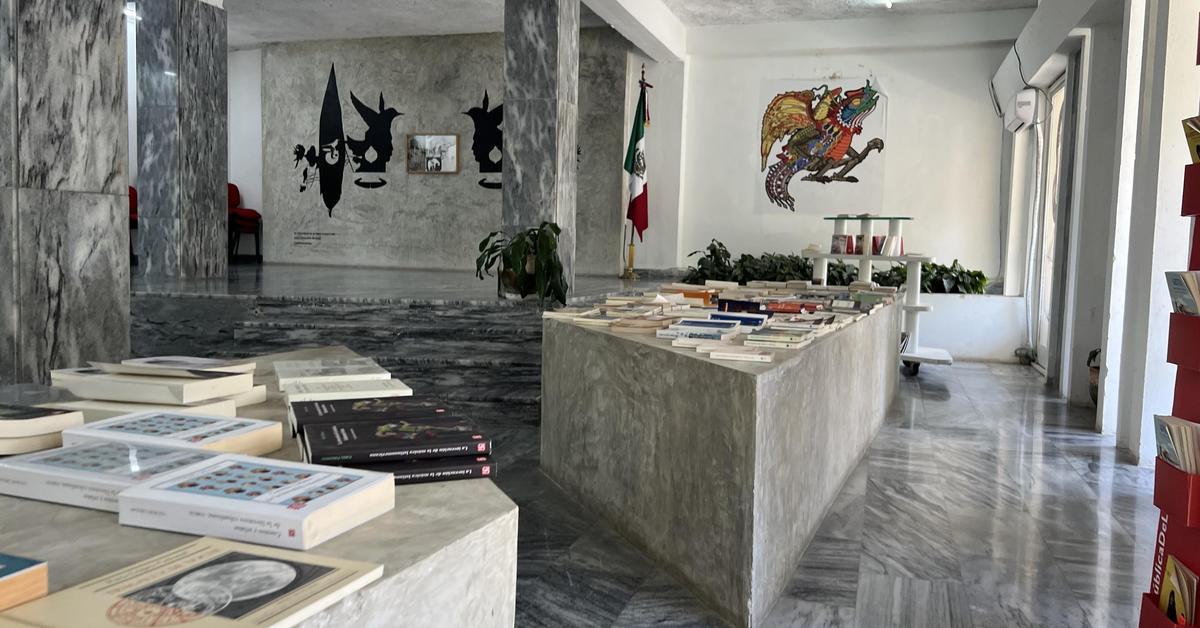
The store, located on the corner of L and 27, continues to present the same panorama as when it opened – replacing the emblematic Fernando Ortiz bookstore -, in August 2022: dark, leaky, lacking paint, almost empty of customers, without recognized titles.
The books are placed in no apparent order on the shelves, with their spines raised by humidity, deformed. Many are priceless, as if it were assumed that they would not be bought, but most range between 120 and 250 pesos.
A title about Alzheimer’s signed by Norge Céspedes Díaz and Adolfo Valhuerdi Cepero (memory recovered) together with a manual of “equine therapy” by Jorge Velázquez Gómez, both published by Cuban state publishers, appear together with a book of poems, A uterus the size of a fistby the Brazilian Angélica Freitas, translated by the Mexican Paula Abramo. This volume, by the way, in an edition that appears in the catalog of the Brigade to Read in Freedomthe family business that Paco Ignacio Taibo II founded before directing the FCE, and which is dedicated to buying out-of-print books by weight and reselling them at fairs.
Balances, what no one wanted before, is precisely what Tuxpan seems to offer. Very little from the thick catalog of the Fondo, the great Mexican state publishing house founded in the 1930s at the request of the liberal historian Daniel Cossío Villegas to provide university students with economics books that were not translated into Spanish, and which has to its credit works by Fernando Ortiz himself and other “uncomfortable” Cubans, such as Rafael Rojas.
Not in Havana. Here, what is found is Mexico’s international policy in the 1980s either Criticism of globalityeither The back of Houssay’s neck: Argentine science between Billiken and exiletitles published in the 90s and that may be of little interest to a Cuban reader.
/ 14ymedio
On the other hand, you do see many books published on the Island, but none transcendent. Waldo Leyva, Carlos Montenegro, Soleida Ríos, Larry Morales… “When new books come out, people go quickly and grab the few interesting copies,” another of the workers excused. Although he recognizes the limited variety of authors, he recommends that customers directly go to the private bookstore on 25 and O, “which is more likely to find the book they are looking for.”
The bookstore, however, is kept clean and well-kept. A Mexican flag hanging from a flagpole continues to adorn the space. When some foreigners entered, the employees became alert: finally, a sale in sight. However, they did so only to use the bathroom. They were immediately dissuaded: “only for customers.”
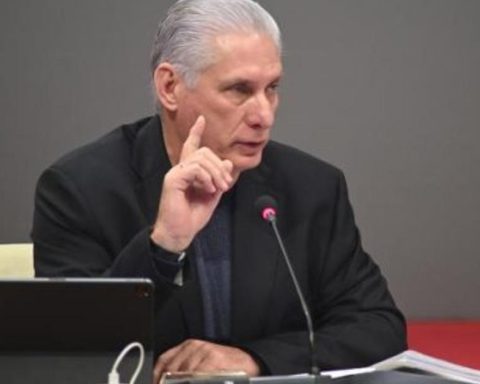
The situation contrasts with the solemn ceremony presided over by Díaz-Canel at the National Capitol on December 17, when presenting the Mexican project 25 for 25an initiative by President Claudia Sheinbaum that provides for the free distribution of 2.5 million books to young people between 15 and 30 years old in fourteen Latin American countries, including the Island.
The Mexican ambassador, Miguel Díaz Reynoso, present at the event, described the collection as a “modest gift” for a “people educated in reading” and stressed that it is a commitment to Latin American cultural memory. The selection includes important names such as Gabriel García Márquez, Eduardo Galeano, Juan Gelman, Mario Benedetti, Juan Carlos Onetti, Andrés Caicedo, Roberto Fernández Retamar, among others. They have not yet arrived at Tuxpan and there is no news on when it will happen.