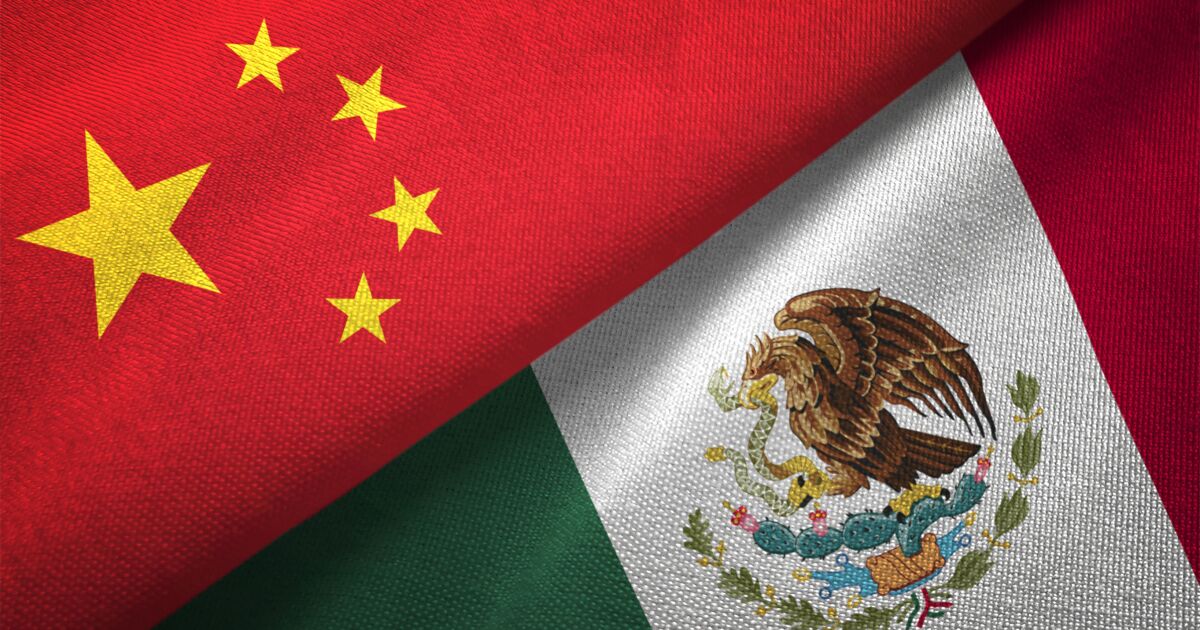
Once adopted, the measures will “substantially undermine” trade interests, the ministry said in a statement.
“China has always opposed any form of unilateral increase in tariffs and hopes that Mexico will correct such unilateralist and protectionist practices as soon as possible,” he added.
Mexico’s Congress decided to raise tariffs up to 50% starting in 2026, affecting $1 billion worth of shipments from major auto exporters including Volkswagen and Hyundai, according to two sources and a letter from an industry group reviewed by Reuters.
The move also comes amid U.S. pressure on Mexico to reduce business with China, despite opposition from local business groups who warn that higher tariffs will increase costs.
India, the other affected country
The Society of Indian Automobile Manufacturers, an industry group that counts VW, Hyundai and Suzuki among its members, had urged India’s Commerce Ministry in November to pressure Mexico to “maintain the status quo” on tariffs for vehicles shipped from India, according to a copy of the letter.
“The proposed tariff increase is expected to have a direct impact on exports of Indian automobiles to Mexico (…) we request the support of the Government of India to dialogue with the Mexican Government,” the industry body stated in its letter to the Ministry of Commerce before the tariff was finalized.
It is the first time that the details of the letter have been reported. It is unclear what steps the automakers, the industry body and the Indian government will take next.
The rise in tariffs could force Indian manufacturers to rethink their strategies that depend on Mexico, which is India’s third largest automobile export market, behind South Africa and Saudi Arabia.
Indian automakers have relied on exports to maximize production and achieve economies of scale. Some are also relying on exports to cushion slowing domestic sales or improve margins, a business strategy that may have to be rethought.
The tariff hike, which reflects a rise in global tariffs, including levies championed by U.S. President Donald Trump, could also complicate Prime Minister Narendra Modi’s efforts to promote India as a low-cost manufacturing alternative to China.
India’s commerce ministry, the Society of Indian Automobile Manufacturers and the Mexican government did not respond to requests for comment.
Hyundai and Maruti Suzuki did not respond to requests for comment, while Nissan declined to comment.
Piyush Arora, head of VW’s Indian unit Skoda Auto Volkswagen, said India has been a strong export base for many years and the company ships to more than 40 countries from here.
“Mexico has always been one of our important export markets, given the growing demand there and the traction of our Indian-made models,” Arora said before the tariffs were approved.
VW the most exposed
India sent goods worth $5.3 billion to Mexico in the last fiscal year, of which cars accounted for nearly $1 billion, according to the letter and customs data available in the market.
Skoda Auto accounts for almost 50% of total automobile shipments from India to Mexico. Hyundai shipped cars worth $200 million, Nissan’s exports stood at $140 million and Suzuki’s at $120 million, the data showed.
In meetings with government officials last month, the automakers said that most of the shipments from India to Mexico are compact cars with an engine size of less than one liter, which are designed for the Mexican market and not for later export to the United States, one of the sources said.
“Vehicles of Indian origin are not a threat to the local Mexican industry, since Indian vehicles do not supply the high-end segments manufactured by Mexico to serve the North American market,” the industry group said in its letter.
The automakers also told Indian officials that of the 1.5 million passenger vehicles sold in Mexico each year, about two-thirds are imported and shipments from India represent “only about 6.7%” of total sales, according to the first source and the letter.
Korea will analyze impact
South Korea also announced that it will evaluate response measures for the tariffs imposed by Mexico. According to the EFE agency, the Ministry of Commerce of that country will evaluate the impact of the measures in order to announce a response later.
With information from Reuters