The Dominican Republic suffered during summer from 2025 extreme temperatures in several locations, which led to the Dominican Institute of Meteorology (Indomet) issued at the end of August a heat alert, after communities such as Bayaguana, in the Monte Plata province, exceeded 35 degrees Celsius.
This increase in temperatures and the sensation of heat caused August appears as the month with the greatest demand for energy generation in the National Interconnected Electrical System (SENI), at least in the last five years.
The records of Coordinating Body (OC) of the SENI indicate that during the eighth month of last year the generators injected 2,306.1 gigawatt-hours (GWh) of electricity, a figure that represented a ceiling within the system.
However, even though August It is the period in which the system reached its maximum generation, the energy production requirements remained above the 2,040 GWh prior to the start of summer and after that season.
Between May and October 2025, generating companies produced 12,951.7 GWh of electricity, equivalent to 59% of the total production for the January-November period, which reached 21,962.4 gigawatt-hours, according to OC data.
To generate a monthly average of 1,766.4 GWh between January and April of last year, a period with typically less hot temperatures, the figure skyrocketed 2,158.6 gigawatts between May and October.
Temperatures and blackouts
Dominicans were suffering from temperatures hot from May until mid-November, with forecasts that exceeded the 39 degrees Celsiusas the one registered in the Jimaní municipality on the 3rd of August.
On October 11, the thermal sensationwhich is the combination of the temperature of the human being, that of the environment and humidity, reached in the dominican capital the 46 degrees Celsiusaccording to a report from the Indomet meteorological station.
The heat wave that the country suffered during the summer provoked blackouts at night, due to the increase in energy demand by the population.
On the 21st of August the country reached its peak demand of electricity, with 4,038 megawattsaccording to the authorities of the sector.
Main generators
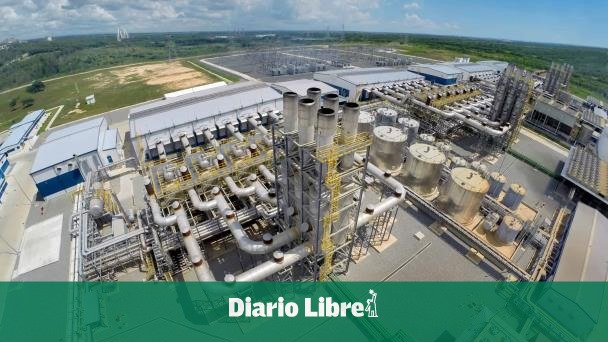
The thermoelectric plant Catalina Point figure as main generator of the SENI, being responsible for injecting 4,505 gigawatt-hours of energy between January and November 2025, representing 20.5% of the total.
-
This was followed by the Egehaina plants, which contributed 2,525.4 GWh during the aforementioned period, equivalent to 11.5% of the total electricity contributed by the different generating companies to the system.
The Electricity Company of San Pedro de Macorís (CESPM) was located in the third position in energy injected into the SENI from January to November of last year, with 8.3%, equivalent to 1,829.5 GWhaccording to OC records.