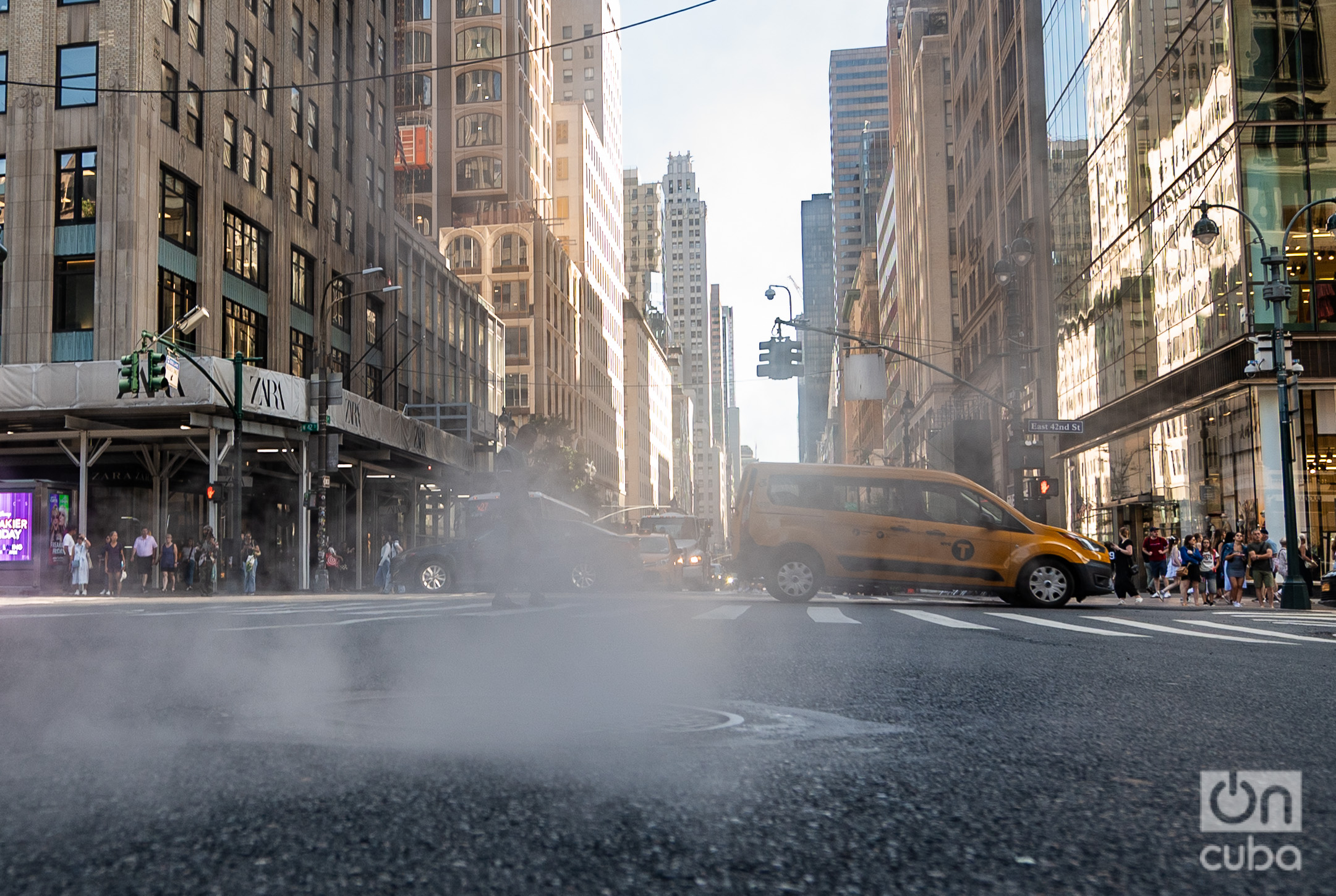
There are postcards of New York that need no explanation: the profile of the skyscrapers at dusk, the Brooklyn Bridge silhouetted against the sky, the Statue of Liberty, the yellow taxis stopped in an eternal traffic jam. And there is also that other seal, less showy but just as insistent—and omnipresent in movies and series—: a whitish column that sprouts from some sewers.
It’s not smoke, even though it looks like it. It’s steam. And what appears on the surface is just the visible trace of a gigantic underground network: steel pipes that, since 1882, have transported pressurized steam through Manhattan as if it were electricity or gas.
That year, the New York Steam Company began serving Lower Manhattan, inaugurating a pioneering district heating system. Over time, the network expanded and today is in the hands of Consolidated Edison, through its Con Edison Steam Operations division. It is the largest commercial district heating system in the world: it supplies steam to almost 2,000 customers and supplies more than 100,000 commercial and residential establishments, from Battery Park, on the southern tip of the island, to 96th Street, in the north. Every year about 13.5 million tons of steam circulate through these pipes.
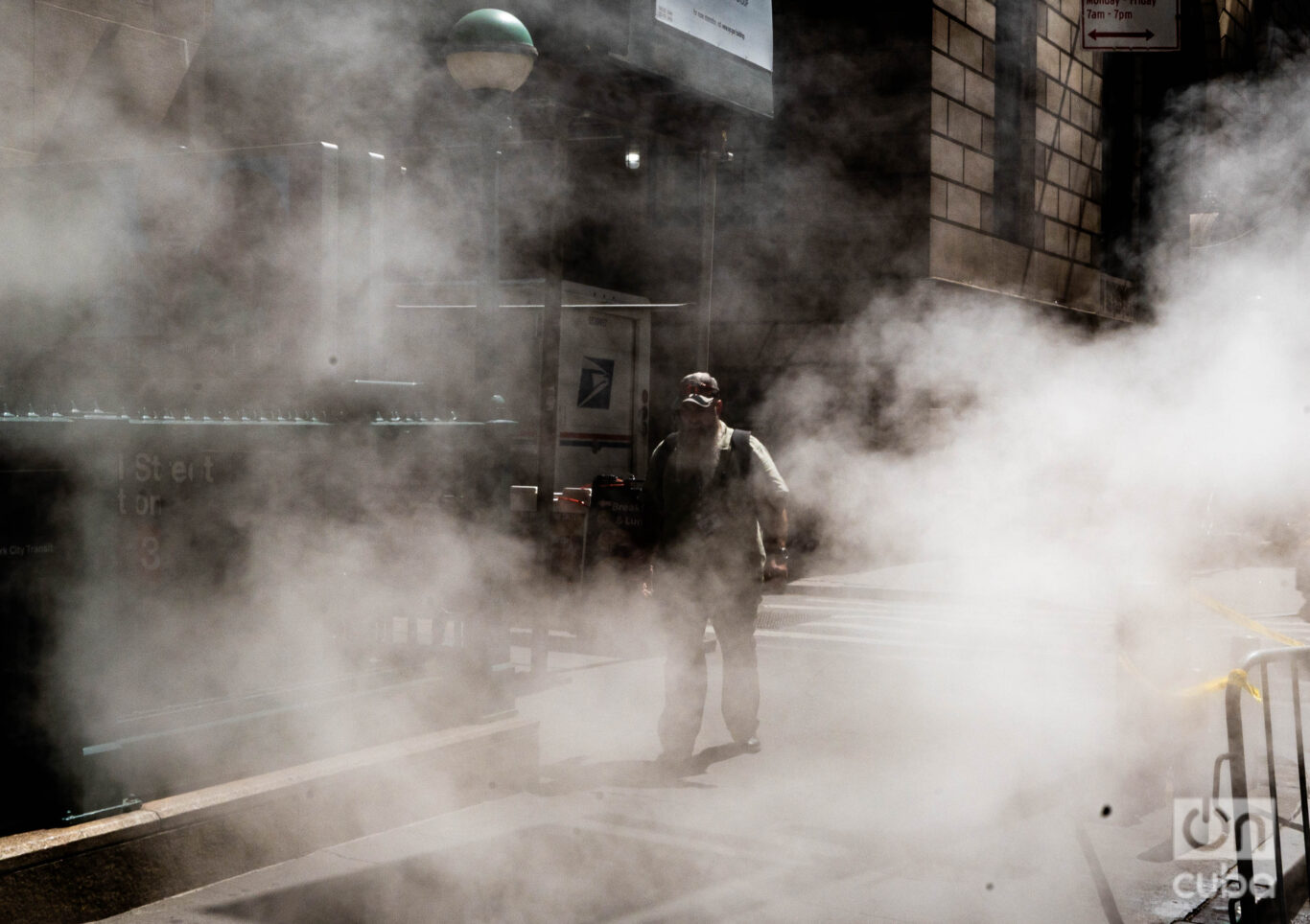
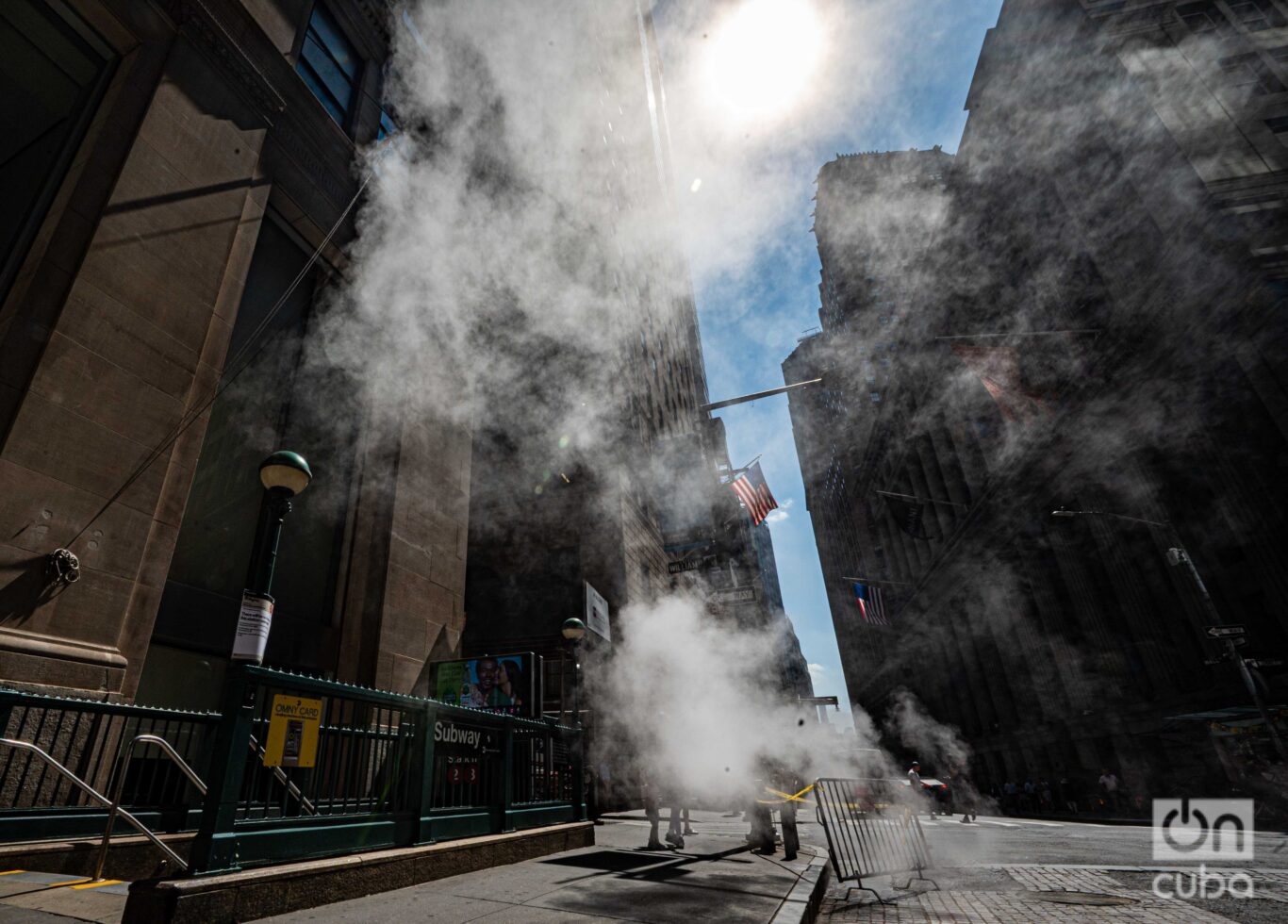
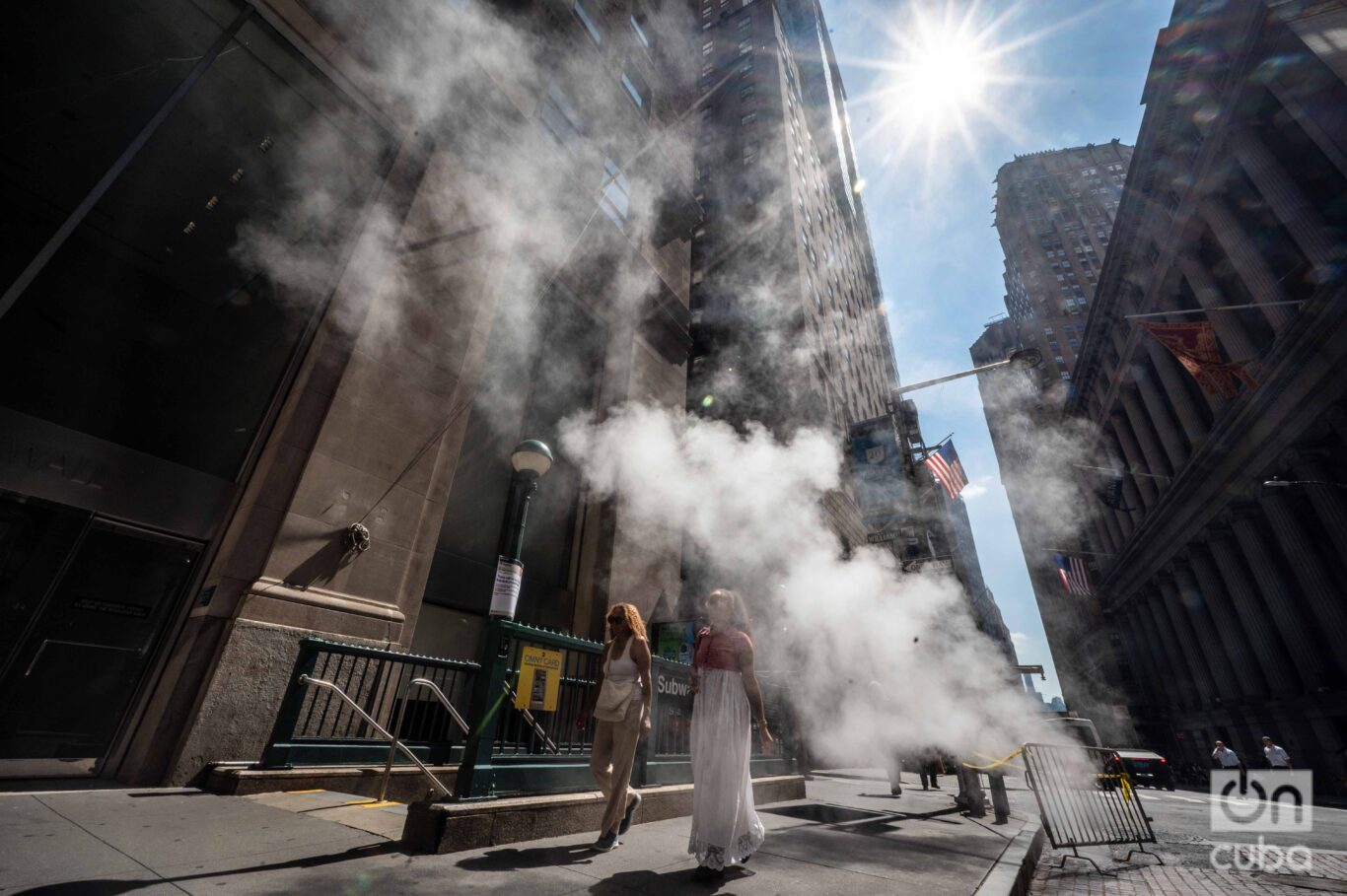
Among the users are some symbols of the city: the Empire State Building, Rockefeller Center or Grand Central Terminal. There the steam powers the heating, heats the water in the taps and, in some cases, drives large chillers to produce air conditioning.
The scope of the system goes beyond comfort. In hospitals and dry cleaners, steam is used for cleaning and technical processes. And in museums such as MoMA or the American Museum of Natural History it fulfills a silent but crucial task: stabilizing temperature and humidity, two decisive variables for preserving works and collections. In contrast, many residential buildings in Manhattan do not depend on this network and operate with their own boilers.
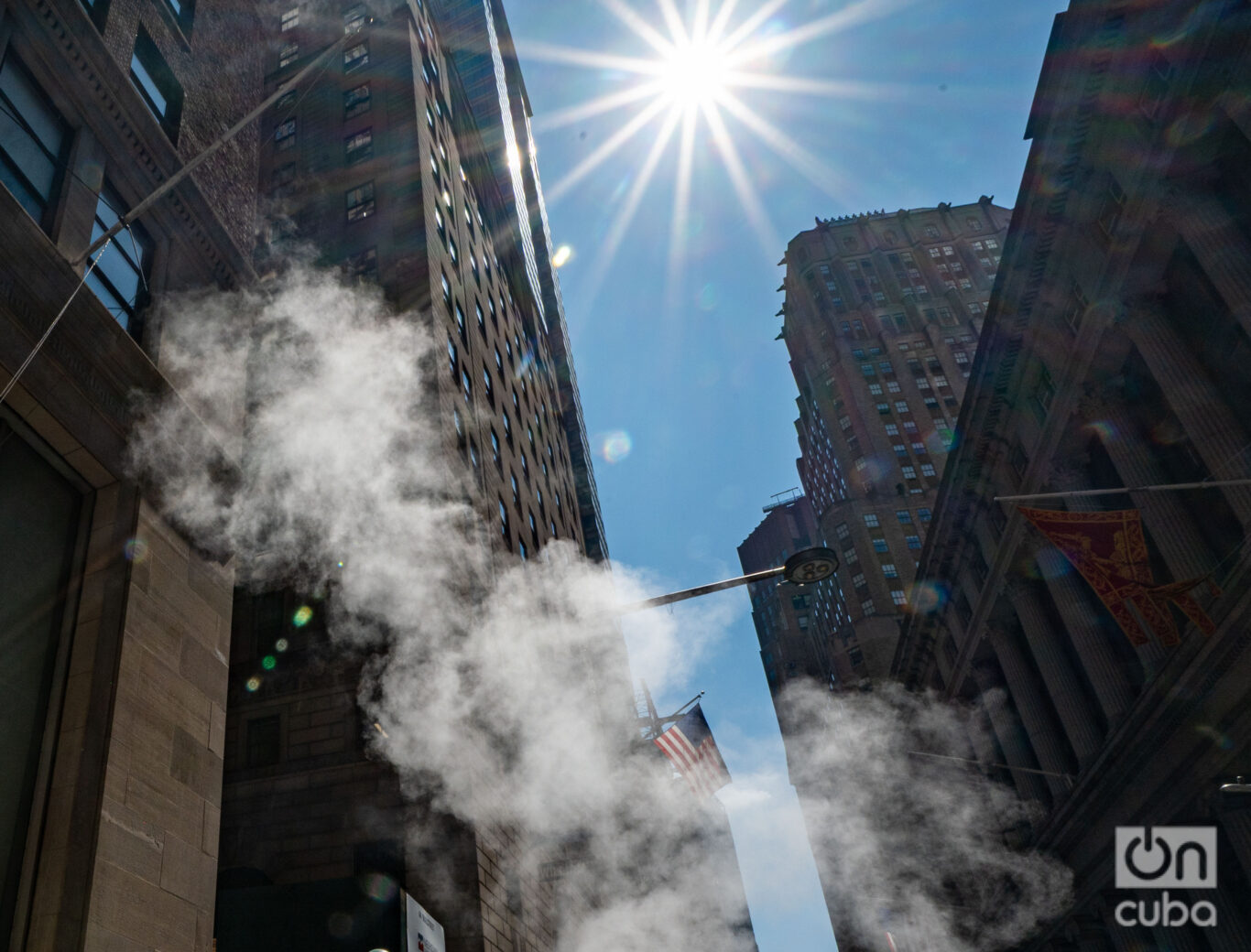
In addition to its scale, the system has a relevant environmental impact. Cogeneration—which allows the simultaneous production of electricity and useful steam—significantly increases fuel use efficiency. By taking advantage of the heat that would be lost in other plants, it reduces total energy consumption and, with it, emissions of pollutants such as nitrogen oxides (NOx), sulfur dioxide, carbon dioxide and particulate matter. This helps reduce the city’s carbon footprint compared to thousands of individual boilers operating separately.
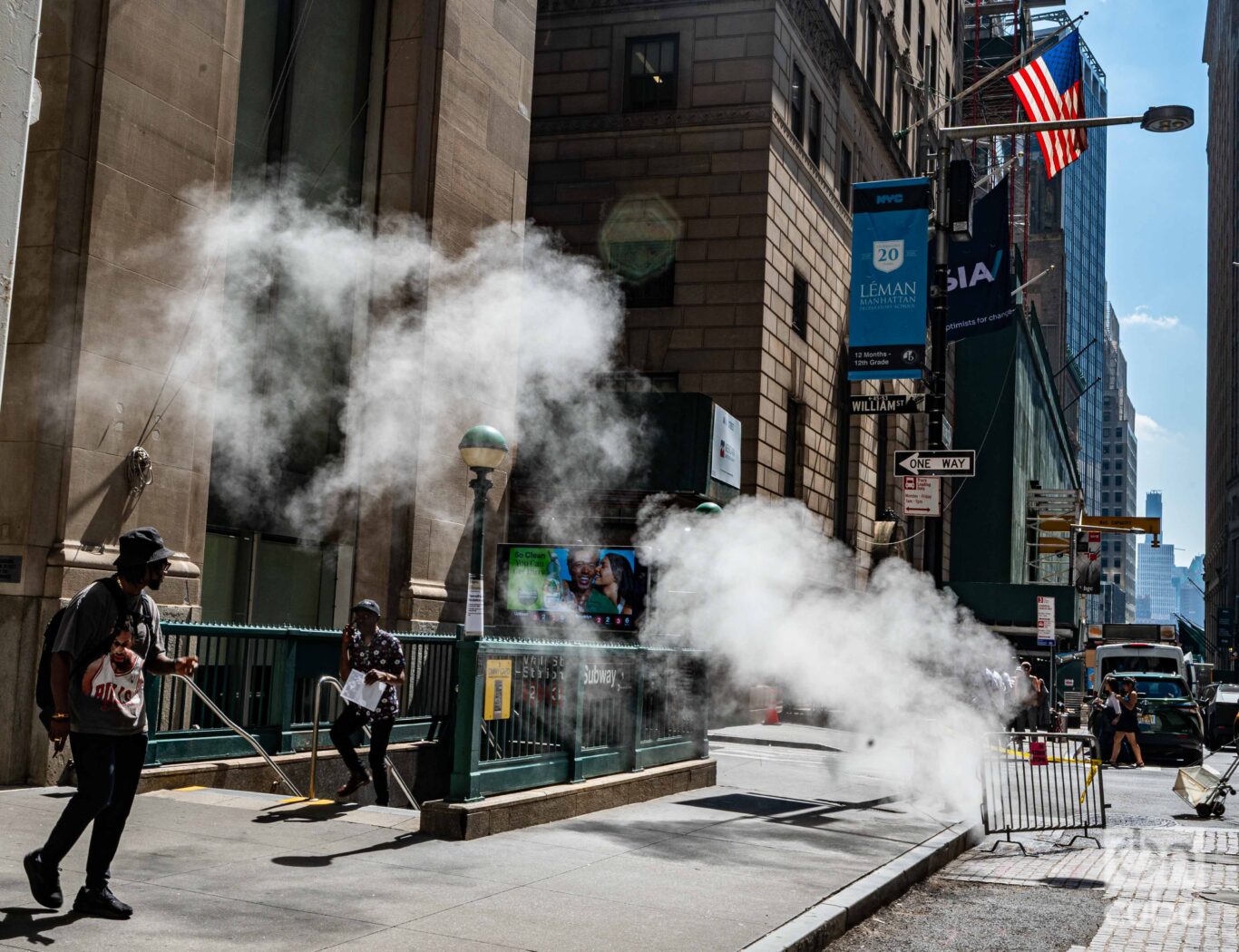
The steam that emerges from the sewers, in itself, is not polluting: it is simply water in a gaseous state. It does not contain smoke or toxic residues. Its direct environmental impact is minimal, since when it dissipates it condenses and returns to the natural water cycle. The environmental issue is not in the visible cloud, but in the source of energy necessary to produce that vapor. Although the system is more efficient than decentralized alternatives, it still depends partly on fossil fuels, so its carbon footprint is not zero. In recent years, the company has incorporated technological improvements to optimize processes and reduce emissions, and promotes the use of steam also for refrigeration through absorption chillers. These trigeneration schemes generate additional energy and further optimize fuel and pollutant savings.
When it rains or snows, water leaks through the manhole covers and comes into contact with very high temperature pipes. The result is immediate: the water evaporates and rises like a white cloud. That is why the phenomenon intensifies in winter and, in most cases, does not indicate a serious failure.
However, it can also be leaks. The wear and tear of centuries-old infrastructure occasionally causes specific leaks. They are not frequent, but potentially dangerous: the steam can come out at high temperatures and with enough pressure to cause burns.
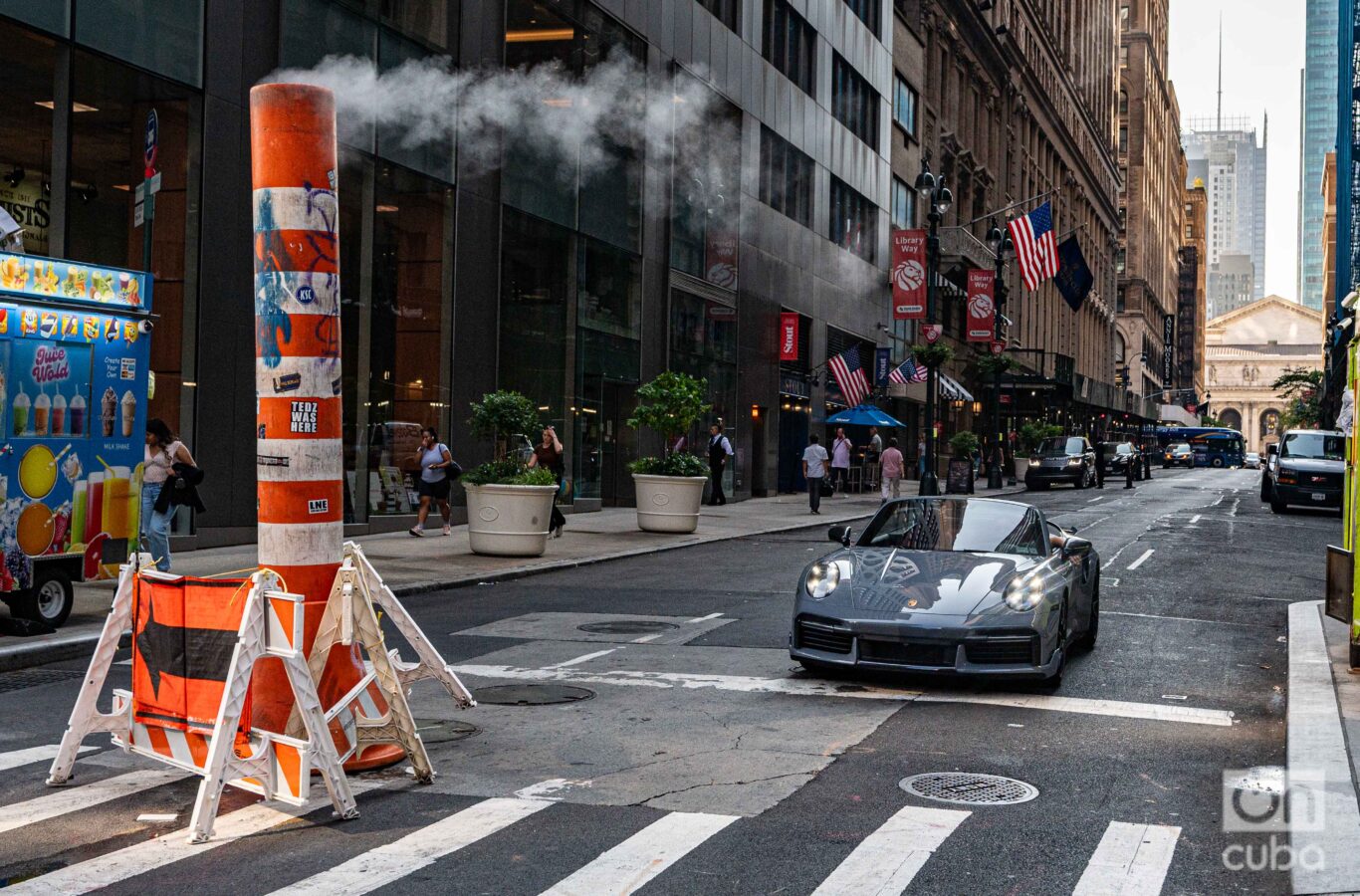
In any of these situations, the company usually places over the sewer the portable chimneys with orange and white stripes—sometimes completely orange—that are already part of the urban landscape. Its function is simple and effective: channel the vapor upwards to keep it away from pedestrians and vehicles, and allow traffic to continue. It is such a recognizable detail that just seeing it makes you instantly think of New York.
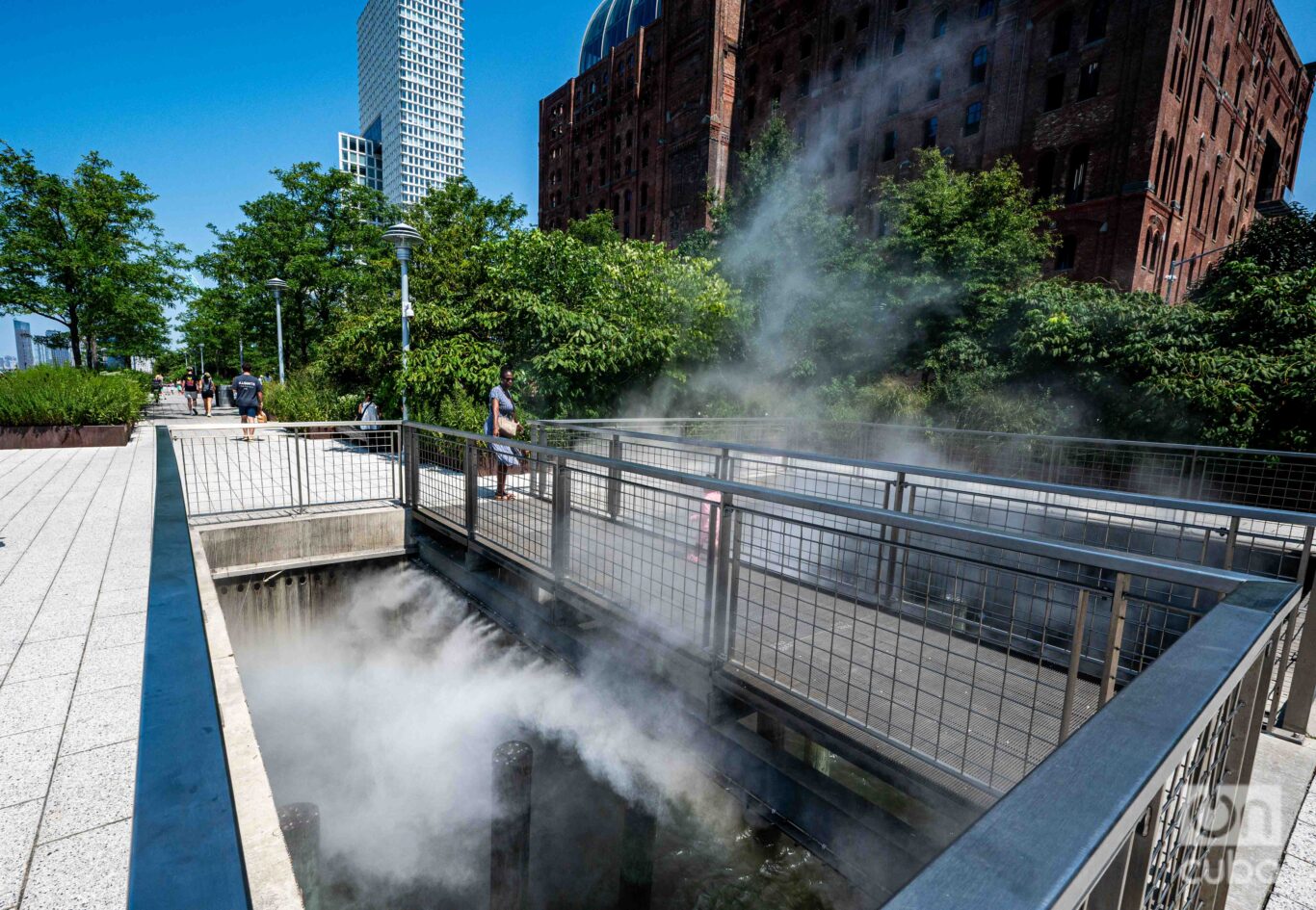
The paradox is that the system, despite its age, is still fully operational. The infrastructure, born in the 19th century, supports 21st century routines.
New York has always been a city of layers. On the surface, the rush and the noise. Underground, trains, cables and tunnels. And further down, that invisible river of steam that heats skyscrapers, protects works of art, cools buildings in summer and leaves, from time to time, an ephemeral mark—harmless but eloquent—on the asphalt.