Mentions and direct support for Nicolás Maduro on the international stage have stagnated as the days have passed, while the former Venezuelan ruler awaits a new appearance before a New York court. Political scientist Enderson Sequera points out that the statements from countries like China and Russia “have been quite timid and not very forceful” after the capture by the United States.
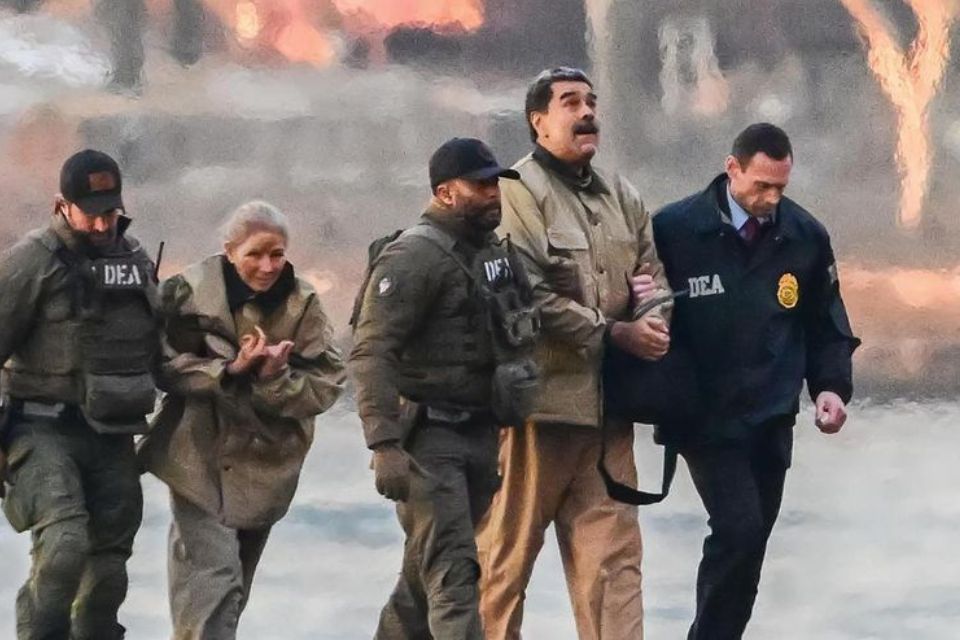
The geopolitical scenario after January 3 gave a tangible change for the “non-aligned” axis to the West. The capture of Nicolás Maduro and Cilia Flores in a United States military operation put in check the influence of nations such as Russia and China in the Latin American region.
Political scientist Enderson Sequera considers that Maduro “has been left alone” as the days go by. “The statements of Russia and China, in theory Maduro’s strongest allies, have been quite timid and not very forceful” after his capture. Neither Vladimir Putin nor Xi Jinping mentioned his capture or even the military attack in Caracas directly, and they have left it at the level of foreign ministries.
Although he points out that no mobilization of troops or Russian and Chinese military support was expected, “a little more solidarity in the rhetoric was foreseeable. That has not been seen. The hypothesis is proven that China and Russia used Venezuela as a platform for pressure against the United States, but they were never willing to have an alliance that went beyond economic and financial support at certain times.”
This strategic commercial vision has been maintained under the leadership of Delcy Rodríguez. On Monday, March 2, there was a meeting between Foreign Minister Yván Gil and director of the Latin American Department of the Russian Foreign Ministry, Alexánder Shchetinin, to review the “progress” of the “strategic cooperation” maintained by both countries, without giving further details about the topics covered by the conversations.
We have held a meeting with Alexander Shchetinin, director of the Latin America Department of the Ministry of Foreign Affairs of the Russian Federation, to review progress in strengthening our strategic bilateral cooperation. We also put… pic.twitter.com/L9yxYjt7Ag
— Yvan Gil (@yvangil) March 2, 2026
Just last November, the “Strategic Partnership and Cooperation Agreement between Russia and Venezuela” came into force, expanding cooperation in the political and economic sector, especially in energy, mining, transportation and communications, security and the fight against terrorism.
On February 5 of this year, Russian Foreign Minister Sergei Lavrov warned about the “open attempts to expel” Russian companies from the Venezuelan market by the United States. Companies such as Roszarubezhneft, a state-owned company that manages Russian oil assets in Venezuela, stated that they would continue to fulfill their obligations in the country.
«Economically, Russia loses little with the change of regime in Caracas: loans were difficult to recover, arms sales are paralyzed and oil projects were no longer profitable. The loss is fundamentally (geo)political. For the third time in two years, Moscow demonstrates its inability to protect a key ally and loses influence in a strategic region: first in the Middle East with the Syrian regime of Bashar al-Assad and then in Armenia in the South Caucasus. And now in Latin America,” has pointed out Mira Milosevich-Juaristi, senior researcher for Russia, Eurasia and the Balkans at the Elcano Royal Institute.
Russia also decided to lift the travel restriction to Venezuela on February 24, considering that Delcy Rodríguez and the rest of the authorities “have the situation in terms of maintaining public order under control.”
At that time, they reiterated their demand for an “immediate” release of the Maduro-Flores couple, regarding whom they have raised the possibility of grant asylum.
For its part, China has also privileged the diplomatic and commercial relationship with Venezuela without leaving aside sporadic pronouncements on the situation of the former Venezuelan ruler.
“The use of force against a sovereign State and the forced control over its president by the United States constitute hegemonic acts that seriously violate international law and violate the sovereignty of Venezuela. China supports Venezuela in safeguarding its sovereignty, dignity and legal rights,” has said the spokesperson for the Chinese Foreign Ministry, Guo Jiakun.
The Chinese ambassador Lan Hu has participated in direct meetings with representatives of the Executive, the last of them on February 27, while Venezuela has reported on the support of the Asian nation for the equipment of hospital units, as happened in the Ruiz y Páez university hospital complex (Ciudad Bolívar, Bolívar state) on February 6.
We have held a meeting with the Chinese ambassador, Lan Hu, to evaluate the good state of our bilateral relations. These cover diplomatic and friendship aspects, as well as high-level cooperation in various fields, within the framework of our “Association… pic.twitter.com/sdyh5w1YPs
— Yvan Gil (@yvangil) February 27, 2026
For political scientist Sequera, Venezuela “has a historic opportunity that, at the end of the tutelage, there is a free election in the country that results in the election of a democratic government.”
He assures that in this way, the country could insert itself again into the Western Hemisphere “as a very reliable supplier of energy and one of the closest allies of the United States” in the region, in addition to the “return to global financial markets” with the endorsement of a Trump administration that hopes to keep the sale of Venezuelan oil exports under its control in the short and medium term.
The post-Maduro regional scenario
Cuba, the eternal ally of Chavismo in the region, has maintained its complaints about US interventionism after the military operation of January 3. The island suffered its own casualties within that event, after reporting the death of 32 Cuban soldiers who were part of Maduro’s security ring.
However, the tutelage maintained by Donald Trump’s government on Venezuelan oil sales put in check one of the island’s main sources of financing and energy, a service that is going through its worst moment in recent decades due to recurring blackouts.
Trump himself maintains pressure on Cuba with the embargo and now the possibility of a “friendly takeover”, after the results obtained in Venezuela and Iran, where he has already given a negotiation ultimatum to the rulers of the Persian nation after the joint attacks over the weekend that caused the death of at least 48 people belonging to the ruling leadership, including Supreme Leader Ali Khamenei.
“We could very well end up having a friendly takeover of Cuba after many, many years,” Trump told reporters at the White House on February 27. “They are going through big problems and we could very well do something good, I think, something very positive for the people who were expelled, or worse, from Cuba and who live here.”
However, a day before reported on a new series of licenses from OFAC, attached to the US Treasury Department, to allow the resale of crude oil and other Venezuelan products to the Cuban private sector “for commercial and humanitarian use” on the island.
On the other hand, Brazil, whose president Lula da Silva maintains good relations with the Venezuelan government despite complaints about the last presidential elections and human rights, has insisted on the release of Nicolás Maduro due to the violation of international law.
Lula himself, 10 days ago, pointed out that the important thing “now is to restore democracy in Venezuela.” Regarding Maduro, he indicated that if he must be tried for any crime “it must be done in his country, not abroad,” since Brazil “cannot accept the capture of one head of state by another.” This issue, he said, would be raised in writing to Trump himself.
Enderson Sequera points out that the Rodríguez administration could resume relations with countries in the region, beyond the strictly consular, as happened with the Dominican Republic at the beginning of February, “especially if it continues to maintain the initial support and support of the United States.”
The challenge is in the medium term, says the political scientist. “The Rodríguezes will want to buy time to stay in power. But Venezuelan society will pressure for democratic guarantees that culminate in free elections.”
A new democratic government, Sequera reiterates, “would be in an unbeatable position to reestablish relations with the entire region, beyond the merely consular and immigration issues, including through energy, economic and even security cooperation agreements.”
*Journalism in Venezuela is carried out in a hostile environment for the press with dozens of legal instruments in place for punishment of the word, especially the laws “against hate”, “against fascism” and “against the blockade”. This content was written taking into consideration the threats and limits that, consequently, have been imposed on the dissemination of information from within the country.
Post Views: 202