Two global brands born from the work of their people.
Colombia News.
In the west of Boyacá, hidden between green mountains and a landscape that smells of humid earth and freshly roasted coffee, there is a place that surprised the world with two Guinness records that are as particular as they are extraordinary. There, where life goes by at the rhythm of the countryside and traditions still mark the calendar, a gigantic mango and a carpet of flowers woven by an entire community forever changed the history of a small town that never imagined going so far.
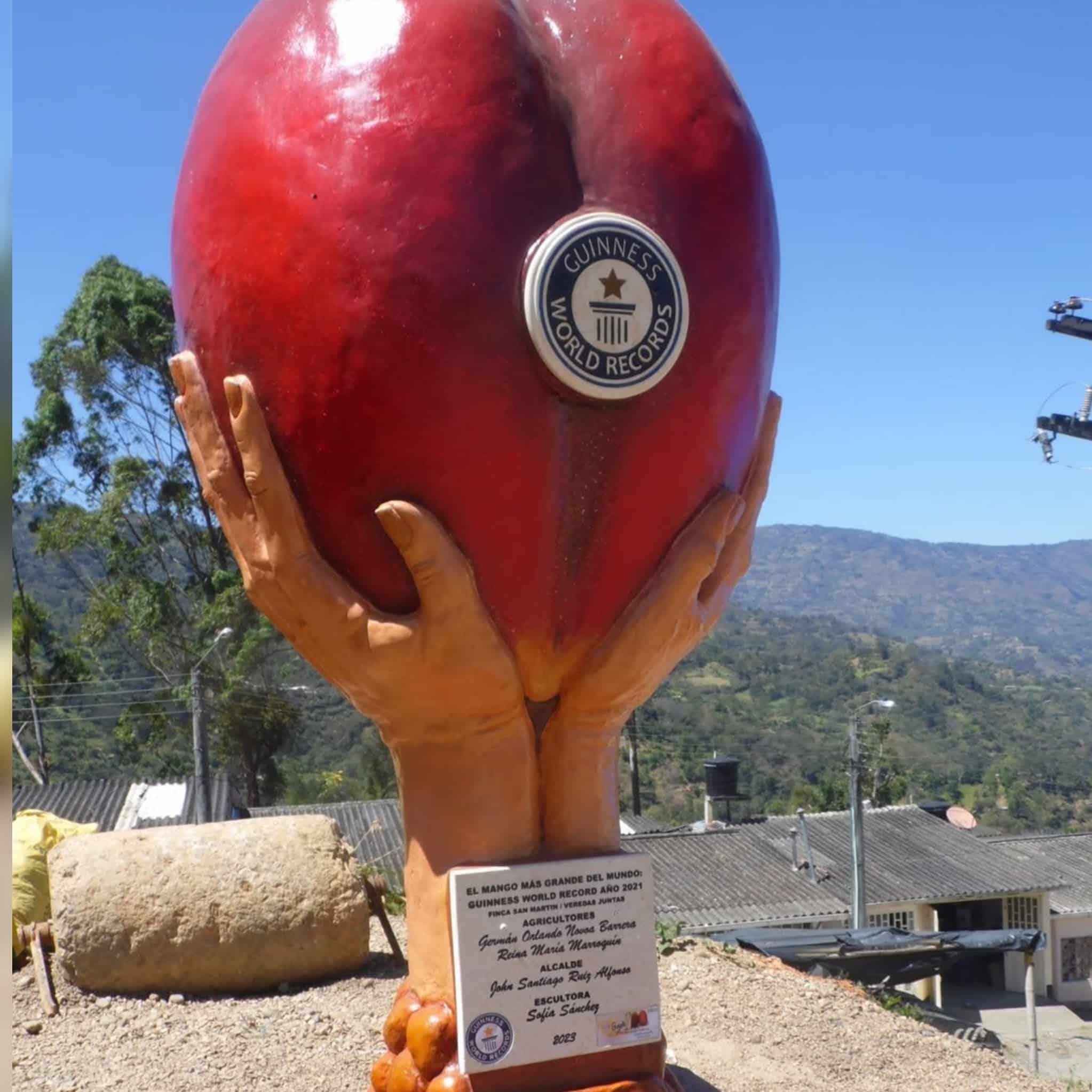
The most famous feat occurred in 2021, when a peasant family discovered, hanging from one of their trees, a fruit that was unlike anything they had seen before. Germán Orlando Novoa and Reina María Marroquín, workers at the San Martín farm, noticed that one of the mangoes was growing non-stop. The size was so unusual that they decided to weigh it along with their daughter. The result left them speechless: 4.25 kilograms. That enormous fruit far exceeded the world record in force since 2009 and would become, shortly after, the heaviest mango on the planet according to Guinness World Records.
The fruit was 23 centimeters high and had a circumference of 61.5 centimeters. It was so impressive that official Guinness representatives traveled to the farm to verify it. For the family, the recognition was more than an agricultural achievement: it was a symbol. In the midst of the pandemic, that giant mango became a message of hope about the power of the Colombian countryside and the love with which the land is worked.
But this little town had already conquered the world before. In 2014, during the celebration of Corpus Christi, its most emblematic tradition, hundreds of residents came together to create a monumental flower mat that toured the main streets. With an area of more than 3,199 square meters, the floral carpet obtained the Guinness record for the longest flower carpet in the world. The work, made with petals, leaves, seeds and wild flowers, not only showed the creativity of its inhabitants, but also their ability to work as a community. Each family contributed colors, figures and hands to give life to a centuries-old tradition that today is a national tourist attraction.
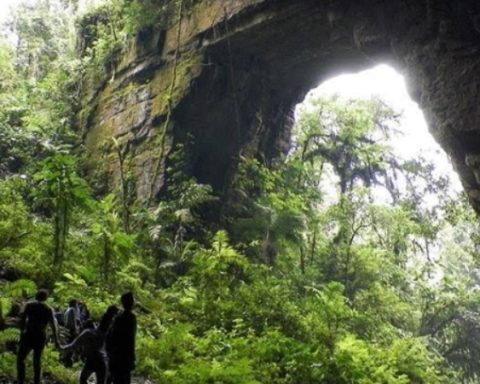
Beyond its records, this corner of Boyacá is a treasure for those seeking cultural and natural tourism. Its colonial streets, its stone church, its hand-painted balconies and its mountainous landscapes create a quiet atmosphere, perfect for disconnecting from the noise. The region also stands out for its production of coffee, lemon, avocado and the famous local mogollas and arepas that any visitor will fall in love with.
Added to this are its festivities, full of carranguera music, peasant cuisine and traditions that are kept alive thanks to the community. Fairs, festivals and religious celebrations are part of the annual calendar and reflect the identity of the town and its pride in what they have achieved together.
Today, this place continues to surprise. Their records are not simple curiosities: they are proof that collective work, dedication and love for the land can turn a small Colombian town into the protagonist of stories that travel the world. And for those looking for authentic destinations, full of tradition and beauty, this corner of Boyacá is an open invitation to discover how a giant mango and thousands of flowers can tell the story of a territory and its people.