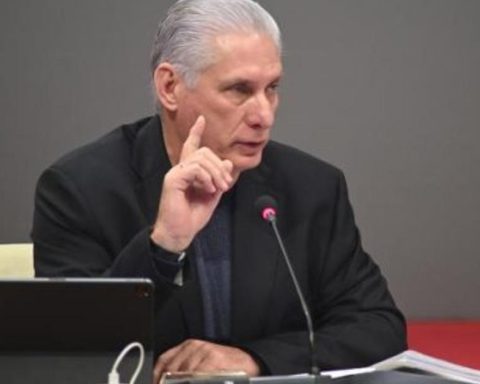
Havana/The Cuban crisis is “systemic” and it is likely that its planned economy model has reached “the limit,” the renowned Cuban economist Pedro Monreal maintains in an interview with EFE, who emphasizes that the first step of an economic reform must always be “political.”
“The current situation is very critical, more critical than in the special period, between 1990 and 1993,” he points out in relation to Cuba’s worst crisis to date, the one that followed the collapse of the Soviet bloc in Europe.
This doctor in Economic Sciences from the University of Havana, who has taught and researched for decades in his country and abroad, currently resides in Madrid and is a reference for his analysis on social networks related to current Cuban news.
He explains that the economic contraction was greater in the special period, but that now, after five years of deep crisis on the island, the “fall is more sustained and there is no way out in sight.”
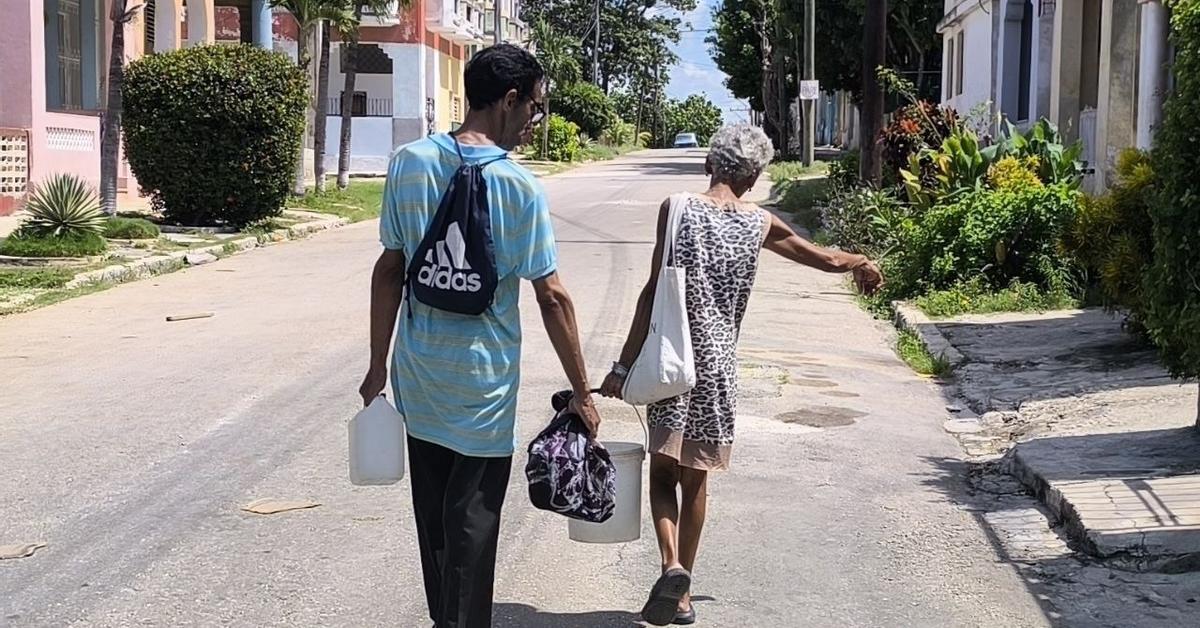
Cuba suffers from shortages of basic goods (food, medicine, fuel), prolonged daily blackouts, strong inflation, recession, growing dollarization, mass migration and an accelerated deterioration of living conditions.
“I believe that the limit has been reached in the ability to adjust a centralized planning system,” Monreal analyzes and indicates that “after successive modifications without eliminating the structural problems” of the country – but only some of their consequences -, the measures adopted by the Government have “decreasing effects.”
“The economy continues to decline and the crisis has no way out, it is not resolved. Whatever is being done is not having results”
“The economy continues to decline and the crisis has no way out, it is not resolved. Whatever is being done is not having results. Are we at the end of a regulation model of almost 60 years? It is likely,” the answer is.
Monreal draws an alarming panorama. It highlights the “totally collapsed levels” of agricultural production, which “continue to fall like a lead from the peaks of 2016-2018,” and warns of a “very, very serious” food security crisis.
It also warns about the energy situation, with the repeated breakdowns in the obsolete thermoelectric plants; the budget deficit; the loss of carrying capacity of the tourism sector; the lack of “productive support” of the Cuban peso; and the collapse of the purchasing power of salaries by 30% in just four years due to inflation.
In his opinion, Cuba is in a “systemic crisis”, “a profound and prolonged alteration of the matrix” of the economic model that affects its pillars. “It is the type of crisis from which a country cannot recover from within the framework of the system,” he says, and regrets that the country’s leadership does not seem willing to assume the “radicality” of the necessary changes.
“All economic reform is a political act,” emphasizes this economist, who maintains that the maintenance of the planned economy in Cuba “has to do with political insistence, not so much economic.”
The lack of political action in this area, in his opinion, can only be understood for two reasons. Firstly, due to the attempt to “preserve the power” of the Government and the Communist Party of Cuba (PCC, the only legal one) because, as happened in almost all other socialist economies, these needs “dictate the pace and direction of the reforms.”
The second, he points out, is the fear that economic changes could modify the “institutional functioning”, diversify the interests of the elites, with the subsequent “fragmentation” of the country’s leadership.
In his opinion, the “calculation” of these elites is that “it is preferable to assume the risk of economic disintegration,” trying to shore up only “the most critical elements,” than to launch “more radical reforms that could completely disrupt” the power structure.
“In Cuba, the very great risk is obviously recognized that the loss of economic dynamism will drag the population into a social crisis that will transform into a political one, of which sparks have been seen”
“In Cuba, the very great risk is obviously recognized that the loss of economic dynamism will drag the population into a social crisis that will transform into a political one, of which sparks have been seen,” Monreal points out.
Regarding the government program to correct distortions and re-boost the economy, which has been implemented in dribs and drabs for almost two years, Monreal points out inconsistencies and inconsistencies: “It is an attempt to resolve a structural crisis without substantially modifying the framework.”
He considers that the program, which mainly included budget adjustment measures and partial dollarization of the economy, has no signs of achieving its objectives because “it continues to maintain an idea that the system can be recomposed based on – I say – cosmetic modifications.”
One of the measures contemplated in that plan is a reform of the monetary system, deeply strained by the so-called Ordering Task of 2021, a failed attempt by the Cuban Government to remove the dollar from the local economy. “It is a disaster, which turned the Cuban economy upside down more than anything else,” considers Monreal.
However, any action in this area is now also complex, he acknowledges. The economist does not believe that the Government is going to unify the exchange rates (currently two official ones, both very far from the informal one) nor that it can establish a new rate guided by the fundamentals because it would be “starving the country.”
As to whether it would be a floating exchange rate, as the Government advanced at the end of last year, Monreal also has doubts. A “dirty float” between two bands would be more likely, although that would imply that the central bank had currency to defend the rate.
The Government has indeed been “successful” in reducing inflation and the public deficit, the economist points out, but this has been achieved by “basically impoverishing the country,” due to the fall in the purchasing power of state workers and cuts in services.