Santo Domingo.– The assignment of 4 percent of the Gross Domestic Product (GDP) The Ministry of Education substantially improved the income of teachers in the public sector, but it did not change the harsh reality and miserable salaries of thousands of teachers who serve in the private sector.
Under the principle of free enterprise, schools establish their salary scales without state regulation, generating a structural inequality that affects teachers’ pockets.
The testimonies collected among teachers from Santo Domingo Este, Los Alcarrizos, San Cristóbal and the National District reveal the discrepancy in monthly payments between both segments (public and private) knowing that they are doing the same work, with marked differences in terms of marginal benefits and the facilities they have to teach classes.
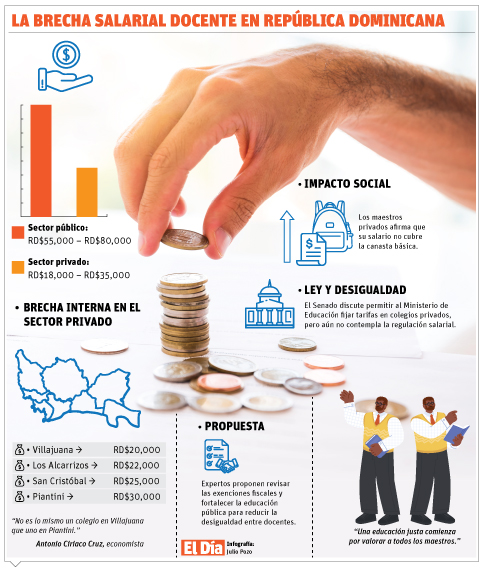
According to data from the Ministry of Education, the average salary of a public teacher is around RD$65,578 After the most recent increase in 10% that was applied to these. While private sector teachers receive between RD$18,000 and RD$35,000 monthly payment, without incentives for seniority or contractual stability.
Salaries contrast with school rates
In Los Alcarrizos, a mother with two children enrolled in a private community school pays RD$1,800 a month for primary school and RD$2,500 for secondary school. In the same area, a semi-private evangelical-oriented center charges an annual tuition of RD$8,000, not including additional services.
In San Cristóbal, the parents consulted pay between RD$4,000 and RD$5,000 monthly in traditional private schools, while in Santo Domingo Este, a mother reported that she pays RD$7,000 monthly in a semi-private secondary school.
These rates contrast with private schools in the National District where, for example, a mother with two children at the initial level (until noon) pays RD$16,000 monthly; and in a high-level bilingual center, the annual enrollment ranges between RD$225,000 and RD$240,000. Even so, the teachers interviewed confirmed that their salary does not exceed RD$30,000 monthly.
In popular neighborhoods, school fees vary depending on the economic capacity of the families and the type of institution.
The gap generates a flight of teachers
“The gap does not respond only to a sectoral difference, but also to a geographical one, there is a segmentation even within the private sector: a school in Villa Juana is not the same as one in the exclusive Piantini sector,” says economist Antonio Ciriaco Cruz, dean of the Faculty of Economics at the Autonomous University of Santo Domingo.
For him, the absence of regulation causes a constant flight of teachers from the private sector to the public, in search of stability and better income.
In fact, in newspaper reviews from 2022 published by El Día they reported on the “teacher flight” from the private sector to the public, a situation that, as stated, was generating a crisis and affecting the functioning of private educational centers.
According to the publication of El Día, the main reason for teacher flight from private schools to the public sector was that the teachers who participated and won the Teaching Opposition Competition of the Ministry of Education were being appointed by the State, which offered them greater job benefits, stability and better salary conditions than those they received in private centers.
Disparity in rates
In popular neighborhoods, school fees vary depending on the economic capacity of the families and the type of institution.
The economist Ciriaco observes that the State maintains alliances with religious and semi-private schools, mainly Catholic, to expand educational coverage.
Through the Support Program for Educational Centers (PASE) and agreements with institutions such as the Salesian Society, the Government covers part of the cost of teaching staff, while the centers assume other expenses with reduced tuition.
However, these alliances do not guarantee salary improvements or job stability for the teachers involved, which reproduces inequality within the system.
The testimony of those who teach
From the Dominican Association of Teachers (ADP), leader Meregildo De la Rosa attributes the problem to the lack of a framework of clear labor rights, as also occurs in other professional branches.
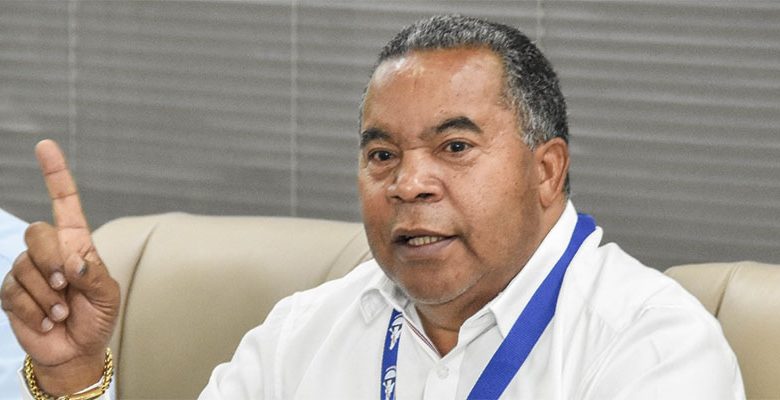
“The teacher in the private sector does not have a teaching career; they are contracts per school year, without incentives or stability. They should organize to negotiate fairer conditions.”
A secondary school teacher interviewed from a private educational center, who asked not to be identified, with more than ten years of experience, simply responded: “We do the same work as those in the public sector, but they pay us much less; we are forced to give private tutoring to pay the bills.”
Free enterprise and inequality
The president of the Citizen Collective for Educational Quality, Juan Valdez, agrees that the root of the problem is structural.
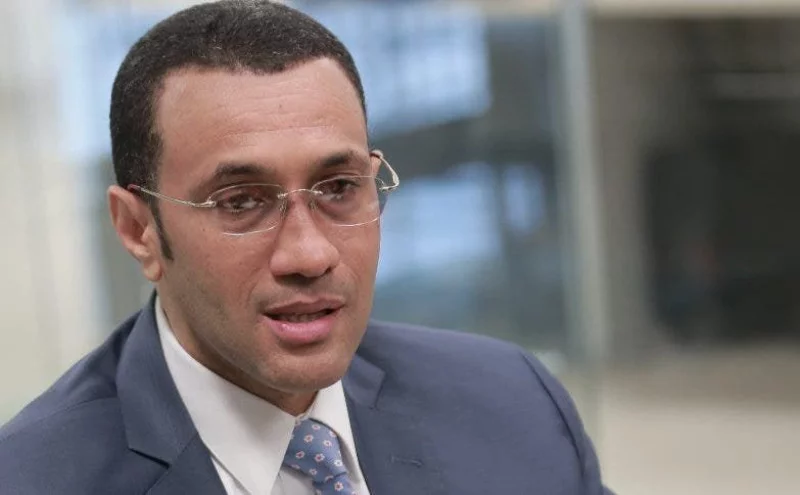
“In the private sector there is no fixed rate or regulation. Schools operate under the logic of supply and demandValdez explained after recognizing that this logic of the free market allows entrepreneurial freedom, but also deepens inequalities between teachers from different social strata.
Proposals and possible solutions
The economist Ciriaco Cruz proposed that, within a tax reform, are limited exemptions tributary to schools with higher incomes, to prevent tax benefits from ending up favoring the richest.
He explained that, through the Educational Expenditure Law, formal families can deduct payments for their children’s education from the Income Tax. However, this benefit is concentrated in middle and upper class taxpayers, who have formal jobs and file sworn declarations, while the popular sectors and community colleges are left out.
“Large schools, such as upper-middle and upper-class schools, are the ones that benefit the most from this mechanism. On the other hand, small or community schools do not receive that support,” Cruz said.
Hence, the economist considers that, in a possible tax reform, the exemptions should be conditioned by the income level of the families and the type of institution, to prevent public incentives from ending up widening the gap between elite and low-cost schools.
For its part, the ADP suggests creating a union figure for private teachers, in order to establish base salary agreements and minimum working conditions supervised by the Ministry of Labor and the Ministry of Education.
Free enterprise will continue to be a valid principle in private educational management, but the absence of minimum limits perpetuates inequality. Guaranteeing decent wages does not mean eliminating the autonomy of schools, but rather balancing the right to compete with the right to teach and live with dignity.
This report is part of the final work of the Diploma “Countering misinformation and hate speech”, taught by the Pontifical Catholic University Mother and Teacher (PUCMM) with support from UNESCO.
The idea of this work is to promote a responsible journalism, based on data and evidencewhich contribute to making visible the structural inequalities of the educational system without resorting to misinformation or polarizing narratives, instead promoting a constructive debate aimed at finding solutions.
Anything else.-
Regarding public policies, the Senate approved in first reading the modification of Law 86-00, which would allow the Ministry of Education to regulate fees for re-enrollment in private schools, but does not contemplate salary regulation, which opens the debate on the role of the State in the face of educational inequality.