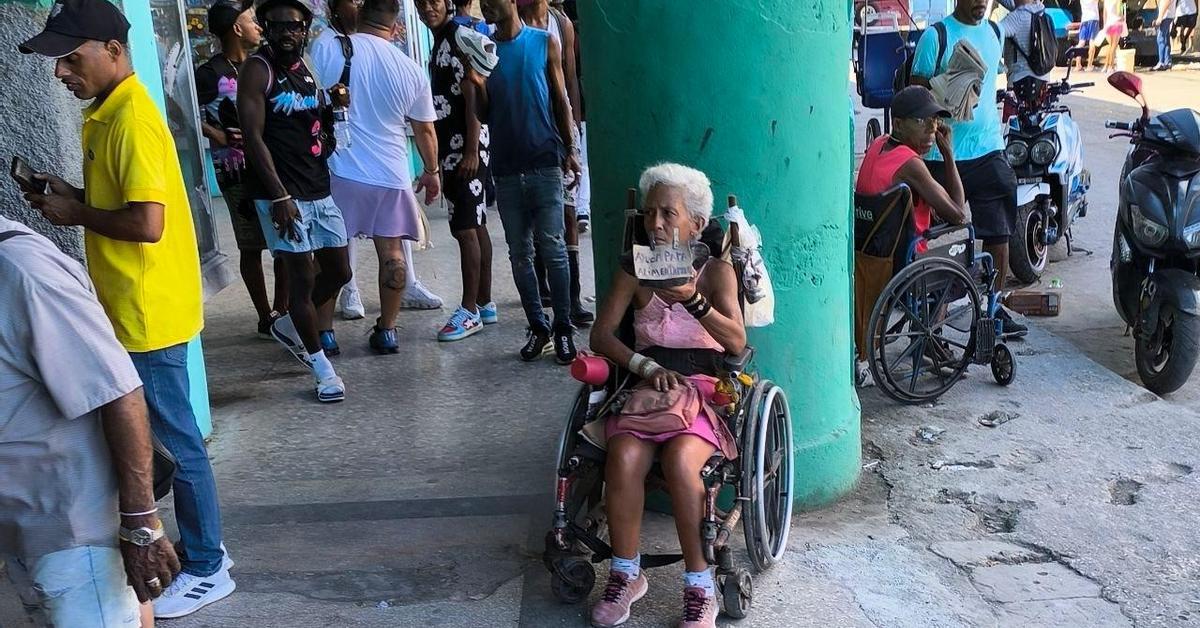
Havana/With graceful hair, deteriorated clothes and lost look, a man rested on Wednesday on a wall of Carlos III Avenue, cast with the landscape of deterioration that surrounded him. Another old woman, in a wheelchair, held a sign in her hands that said: “Help to feed me.” On the same sidewalk, an octogenarian messenger advanced slowly, with his cane, to distribute the purchases that others had commissioned him. These are some of the images of this October 1 in Cuba, declared by the UN as International Age People.
In a country where the population pyramid is invested rapidly, retirees survive with pensions that barely cover the cost of a bread bar and a pound of rice. Many of those who gave their best years and ideas to the promise of “social justice” and “dignity” today contemplate disappointed misery and abandonment that surrounds them.
One of the stories that best illustrates this contradiction is that of the high price of the antianemic trofin in international pharmacies of Havana, while its creator, Dr. Raúl González Hernández, Sell coffee On the street to subsist.
/ 14ymedio
The complaint, made a few months ago by his daughter Elizabeth, highlighted the reality of many retired professionals. At 80, the researcher who headed the development of a registered and applied medication for decades, and which appears in the export catalogs of Cuban biotechnology, is a street vendor to complement his meager retirement.
Meanwhile, the trofin bottle is sold this Wednesday at $ 21, equivalent to three months of pension of a Cuban retiree.
The creator of the medicine itself – whose name appears in scientific articles and clinical studies since the 1990s – has not guaranteed access to its invention or economic recognition for authorship. In the Cuban model, patents remain in the hands of state institutions and researchers barely receive diplomas or honorary mentions.
According to official figures, more than 22% of the Cuban population exceeds 60 years, and the projections for 2030 anticipate that the island will be one of the most aged countries in Latin America. However, social and health policies do not accompany that phenomenon. The scarcity of basic medicines and the pensions that strive in a couple of days, add to the mass exodus of young people. For some, leaving the country is the only way to financially help their relatives in Cuba; For the elderly, it is almost a condemnation to die in solitude.

/ 14ymedio
In the midst of that rawness, the dollar medicine market lifts an additional wall. International pharmacies, administered by the GAESA conglomerate, offer imported supplements, brand medications and personal care products, only, in cash dollars or currency cards, a privilege reserved for those who receive remittances or work in sectors linked to tourism.
On the other side of the street are state pharmacies, in pesos, but empty. For months the most prescription antihypertensives, anxiolytics or basic analgesics have been scarce. In the last days of September, another recognized scientist, the neurologist Néstor Pérez Lache, 85, was thrown into the void from the bridge of Santa Catalina y Vento, in Havana, in Havana, ending your life.
The official Cuba will repeat slogans this October 1 and put flowers in the busts of its heroes. But in the other Cuba, that of the old people who survive with pensions of misery, that of abandoned scientists and that of dollarized pharmacies, there will be no reasons to celebrate.