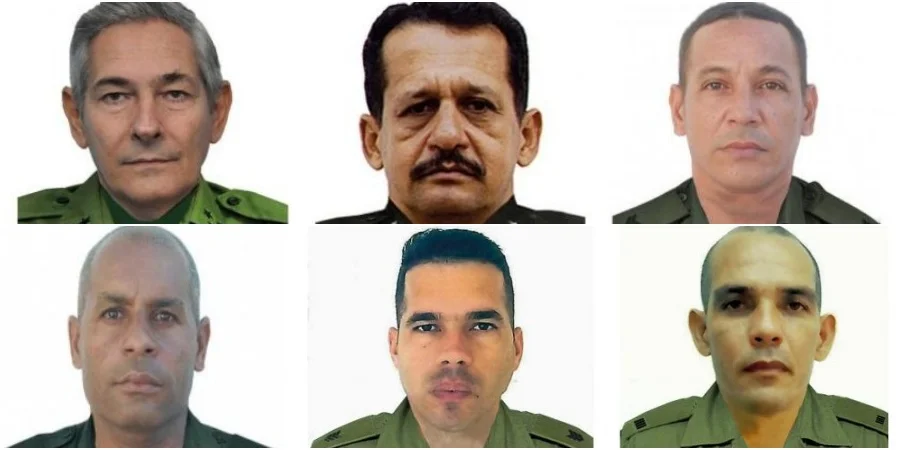
This Tuesday, the official Cuban press published for the first time a list with the names of the 32 Cuban soldiers who died in Venezuela during the US operation.
HAVANA.- The Cuban authorities informed the relatives of the captain of the Ministry of the Interior Adriel Adrián Socarrás Tamayo, 32, that it will not be possible to repatriate or deliver his remains after his death in Venezuela, which occurred last Saturday during the events linked to the capture of Nicolás Maduro.
The notification was transmitted by military sources and Communist Party officials in the Yara municipality, Granma province, where part of the officer’s family resides. According to what a relative told Martí Newsthe arguments offered allude to the war situation in Venezuelan territory and the operational limitations at airports, although without providing specific information about the exact circumstances of the death or the location of the body.
“They tell us that right now it is not possible to bring the body, that the country is at war and there are restrictions, but no one has told us clearly how he died or if they really have the body,” explained a close relative.

Socarrás Tamayo was identified as one of the 32 Cuban soldiers who died in Venezuela during the US operation on January 3 to cseize and extract the dictator from the countrywho remained a fugitive from United States justice. A native of Yara, although residing in Matanzas with his wife and two children, the captain belonged to a military unit in that province. The head of said unit also contacted the family to confirm the news.
According to family testimony, the officer was part of Maduro’s security ring and died during an armed confrontation. “His boss said that he was in the security cordon and that he died fighting, shot by shot,” said the source.
The captain had been deployed in Venezuela for around two years. Although his family knew that he was carrying out a mission in that country, they did not know that he was part of the direct protection scheme of the Chavista ruler. “They never talk about those things. He never explained what he really did,” the relative added.
During his stay abroad, Socarrás Tamayo sent part of his salary to his mother and wife through bank transfers. His last vacation period in Cuba was last year.
This Tuesday, the official Cuban press published for the first time a list with the names of the 32 soldiers of the Island who died in Venezuela during the US operation.
The Cuban regime maintained that the deceased “were carrying out missions at the request of counterpart bodies in the South American country,” despite having denied for years the presence of Cuban military personnel in Venezuela. The list includes high-ranking officers as well as reserve soldiers.
The confirmation of these deaths reinforces the evidence about the deep level of penetration of Havana into the structures of the Chavista regime.