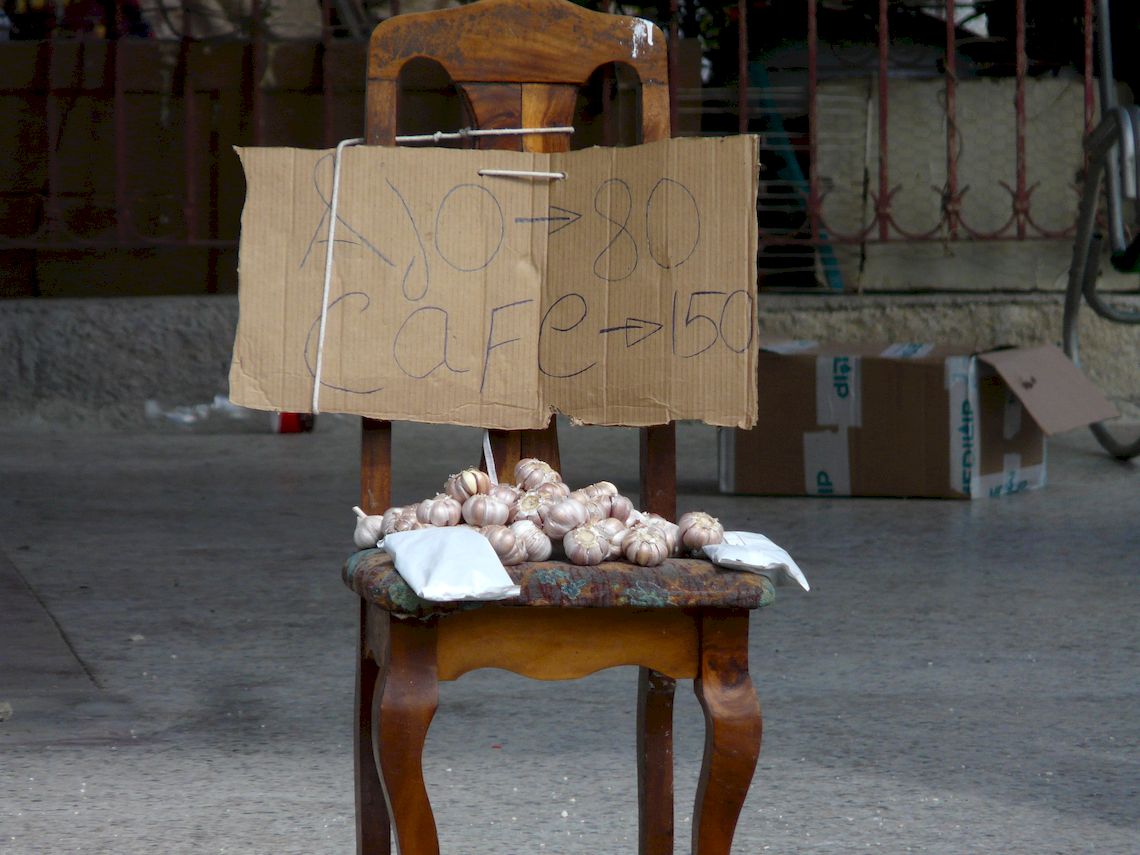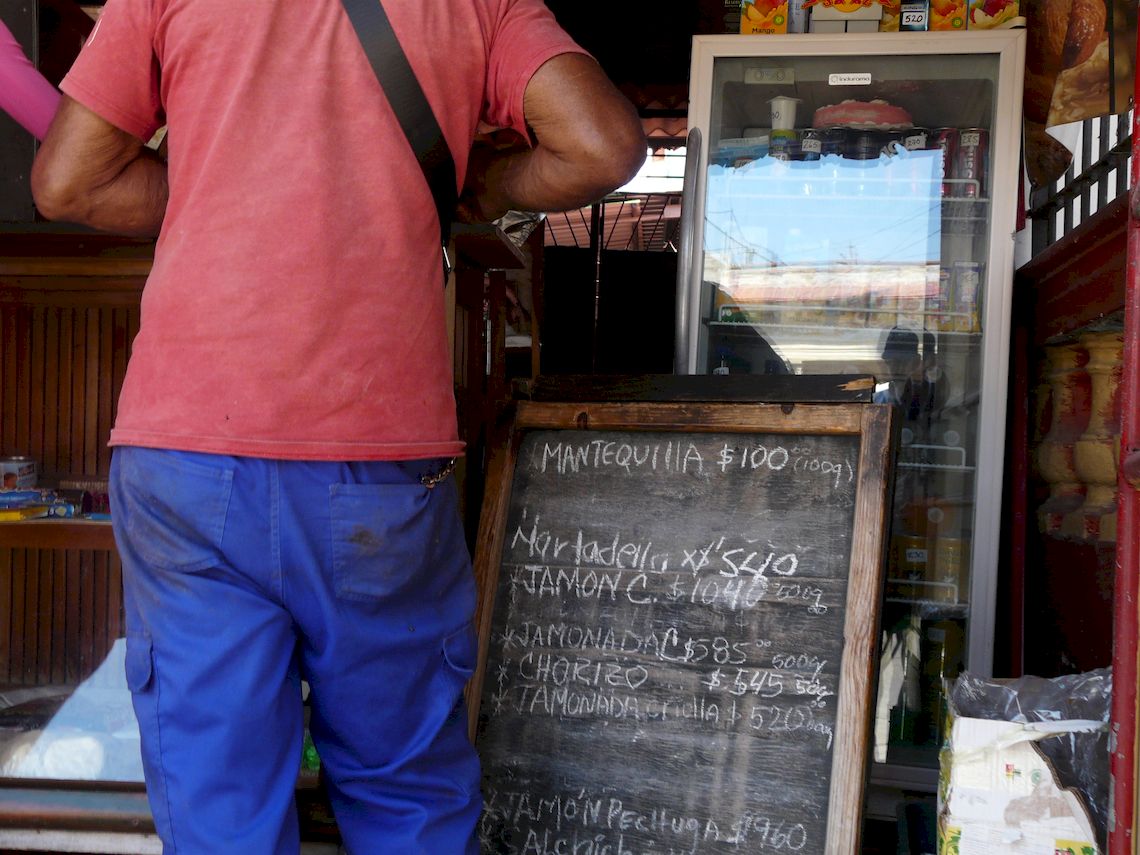
“The room is the same.” This is how the girl behind the counter of one of the private wineries in La Víbora responds, pointing towards the blackboard. He said it with a half smile, backed by a mischievous gesture and not associating – “I don’t know who you are referring to” – the bolero of the Puerto Rican Mundito Medina, which went viral in the late 1940s. Cuban singer Panchito Riset. His extraverbal language responds to current politics and not to a victrola melancholy.
“So far nothing has gone up… or almost nothing,” he adds about the prices of the products he sells at retail. At the moment, the guava pastries, which are the hormonal madness of many in the neighborhood, remain at 100 CUP.
Although an upward tsunami has not yet reached food MSMEs, as has already happened in the private transport sector, after the oil blockade decreed by the Trump Administration On February 2, some articles have begun to climb with climbing shoes.
In another nearby winery, six rolls, whose Lilliputian size recalls the snacks at birthday parties, have already “jumped.” From yesterday at 200 CUP to 210 CUP today; while a kilogram of whole milk went from 2,300 CUP to 2,500 CUP and a cola “cucumber,” like its lemon and orange counterparts, left its 700 CUP box to “take refuge” in the 780 CUP box.
“Don’t complain to me and buy now, because things are cheaper than ever,” warns, also giving a smile, the saleswoman of the place, seated in an air-conditioned carport which they roofed with a gigantography alluding to the 7th Congress of the Communist Party.
The event took place in April 2016, in the middle of the “thaw” with the United States, to conceive an economic model leveraged by a zigzagging reform that later foundered definitively in 2021 with the so-called Ordering Task.
In the neighborhood, several timbiriches cook pizzas. The simple ones, cheese and flour and a tomato dew, moved the pendulum from 180 CUP to 200 CUP, and in the blink of an eye the additions have become products not suitable for the faint of heart. The family pizza has already reached the 1000 CUP barrier. “They hardly come out,” said a customer in front of the business.
The national snack
But what most psychologically and economically dismantles families is the dismantling of the national dish: rice and beans. Uphill, both products have gone hand in hand on the inflationary runway from year to year.
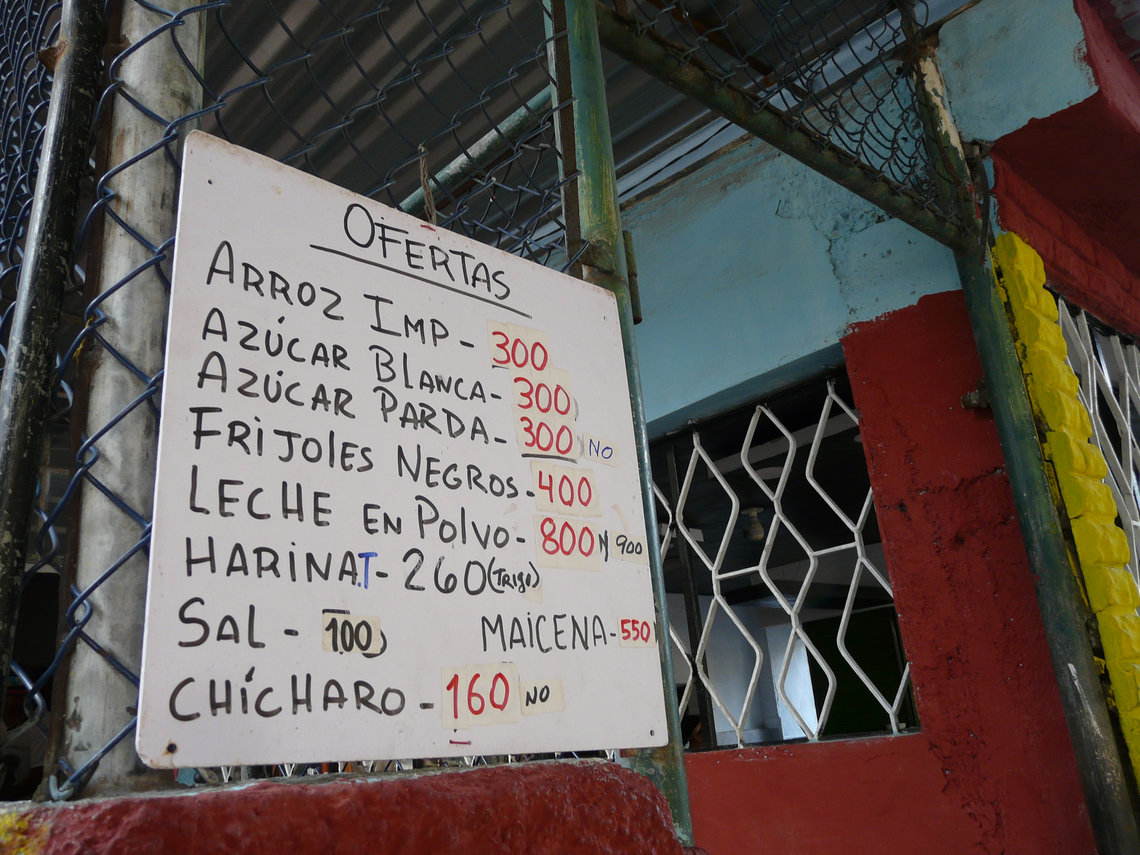
In the most popular grocery store in the community, bulk imported cereal “until recently it was at 260, then it went up to 280 and now they put it at 300,” says a tall old woman in the short line at the warehouse to “get the Chinese donation pound” and the “two January books.”
She explains the upward climb of the dollar. Rebound effect. “Every time it goes up, everything goes up too,” he says with a doctrinal air.
Merchants outside the temple
In Canaán, an improvised farm in the old garden (now an esplanade of vacant land, with rammed cement slabs), of a regal house from the 1940s, one of the owners aligns himself with the criteria regarding the bossy stewardship of the dollar.
“Prices are rising not so much because of fuel shortages, but because of the dollar, which is at 500 pesos,” explains this young evangelical, whose tablet shows a pound of black beans at 400 pesos and a similar amount of taro at 260 pesos, compelling examples of the blind laws of the market.
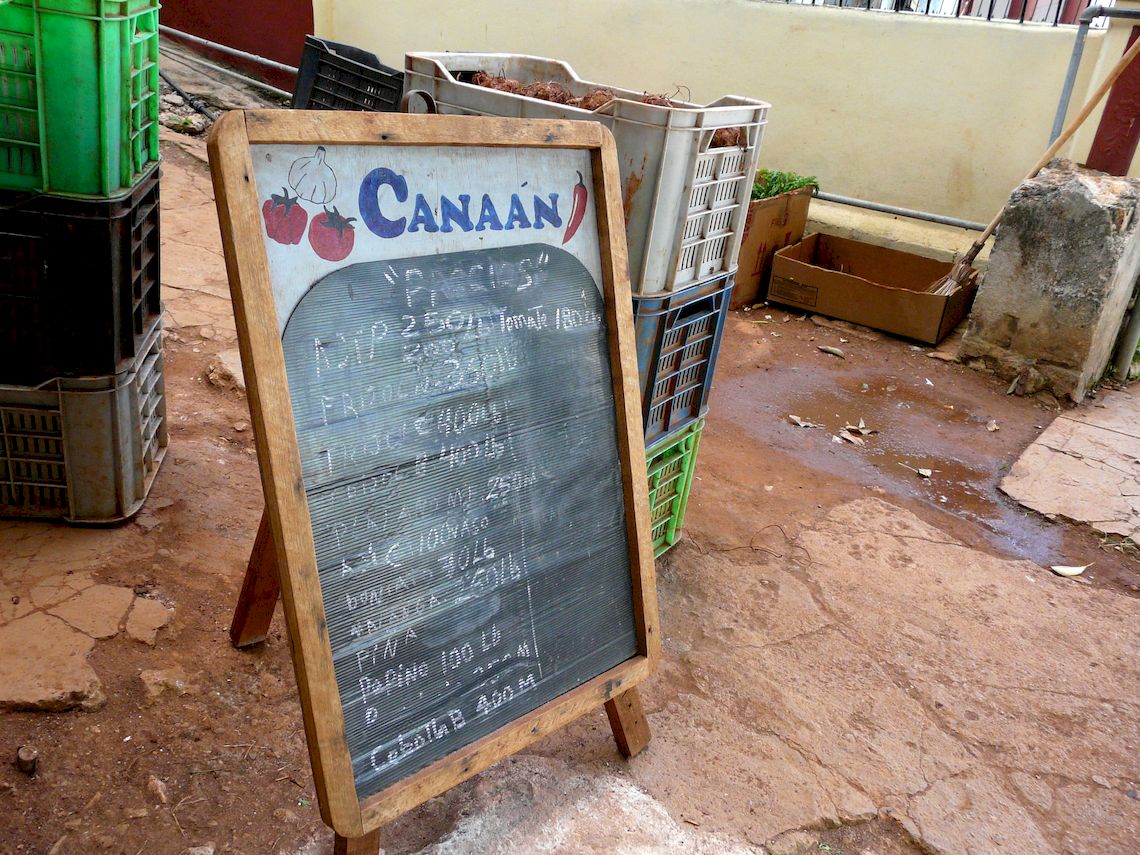
However, he recognizes that Trump’s oil fence has put “fuel through the roof.” The products that Canaán sells are brought from the province of Mayabeque, where the liter of oil has moved the financial needle from 400 pesos to 1,200 pesos today.
“They will have to multiply the miracle of wine,” I say, thinking about oil and alluding to the name of the business. “That happened in the Bible, but it won’t happen in Cuba,” he responds, “where we are impious,” he says with a grim expression.
Malanga and a food stall
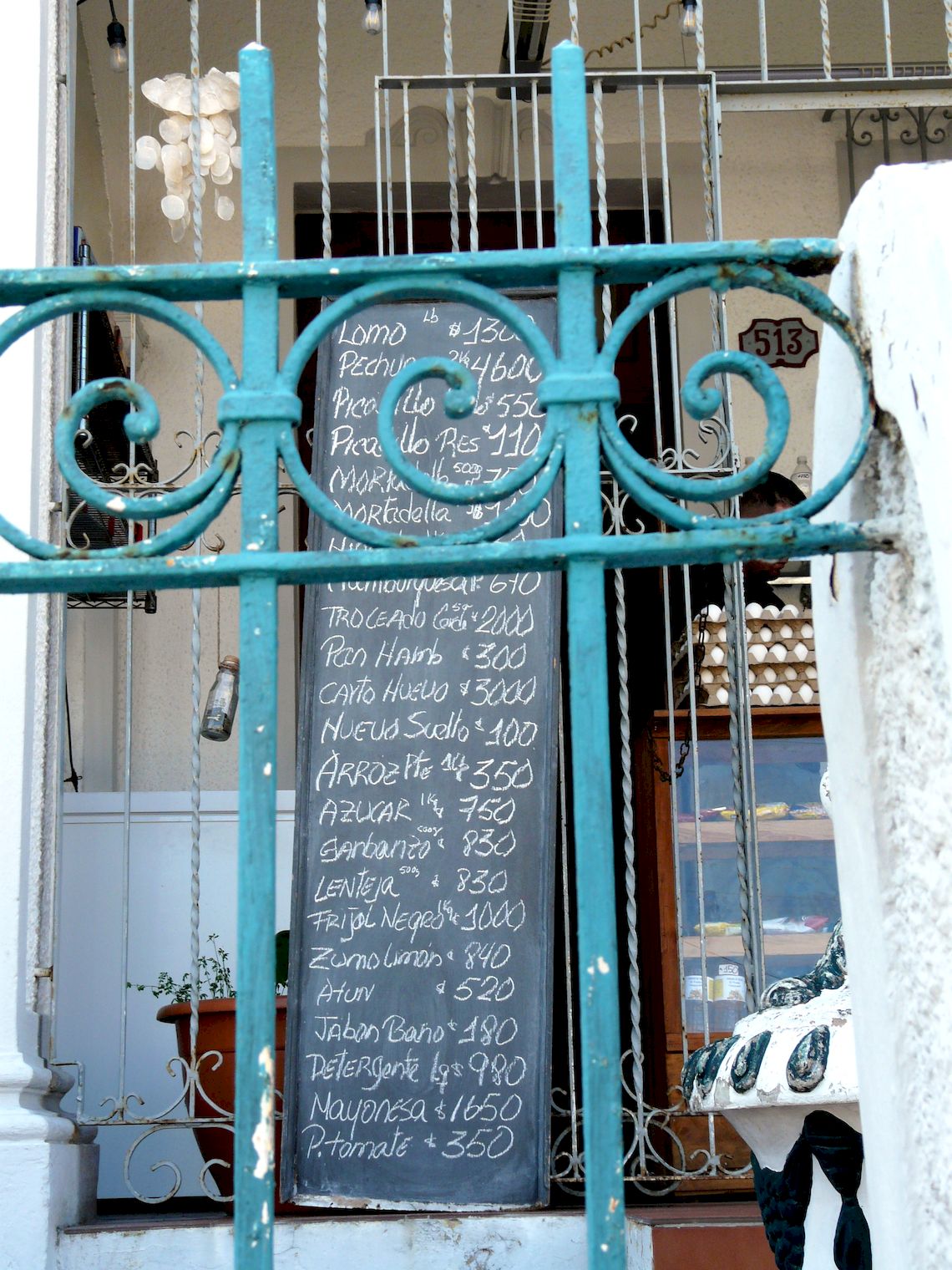
In another of the community’s small squares, the taro languishes. They are stubble. “That’s all that’s left,” the stallholder clarified to a customer who, disconsolate, was trying to separate “someone that’s worth it and that doesn’t turn out to be anything when you peel it.”
Unlike the meager tuber, the agro showed carrots; beets; cabbages; guavas and bananas maleall splendid and fresh, plus some tourist postcard pumpkins. “All that was left by a crazy car that was out there this morning,” said the seller, a young farmer from Campechuela. He wears high-top wellies and likes romantic salsa, although from time to time he fills his hallway with the most rancid urban music of Creole packaging.
“I couldn’t do it suin to the taro, because I was throwing it at 250, and how then was I going to put it on the platform, at 300? “Who is going to buy it from me?” he commented on the insolvency of the product, another of the fetishes of vernacular cuisine that does not stop escalating and for which many have chosen to look the other way in search of alternatives.
Last Friday, the National Office of Statistics and Information (ONEI) published its interannual inflation report in January 2026 in the formal market.
The division of food and non-alcoholic beverages—the one with the greatest weight in the family budget—showed a monthly variation compared to December of 0.65%, but its effect on the index reached 44.32, the highest of the period.
The products that most influenced this result were white cheese (8.32% variation and effect of 7.15), pork (0.37% variation and effect of 6.93) and chicken eggs (negative variation of 2.04%, but with an effect of 3.37). Rice (‑0.66% and effect 3.08) and potatoes (6.75% and effect 2.58) also stood out.
Official inflation falls in Cuba amid historic collapse of the peso
After-meal without coffee with a MSME owner
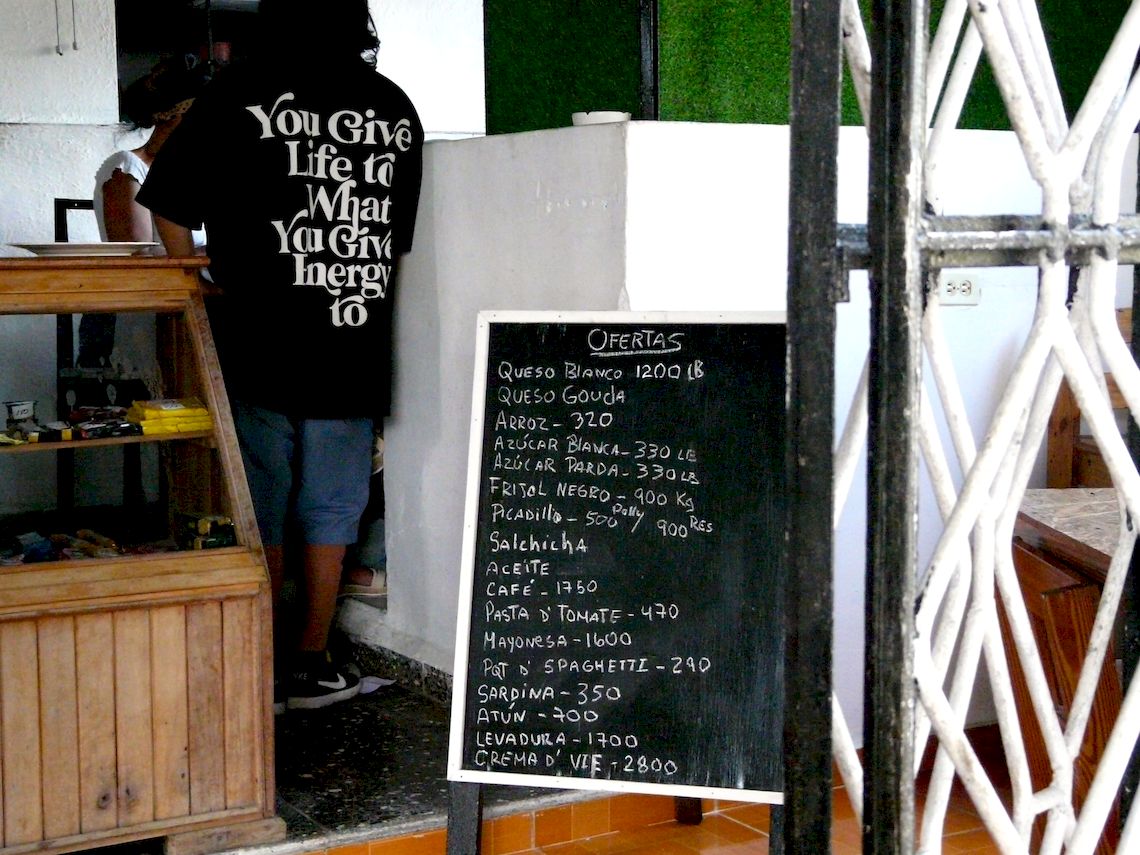
The prices you see here come from one dollar paid to 490 pesos. That’s why you don’t see any rise yet.
How disciplined you are…
Let’s see, brother, from what I have, many things remain at the price at which I bought them. I can’t upload it because I might beat it. The goal is to sell it. If I upload it any more, people won’t want to buy it. The goal is for inventory to move. But if you buy a thing and leave it in slow motion, why did you buy it then?
It has all the logic in the world. I have seen skyrocketing prices of now and then and I wonder who is going to buy that.
The problem with that is that they are already selling you the merchandise they brought out now. That happens to those who buy one bag at a time. That’s why I buy, I’ll give you the example, four, five packs of spaghetti. You understand me? So, I can keep the price stable until I sell everything. That is the objective: to sell, to make the market move.
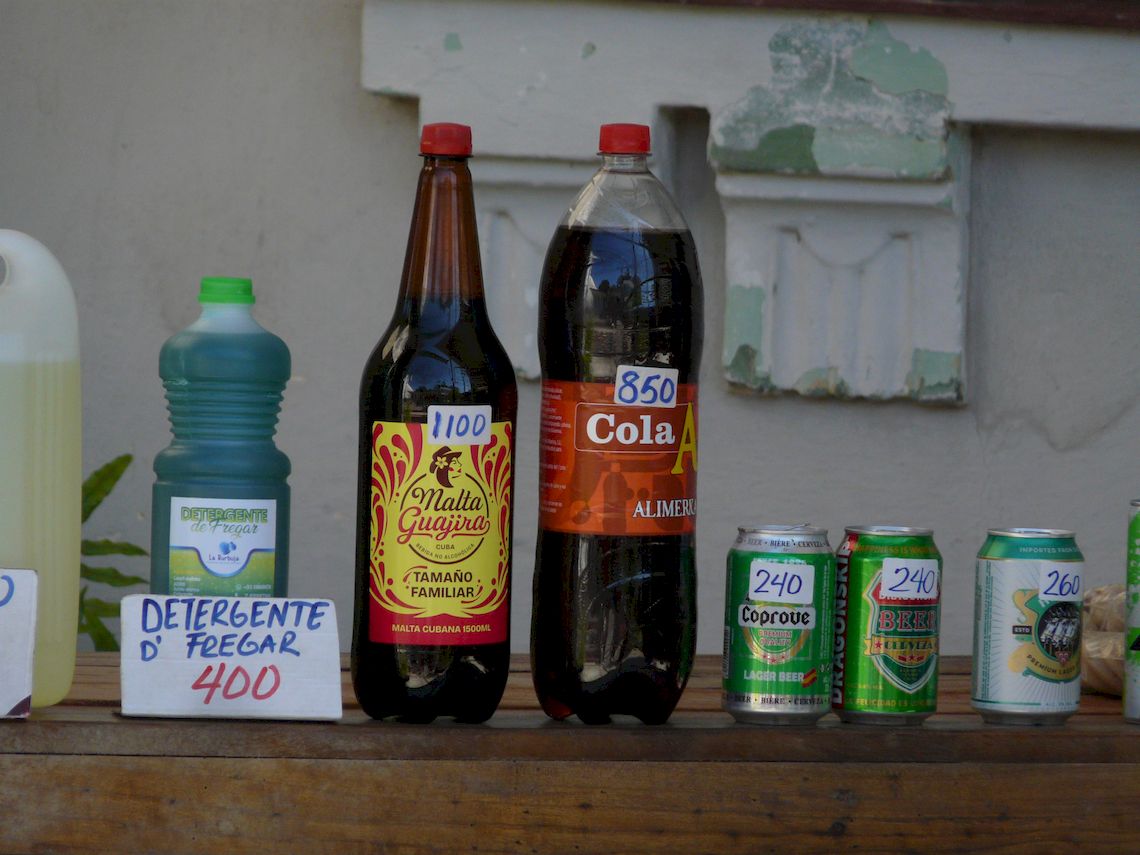
Right now beer is very expensive.
Cyrano (TRUE). When you buy it and add 30% it becomes weight. They sell beer by quantity right now for 225 CUP. So here I add 30% and it comes to 290 CUP, but then no one, or very few, are going to buy it from me. Therefore, I leave it at 260 CUP and lose 30 pesos, but I still earn by selling it and not that muskee in the refrigerators. Besides, I cannot exceed 30% profit, which is the limit authorized by the municipality. There are municipalities that have it at 50%, but this one does not, and that must be respected.
Have you already achieved customer loyalty?
We don’t have it yet. But later I would like to achieve that. Have a loyal clientele, who know you, who know of your seriousness, that you are not a tightener…
And do you give credits to your best buyers?
When I first started in this business I gave a few, but almost all of them failed me. They got lost and didn’t pay me. But I have two or three clients who never fail and that’s why I trust them with whatever they ask for: two, three cases of beer, a tube of ham, bottles of rum… whatever they ask for. But I tell you, the majority are not faithful, nor do they have a word. And so I avoid that. You know how the saying goes: “If I believe, the dollar is not mine” and I need the money to invest again, buy and sell, and complete the merchandise cycle.
Well, and now with Trump’s siege, which put a cap on oil, what is the game going to be like? Will you have to close the business?
No boy, MSMEs are going to continue to matter. We are not the State. The strategy is that now it is the MSMEs that bring the fuel. And it is something viable, but of course, they will not be supertankers. They should have done it a long time ago. You understand?
So, that is part of the solution to the problem of lack of fuel…
Look brother, that’s one part, but what’s needed here is to open everywhere. Let people have freedom; that you feel free to do; to imagine things; projects; crazy dreams, and that the State keeps the essentials: electricity, mining, part of the transportation, health, education, but that it liberates the industries, the commerce, that this is the only thing that prospers, since ancient times that has come, it is giving margin to the people…
That’s what Rubio says… Let them open the economy, let people be empowered…
But I don’t believe in Rubio, or Trump, or any of them. No no. Theirs is to dominate the world. The problem is ourselves. Nobody is going to fix it from outside. Why do you think people look at El Salvador, which was destroyed, with such admiration and want a Bukele? That man built a little country that was stolen and in the hands of criminals, you couldn’t go from one neighborhood to another because you they ended upand Trump did not get involved there, nor did anyone from outside. They did it themselves, against corruption, against the mafias, with economic freedom, but controlling the money.
And then you want there to be economic freedom?
Clear.
And also political freedom?
Also, boy, too. If you want to be a communist, you already have a party there. If you want to be, what do I know, an environmentalist; there you have a game; If you want to be religious, then you do something else; and so, people can choose without having a cannon shot at you. In principle, I think that the first problem to solve here is to open the economy. That’s the key, brother.
But you don’t have coffee The key in your store?
I had it for a while, but it’s over. I hope to have it again. Soon!