The combination of 5G technologies with artificial intelligence (AI) promises the improvement and emergence of new types of interactions between people and man with the machine, to make entertainment, education, health processes a reality and much to strengthen the economy in all its sectors, which today still seem science fiction applications or intended only for developed economies.
This is what you believe Huaweione of the main developers of infrastructure and applications for telecommunications services worldwide. Huawei believes that the integration of AI with 5G will make Internet access more accessible to all and that communication of humans with devices It will also be more precise and faster, thanks to algorithms that are continually improved.
James Chen, president of Huawei’s sales department to operators, said that worldwide 5G technology has reached an inventory of 6 million installed radio bases and also a coverage of 1.8 million locations, data that shows the benefits of this new communication standard and its evolution to 5.5G and integration with other technologies, such as AI.
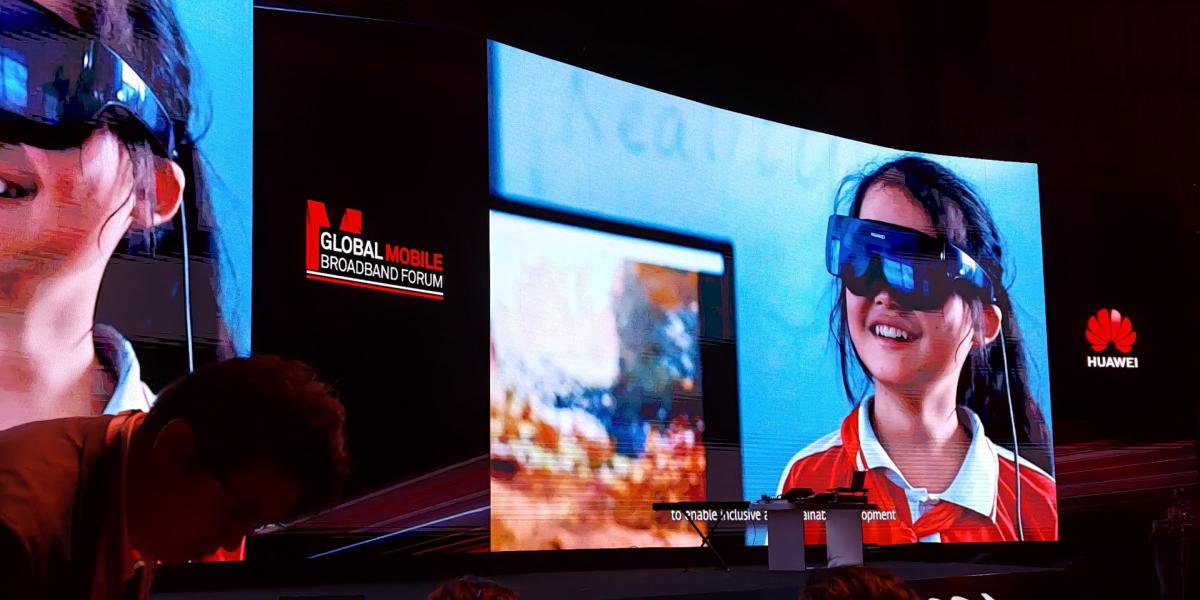
At its UBBF 2024, Huawei showed application proposals so that telecommunications companies, such as Telcel, Vodafone, Turkcell or Vivo, among many other companies, can monetize and add greater value to services with AI technology with 5G.
An executive demonstrates how the integration of AI and 5G technology can improve production processes and, above all, the safety of workers, as for example in this postcard from the construction sector, with the use of remote applications.
A metallic humanoid, but light and faceless, performs various functions of daily life. Further to the side, there is what could be his pet, but in reality it is another small robot with the ability to rescue people and even defuse bombs. These two robots are just examples of how Huawei believes artificial intelligence and the 5G network can offer people.
Huawei presented a demo car, an example of what autonomous vehicles will be, thanks to 5.5G technologies with AI. These cars are already becoming a reality in some advanced telecommunications countries such as China, where public policy has been tied to regulatory policy and technological innovation, to be able to make a reality what in Mexico still seems like a dream.
Huawei’s UBBF 2024 was not only characterized by showing applications for the productive sector, security or health, it was also a forum that showed how other innovations can sneak into the home. The example here is how an AI technology helps a woman choose the best outfit for her daily day from the closet, an innovation that she and he will appreciate.
The integration of artificial intelligence into 5G infrastructures will end up generating operational efficiency for cellular networks, necessary to achieve a truly interconnected digital ecosystem that is also sustainable in the medium term for companies. Here, an executive shows how the demand for use in cellular networks has grown, but also how they have been strengthened.