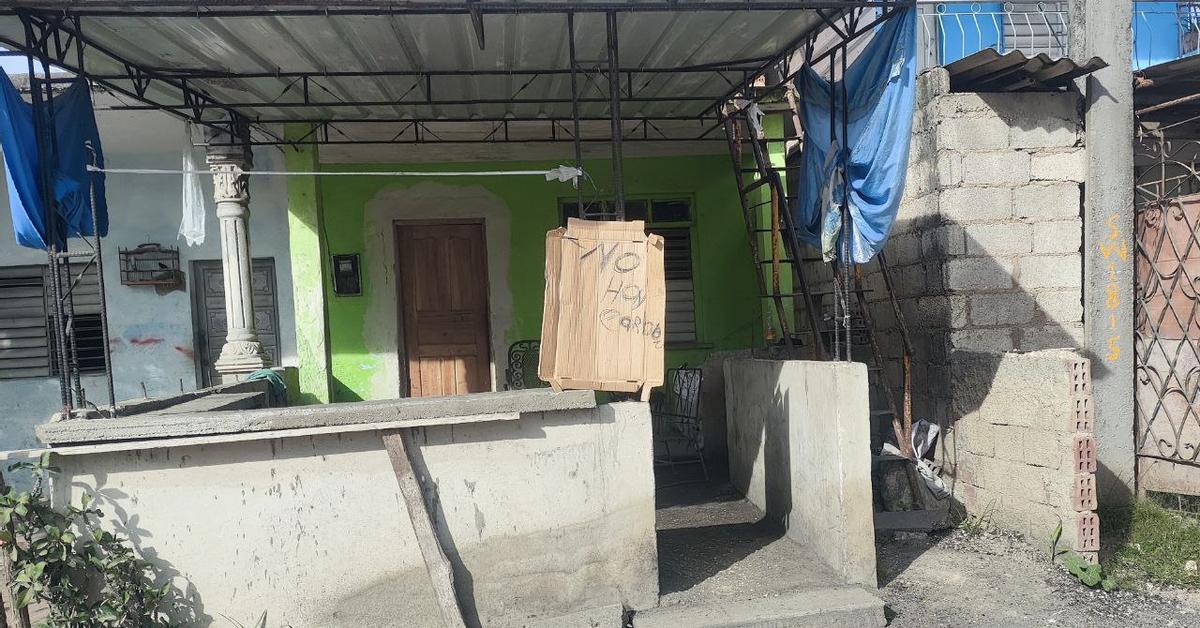
Sancti Spíritus/After a long bicycle tour through the city of Sancti Spíritus, Walfrido comes across the umpteenth sign announcing “There is no coal.” The piece of paper summarizes the serious situation that families in a province have been experiencing in recent weeks where blackouts and a lack of liquefied gas make charcoal the main fuel for cooking food.
The intense rains of these months, the increase in demand and the recent application of a new regulation that causes more doubts than certainties have caused the bag of coal to exceed 2,000 Cuban pesos in Sancti Spiritus territory, more than double the 900 it was at last September.
“You haven’t found coal anywhere for weeks and when someone tells you they have it, it’s at a sky-high price,” he tells 14ymedio Walfrido, who for years has been a regular consumer of marabou charcoal, an invasive plant that plagues the Island’s fields but from which excellent quality pieces of charcoal are obtained for cooking, due to their aroma and because they burn very slowly.
“If I don’t find a sack in the next few days, I’m going to have to sacrifice the pig that I had saved for the end of the year”
The patio stove, where Walfrido prepares food for the pigs he raises, has not been lit for weeks: “If I don’t find a sack in the next few days, I’m going to have to sacrifice the pig that I had saved for the end of the year,” he laments.
The rise in prices is due, in part, to greater controls on the trade of the product to which, until recently, a certain blind eye had been turned. Saúl, a seller in the Sevillian neighborhood with his name changed to avoid reprisals, was recently fined 8,000 pesos and the confiscation of several dozen bags of the product he sold without a specific permit for that line.
“I don’t have a license to sell coal but I’ve been selling it for years without any problems, except that now they have made it available to us because they say that the coal dealers must deliver as much as possible to the State for export, because the country urgently needs foreign currency,” explains the man. The merchants who offered their merchandise on the streets, on bicycles or tricycles, have also disappeared, since the vast majority work informally.
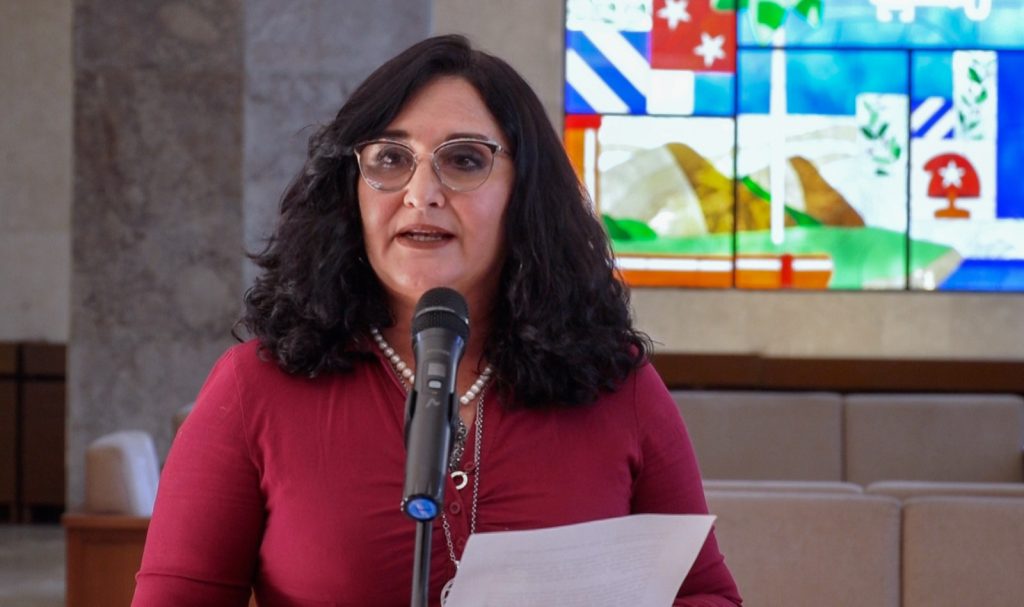
On her Facebook account, Isbel Reina Abreu, first secretary of the Communist Party for the municipality of Sancti Spíritus, has categorically denied that fines or confiscations are being applied for trading the product. “No one in Sancti Spíritus has prohibited the sale of coal,” the official said. However, in the comments to his publication, several Internet users denounce retaliation against merchants and the disappearance of the product.
Until recently, bags of coal arriving from the La Sierpe municipality were piled up in Saúl’s yard. In that region of Sancti Spiritus, the farmers make the product and sell a part to the official entity that exports it and the other part is marketed to national clients. But the arrival of bags to the city through that route has fallen and the guajiros also have their reasons.
“The charcoal oven cannot be assembled when there is a threat of rain because everything can be lost, the time and work invested,” says a producer with more than three decades of experience by telephone from La Sierpe. “I don’t sell directly to people, but several contacts come here to get the coal and buy wholesale from me and they take care of everything else.”
“What I have, I am saving part of it for self-consumption and the other to see if they give me the numbers regarding payment in foreign currency”
In September and October supply trips to the producer’s farm have decreased. “A lot of rain and right now I have little coal and what I have I am saving part of for self-consumption and the other to see if they give me the numbers with the payment in foreign currency.”
The coalman refers to Resolution 25/2025 of the Ministry of Economy and Planning (MEP), approved last April and signed by Minister Joaquín Alonso Vázquez. The legislation was announced as an opportunity to improve the lives of charcoal producers, and its objective was to “increase and control foreign exchange earnings” from the export of this product. By establishing a financing scheme, it also eliminated subsidies.
According to the new regulations, each dollar that comes in from coal exports in foreign currency is distributed in this way: 30 cents go to the central financing account and 70 cents to the state company that markets it. Of the latter, 38 cents go to the producer and the rest covers the expenses of the official entity. Payment to the carbonero is made to a foreign currency account, but without the possibility of making transfers from it or withdrawing cash in dollars.
The sector’s dissatisfaction with low income seems to be at the center of the decline in production that has been evident for several years. Although there is no updated national export data until 2024, in 2022 Cuba produced 39,400,000 tons of charcoal, less than half than two years before, when it achieved 75,600,000, in the midst of the covid-19 pandemic.
For the La Sierpe producer, the norm is “a small step forward” if compared to the situation at the end of last year, when the charcoal producers of Sancti Spíritus lamented that the percentage they received was 20% – compared to the 80% that the State pocketed. But the big question remains whether late payments will continue. “I’m holding on to the coal I have for that, but if I see the slightest delay I won’t sell any more to the State,” warns the farmer.
It is still too early to have an answer. “Although the resolution is from April, it has only begun to be read in the work centers here a few weeks ago and to hold meetings with producers,” an employee in the administrative area of a department of the Ministry of Agriculture in the city of Sancti Spíritus tells this newspaper. “What the paper says is one thing and the interpretations that have been added here are another because the pressure coming from Havana to produce more for export is being very strong,” he acknowledges.
The state worker believes that the objective is to “put as much pressure as possible on the charcoal burner so that it delivers the greatest volume of its production to state companies that are not only the ones that can export but also already have agreements with foreign hotel companies in the tourist centers.”
“Even when the bag reaches 2,000 pesos and people think it’s sky high, that’s not even five dollars at the exchange rate you find on the streets”
“The province has not raised its head in the amount of coal delivered and they are putting their foot on the accelerator, we have to do the same with the producers and in the end that also reaches the national customer who pays for the product in pesos.” The woman assures that she has already seen the emergence of a “parallel market in dollars” where emigrated relatives or Cuban-Americans who come to visit the province pay for the product in foreign currency.
“Even when the bag reaches 2,000 pesos and people think it is through the roof, that is not even five dollars at the exchange rate that you find on the streets, and good quality charcoal, with large pieces and a very good aroma is not worth that anywhere in the world,” acknowledges the administrator. “There are charcoal makers who already have contacts to sell to paladares and food delivery services that pay them in hard dollars. Neither the State, which only gives a plastic card, nor individuals who only have Cuban pesos, can compete with them.”
In a text published in OnCubathe economist Juan Triana had already warned of the deficiencies of the new resolution. The expert criticized the low income that producers receive and recalled the difficulties of their work. “The marabou is very hard; the charcoal that is extracted from it is as hard as the marabou. In Cuba, charcoal production is practically manual. Anyone who has ever been inside a marabou field knows this perfectly.”
Knowing what inefficiency and excesses of state control can cause, Triana summarized the fears he harbors around coal with a livestock metaphor: “Once we had a cow that gave sugar and we managed to dry it; then we had another one that gave income from tourism and we also dried it. Later a new one appeared that gave biotechnological medicines and it seems that we are not feeding it as it needs; we still have one that produces income from professional services, which we do not feed well either. The cowboys know it: when “If you extract more milk than you should, the cows dry up.”