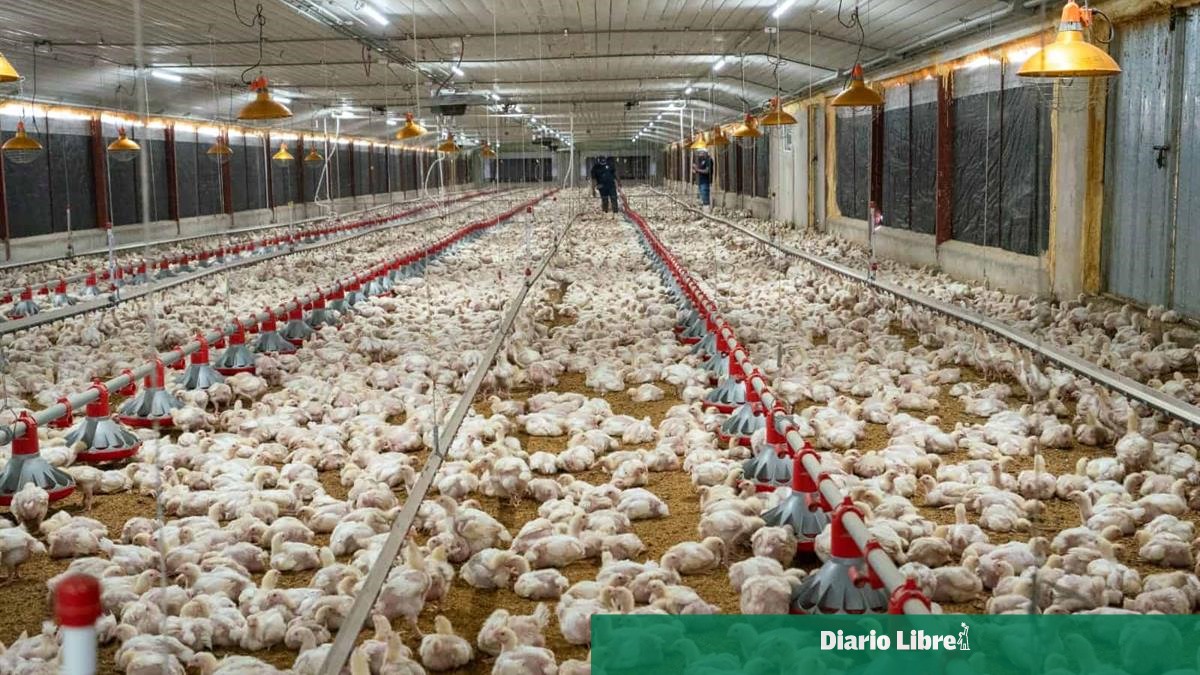
The Dominican Republic does not face a structural shortage of meat chickenhe stated Miguel Lajarapresident of Sanut and director of the Dominican Poultry Association (ADA), pointing out that national production remains above 85% of real demand, with a recovery trend that aims to stabilize supply and prices. prices for consumers.
Lajara indicated that, in the current month, the chicken production will reach an offer close to 21.4 million of units, which shows the recovery of the subsector.
He added that, in the next cycles productive, this trend will be consolidated, generating a better balance between supply and demand and reducing the ups and downs in the price of the pound of chicken.
In parallel, the poultry sector will produce more than 400 million of table eggs during the month, the greater offer monthly recorded in the history of the country, according to the figures presented by the business leader in a press release.
As he explained, the statistics show that, despite temporary episodes of pressure on the prices, does not exist a structural deficit of chicken in the local market. In that sense, he highlighted that the poultry production The national economy has registered an accumulated growth of close to 45% in the last five years, well above the regional average.
“What we have learned from similar situations in the past is that measures taken by the producers, in coordination with the competent authoritiesquickly tilt the pendulum toward the stability“, held.
The president of Sanut highlighted the strategic role of poultry sector in the food safetyand recalled that, according to data from the Food and Agriculture Organization of the United Nations (FAO), the country reduced undernourishment levels by almost 60% between 2019 and 2025, placing it below the regional and world average.
The prices of the chicken
As for the pricesexplained that official data from the Department of agriculture show that the chicken processed has remained during the last three months with a weighted average price below 100 pesos per pound, both in traditional markets and in supermarkets, in a context of greater economic activity and increased demand.
Lajara specified that imports of chicken and genetic material, carried out in a strategic way to mitigate oscillations in supply, have not negatively affected national production, and have operated as a complementary consumer protection mechanism.
Finally, he stressed that the chicken and the egg continue to be cheaper and more accessible animal proteins for the Dominican population, and highlighted the coordination between producers, authorities and consumers as key to guaranteeing supply, contributing to the control of inflation and protecting the purchasing power of households.