State security officers and uniformed agents maintain an operation of surveillance and control around their home, in what constitutes another day of arbitrary repression.
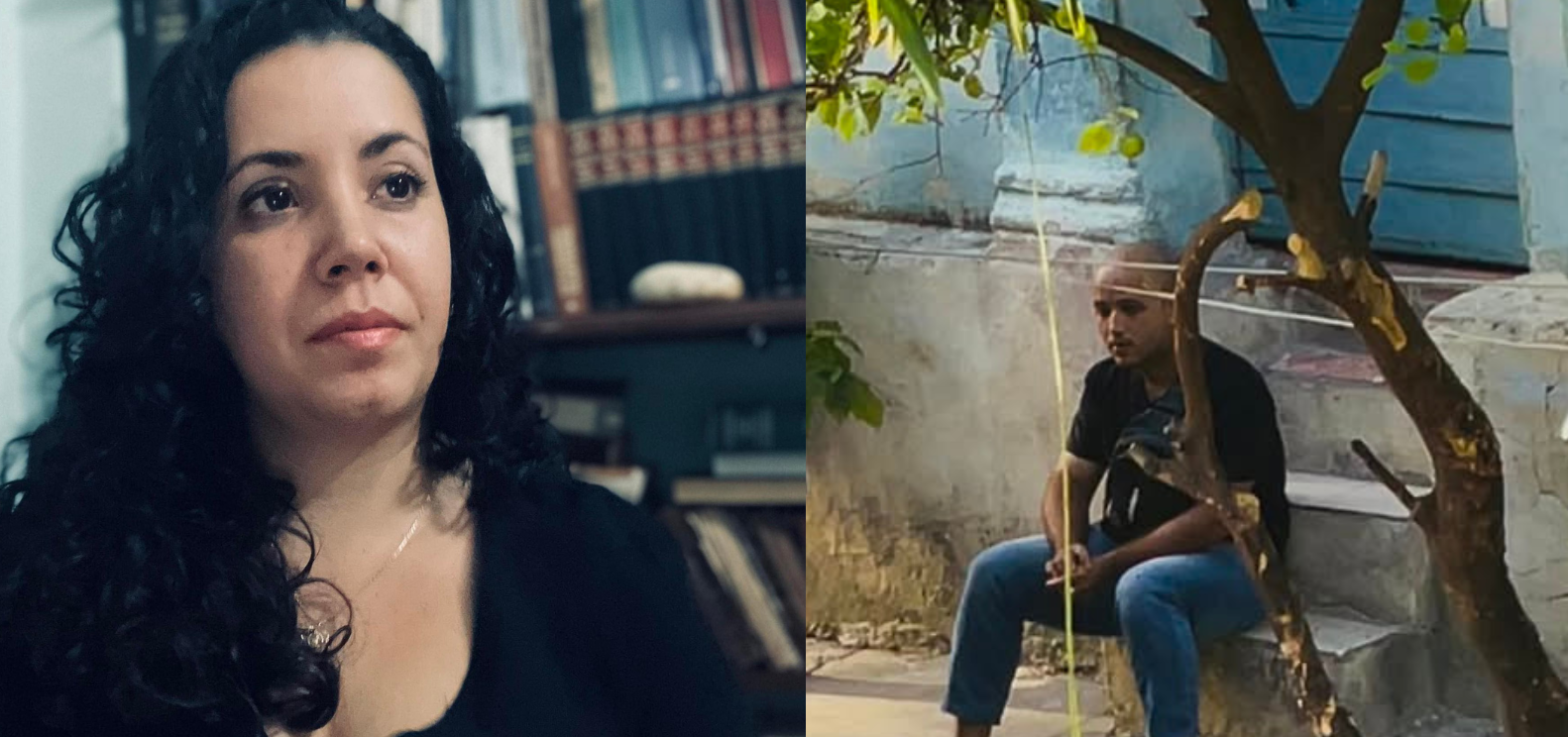
Havana.- The independent and collaborator of Cubanet, Camila Acosta It dawned on August 5 under a new fence of the Political Police, which prevents him from leaving his home in Havana. As reported on their social networks, state security officers and uniformed agents maintain an operation of surveillance and control around their home, in what constitutes another day of arbitrary repression.
“Once again, I am besieged by the Police and the State Security. Today 31 years of the Maleconazo are commemorated. What do you expect to happen today? What do you think I will do? Are those of the SE so paranoid? How much fear of losing control should have to wake the repression!” He wrote Acosta, collaborator of Cubanet and ABC International.
The reporter denounced that this type of surveillance is already a routine practice against her person. “It is the second occasion so far this month that prevent me from leaving my home arbitrarily. The counting of moments of home imprisonment in the six years that I have been exercising independent journalism in Cuba has already lost it a while ago,” he said.
Accompanying his testimony, Acosta shared the photograph of an officer in civilian dressed in front of his home, who last week identified himself as a state security agent for another similar operation. “He even showed me his official identification and told me that he could not go outside, thus, without a judicial document or anything to protect him. From leaving the house, they would stop me and – probably – processes for some common crime,” he said.
This police siege occurs a few weeks after a fact that evidenced the scope and illegality of surveillance on Acosta and its surroundings. At the beginning of July, agents of the Cuban regime intercepted a diplomatic vehicle of the United States Embassy in Cuba, during a surveillance operation against the journalist and her partner, the writer Ángel Santiesteban.
The car, which was planned to transfer both guests to the official reception for the US Independence Day.
The incident, captured by security cameras in the journalist’s house, constitutes a serious violation of the Vienna Convention on Diplomatic Relations (1961), specifically of articles 22 and 29, which guarantee the inviolability of the media for diplomatic transport and the freedom of movement of the guests to official activities of a mission.
For Acosta, these operations show that the Cuban regime “has been sustained only with terror”, in an attempt to silence independent and dissident journalists, especially on symbolic dates as the anniversary of the Maleconazo, the popular protest that shook Havana in 1994.