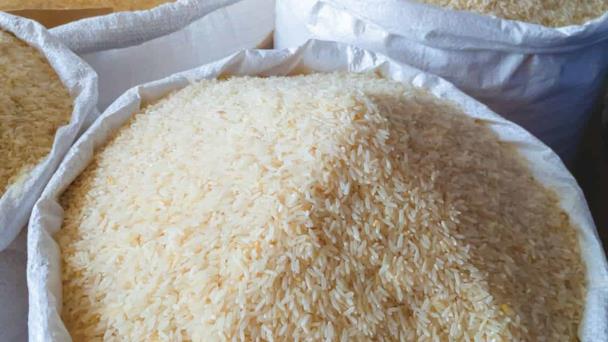
He rice is he most consumed cereal for the Dominicans; the most precious within the basic family basket and one of the agricultural items that exhibits self-sufficiency of up to 106% to satisfy national demand. This has made it possible to maintain minimum import volumes, of just over half a million quintals, in almost 20 years.
However, 2024 broke all records: the Government authorized the purchase of rice highest in decades, while taking measures to avoid the repercussions on the local market of a tariff free cereal as provided in the Free Trade Agreement between the Dominican Republic, Central America and USA (DR-Cafta).
More than 4.7 million quintals of rice –bought, for the most part, from nations outside DR-Cafta– arrived in the Dominican Republic in the year past, totaling 152.6 million dollars, being the most significant purchase of a cereal whose imports had averaged 17.2 million dollars annually between 2005 and 2023, according to data from the General Directorate of Customs (DGA) and the Ministry of IndustryCommerce and MSMEs (MICM).
Not even in this year so much has been bought rice as in the past. Until November 2025, Customs registered the entry of 473,622 quintalsvalued at about 14.7 million quintals, 87.5% less than the volumes entered in January-November 2024, of 118 million dollars.
For this December, the Dominican Federation of Merchants assured stable prices in the commercial sector. It guaranteed that the price of rice in the retail market will be between 35 and 38 pesos per pound, while select Jaragua-type rice will be sold at 32 pesos per pound.
The agreement before the decree
On July 12, 2024, the Ministry of Agriculture and the Dominican Association of Factories of Rice (Adofa) subscribed a memorandum of understanding.
This agreement authorized the import of 100,000 tons of rice white (equivalent to 2,205,000 quintals), additional quantities to the 50,000 tons (1,100,000 quintals) already approved in the resolution 02-2024 of the National Rice Commission (CONA).
Five months before the president of the Republic, Luis Abinaderapproved the placement of a cap on imports of the rice As an internal strategy against the possible impact of the DR-Cafta zero rate, this agreement had already approved the entry of 3,305,000 quintals totally free of tariffs from the date of subscription until March 31, 2025, estimating 80% of the allocations to industries and 20% to merchants.
That year closed with a national production of just over 14 million quintals, an increase of 3.5% compared to the 13.5 million harvested in 2023, according to the Department of agriculture. Why would the country need so much rice If production continued to grow?
The executive director of Adofa, Herald Serumattributed these amounts to “an unusual spike in the apparent consumption” that triggered demand, in a context in which the rice industries reported “a low inventory“, to which were added tropical disturbances that affected the quantity and quality of the grain during that period.
He indicated that the increase in consumption of this product is attributable to factors such as the increase in the arrival of touristsgreater demand through informal trade with Haiti – the main country to which it is exported rice Dominican – and greater internal consumption.
“With the imports of year past was achieved safety inventory or strategic reserve that the country needed,” he asserted, after indicating that the rice policy national is aimed at prioritizing production. “The intention is always bring to zero import,” Suero emphasized.
Apparent consumption and more purchases
This peak in the apparent consumption It is not seen in official estimates. For 2024, Agriculture had projected a consumption of 14.7 million quintals, just 4.8% more than the 14.1 million of the year past, in which the import was only 495,731 quintals.
Even so, they would have ended up entering the country 213,000 tons –63,000 more than the 150,000 tons subscribed at that time–, assured the president of the National Federation of Producers of Rice (Fenrice), Marcelo Reyeswho considered this income as a breach of agreementwhich also supported a distribution of imports between industrialists and merchants that was also not respected.
“It was brought rice at zero rate from different places to very cheap pricescausing damage to the local market,” he said.
The president of the Dominican Federation of Merchants, Ivan Garciasaid that his union – which groups 2,300 supermarkets– did not participate in the imports of the year passed because, in practice, they only offered him about 75 tons.
“That’s nothing, the rice It is not advisable to buy it like this. We, as a trade sector, do not participate in imports of rice of 2024,” he concluded.
Although Customs records imports of only 4.4 million dollars made within the DR-Cafta, the data from the Ministry of IndustryCommerce and MSMEs (MICM) point out that 33.5% of the rice imported (1,468,770 quintals) came from USAfollowed by countries like:
- Brazilwith 18.9% (848,500)
- Guyana, with 17.5% (862,569)
- Thailand, with 16.2% (895,181)
- Uruguay, with 6.97% (305,451 quintals).
Impact on the producer
Imports of rice comply with the essential function to complement what is needed to satisfy consumption, increase local reserves and diversify the offer in the market with aromatic varieties that are not planted locally.
Of some 14 million quintals produced in the country, 10% – 1.4 million – is rice tiptoe, so the real production is about 12.6 millionbelow a apparent consumption which averages 13.2 million quintals.
However, factories must ensure reserves of up to three months to respond to any spike in demand or drop in production, especially during the second harvestwhich begins in July and tends to be of lower quality due to its greater vulnerability to temperature changes.
These imports are authorized through the National Rice Commission.
![[object HTMLTextAreaElement]](https://resources.diariolibre.com/images/2024/11/13/wasacs-8bed5dfd-d7c2-4132-83eb-b26ee2eb9b0f-f4fe9f17.jpeg "The period in which rice purchases broke records in the DR")
If the factories are sufficiently supplied with grain, their demand decreases to the detriment of producers, who find themselves with an excess of supply that they cannot process or store.
The president of Fenrice alleges that producers were “very mistreated” due to these imports in a context in which the cost of production per task has increased to 9,200 pesos due to the increase in prices. fertilizers.
Indicates that These purchases depressed prices at the time of negotiating with the millers and motivated complaints from the producers during July of this year.
However, the executive director of Adofa considers that these claims came from a minority that tried to “politicize” the topic. “Everyone knows that in July, August, September, all rice has quality issues; that is compensated very well in October and November, and the sector ends up happy doing business,” Suero insisted.
Even so, the import of 4.7 million quintals represents around five months of reserves, García observed. And when adding what is imported with what is produced, it is about 18.7 million quintals of rice in stocks.
“In the history of the country they had never been imported almost five million of quintals of rice in a year“he asserted.
2025: a year low different conditions
The president of Adofa maintained that this year presented very different conditions from those of the year past. Currently, the factories have an inventory of 7.4 million quintals of rice of which, he assures, are from national production.
“This was a year robust: we started with a good inventory, there were no major climate issues, there was a decrease in consumption, perhaps associated with the drop in Haitian migration… all of this leads to the conclusion that there was no need to import,” he explained, after indicating that the country returned to regular consumption after the unusual demand of the year past.
Both García and Reyes agree that the 99% tariff applied through the Decree 693-24 has had an effect to avoid greater import volumes at zero tariff through DR-Cafta.
“Unless declared a shortagecannot and should not enter rice to the DR-Cafta country, or anything. Only the 23,300 tons approved in that decree,” Reyes noted.
Last Friday, the Minister of Agriculture, Limber Cruzheld a meeting with the National Rice Commissionin which the inventories of ricethe pledge status for 2025 and the planning for 2026, including the incentive of 75 million pesos for the use of certified seed 2025-2026.