He Las Parras Correctional Center It has begun formal operations two weeks ago and began receiving inmates last week.
With the move of the first groups, which include people with technical training as cooks, electricians and plumbers, the end begins for the prison of The Victoryhistorically an academy where prisoners graduate as criminals and where many of the country’s worst crimes are planned.
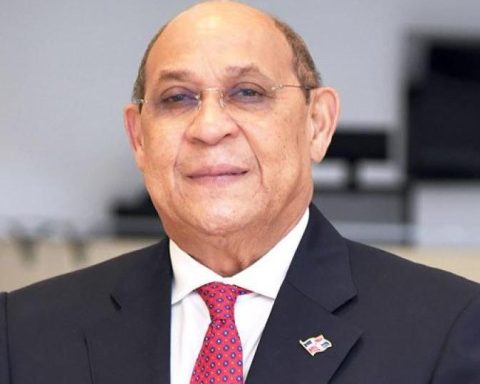
Also an ignominy in the rehabilitation and reintegration of these people into society. In a frank conversation with Roberto Santanageneral director of Penitentiary and Correctional Services, we address how unideal, questionable and expensive the construction of Las Parras has been for the Dominican people whose budget had to be paid with the emoluments of the agreement with the company Odebrecht after it admitted paying bribes to obtain works in the country. But it is what it is.
There, in that building started by the former attorney Jean Alain Rodríguezsubjected to corruption, thousands of convicted and preventive prisoners are expected to be reformed.
US$100 million more expensive
Even so, Roberto Santana He recalled that when he was entrusted with planning the replacement of The Victorythe project had an approximate budget of 81 million dollars, but Danilo Medina They told him it was 181 million dollars, 100 million dollars more.
Santana recalled that, when asked for a proposal to replace The Victory -which then housed some 9,300 prisoners- proposed a completely different model than the one that ended up being built.
“The remoteness of Las Parras is not only a problem for the Dominican justice system. It is also for the families of the inmates who have to cross the town of Guerra to get there”Director General of Penitentiary and Correctional Services
His idea: take advantage of the Santo Domingo ring road and raise nine prisons of thousand seats each one, distributed near the communities where the families of the majority of the inmates live.
He proposed three centers in the west (for Herrera, Los Alcarrizos and surrounding areas), three in the northern strip and three in the east until Boca Chica and Los Mina. Total: 9,000 places, but distributed territorially, with community logic and close to basic services.
The economic key was in the land: state land that belonged to the Haina mills and Boca Chica. That is, you didn’t have to buy them.
With that basis, Santana assures that each prison could cost 9 million dollars. Nine centers would cost $81 million; eight, 72 million. In 2016 pesos, he emphasizes, the total amount tendered for the project was around 3.4 billion pesos.
However, when his proposal reached the highest levels, someone multiplied it. “They told the president that this cost 180 million dollars,” he says a member of the patronage of the time.
own patronage He had to return to the president with the plans and numbers Santana in hand to explain that the actual cost projected was 81 million, less than half of what had been put on the table.
US$81
Millions, was Roberto Santana’s original proposal to build nine prisons around the Beltway.
With that correction, the then president gave green light. The tender, Santana recalls, is posted on the Attorney General’s website for around 3.4 billion pesos. But the original plan was not followed: they were not built nine prisonsbut a single gigantic complex in a remote part of Guerra, Las Parras.
When the new government receives the work in 2020, the outgoing authorities report that 7,000 million pesos had already been invested. Of that cost, 1,093 million were spent on earthworks alone. “This is a business,” he says, describing the cost of leveling and preparing the land where they were built.
While during the Abinader governments there has been investment between repairs, corrections and redesigns additional 2.3 billion. And that, Santana emphasizes, on a structure that had to be intervened in 80% due to execution problems.
For all these irregularitiesdeclares Santana: “That is a case that is in court, but I believe that the Dominican people must be compensated.”
Without foot or head
Beyond the amount, Santana considers that the strategic decision was wrong from the base: “For me it was catastrophic when they informed me that they were going to do all the prisons together in one place.” In his opinion, concentrating nearly 10,000 inmates, plus staff and visitors, in a single point defies basic public health and safety criteria.
If a aggressive virushe argues, the constant transit of relatives from all over the country would turn the complex into a national amplifier of the problem.
Added to this is the distance. Santana remembers that the complex was built several kilometers from the municipal limit and about 72 kilometers of the Courthouse from the capital, which requires long and expensive trips for hearings and transfers. It is also far from the new Courthouse east.
The design also breaks with the rules of United Nations on the proximity of penitentiary centers to the communities of origin of the inmates, to fire services, reference hospitals and transport networks. Exactly the opposite of what Santana himself had defended in his original proposal.
That distance is not only a problem for justice. The families of the inmates will feel it in their pockets. To go to Las Parras from Santo Domingo, the natural route requires passing through the congested municipality of Guerra. “The roadblock to cross that town and then get to Las Parras.”
In the original plans, Santana says, security personnel slept only in the administrative quadrant, far from the highest risk areas. “If I miss one from quadrant four, when these people wake up and arrive, that inmate is from the airport to there,” he graphed. To correct this, small accommodations were built for the agents in each quadrant, in order to have an immediate response to any incident. Santana explained that changes were also made to the cells. The initial design placed the toilet in front of the beds, visible to everyone, without a wall or door. Therefore, 1,080 walls and 1,080 doors were built to protect that area. Although it defends improvements in ventilation, lighting and corridors, it warns that accommodation for education, work and treatment has yet to be built, which will now have to be “fabricated” on the fly.