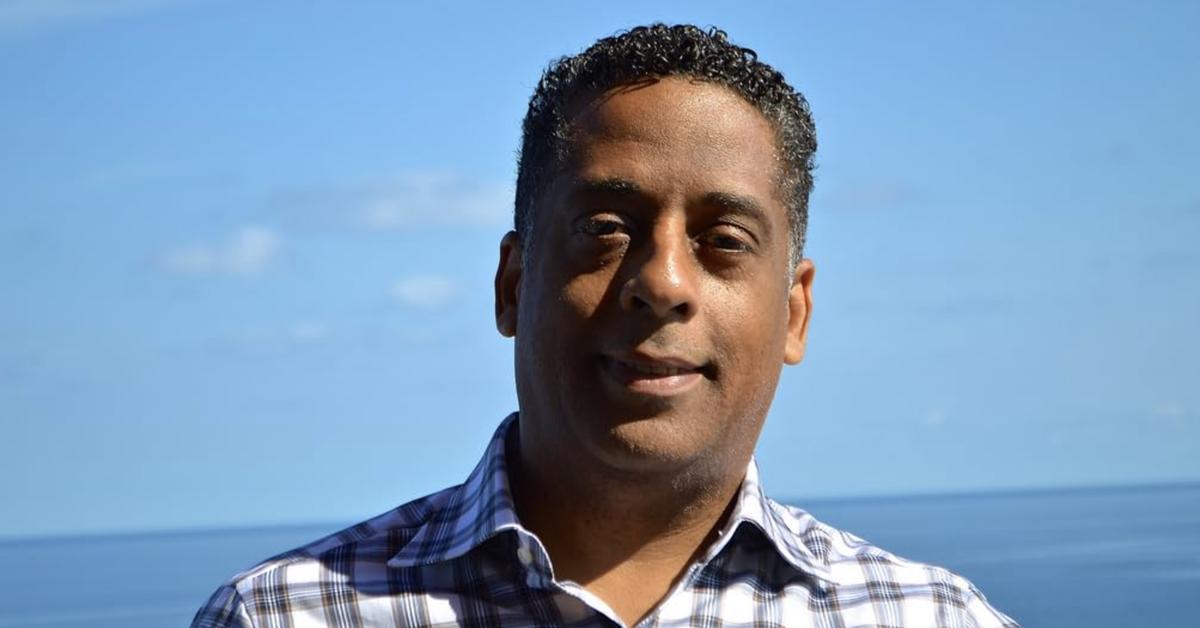
Havana/Cuban-American businessman Hugo Cancio, with important businesses and contacts on both sides of the Florida Strait, encouraged Havana in an interview with EFE to “take advantage” of the “unique opportunity” to speak with Washington, despite how “difficult” it is to negotiate under pressure.
The owner of the Katapulk e-commerce platform and the OnCuba media outlet, among others, regrets from Miami the situation in his country of origin and advocates leaving behind the “pingpong of guilt” to move towards a “total and profound economic opening” and, also, towards a “political opening” on the Island.
“I don’t think it’s healthy to negotiate under pressure. But sometimes you have to do what you have to, not what you want. The Cuban State has at this moment a unique opportunity to sit down and negotiate with the United States Government,” he says.
He highlights that the administration of US President Donald Trump “has taken the initiative” to seek a negotiation, despite the fact that it has at its disposal “all the tools in the world” to force a change in Cuba, including militarily.
“It is a transaction – let’s call it inhuman, call it incoherent, whatever we want – but it is an opportunity, a door that is open, that must be taken advantage of,” he argues.
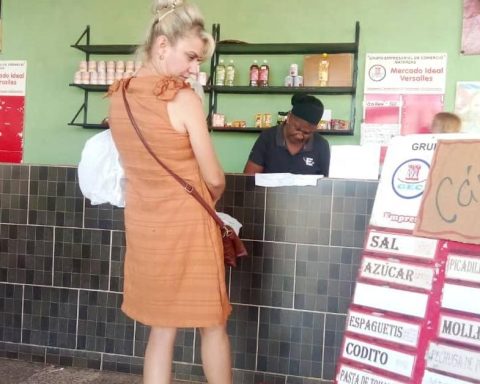
Cancio does not underestimate the effect of the US oil siege, which is “deepening” the “humanitarian crisis” on the island
He considers it positive that the US Secretary of State, Marco Rubio, said that “economic opening is a good start” and that Washington this week relaxed restrictions on fuel exports to the private sector in Cuba.
Cancio does not underestimate the effect of the US oil siege, which is “deepening” the “humanitarian crisis” on the Island; nor that of sanctions, an “extremely unfair” policy for the Cuban people.
However, he maintains that resentments between Cubans must be abandoned, because he believes that there are those responsible “on both sides.” Instead, he advocates seeking ways to improve the country, although without forgetting, because he recognizes that there is “an open wound.”
“There is a lot of pain and resentment on both sides of the Florida Straits. There is deep pain in the community in Miami, where there is a group of Cubans who oppose any type of concession. And in Cuba there are also people and organized groups that are constantly criticizing any type of approach,” he describes.
Regarding the route of transformations, he proposes starting with “a forceful economic reform that allows the return of the diaspora” and that Cubans abroad can legally own private companies on the Island and invest from abroad: “Open the legal framework so that the private sector in Cuba has more capacity for movement.”
“It would be extremely positive if the Cuban State begins to open a little more to the possibility of strengthening, of offering the tools to the private sector”
“It would be extremely positive if the Cuban State begins to open a little more to the possibility of strengthening, of offering the tools to the private sector” on the Island because “at the end of the day the one who benefits is our people,” he proposes.
He assures that Cuban private companies, despite multiple limitations, imported $1 billion last year while electronic commerce platforms, with some 20,000 daily transactions, already have an “enormous role” in alleviating the crisis.
“The private sector plays a fundamental role in the Cuban economy,” says Cancio.
However, the changes cannot be limited to the economic. “A prosperous Cuba depends greatly on the unity of all Cubans, regardless of political and ideological differences,” which is why he considers it a priority to “seek the generalized unity of all Cubans,” something for which it is first necessary to “lower our spirits.”
His ultimate goal would be “a much more democratic, more plural, more inclusive, more participatory Cuba, that welcomes all its children,” in which all citizens can “decide from the smallest position at the municipal level” to the position of “president of the country.”
Regarding his possible role in a transition, he believes that he can contribute more from the private sector than by jumping into politics, taking advantage of his connections with “people who have a lot of influence” in the United States and Cuba, an area in which he assures that he remains “very active.”
Among these people is the US Secretary of State, Marco Rubio, although Cancio acknowledges that he would “love” to be able to “sit down and talk” with the Cuban-American politician “and at least hear another perspective of what Cuba is today.”
Regarding the role of the United States in Cuba, he understands that it can play it “from an economic point of view.” But political matters, he clarifies, that “is something that belongs to all Cubans, to decide what the future of Cuba is going to be.”