Madrid/If the more than 13,500 Cubans who received residency in Uruguay in 2025 represent a striking figuremuch more are the island’s nationals than did so in Guyana in the same year: ten times more, 135,000. There were barely 800 who settled in that small South American country in 2020, which gives the measure of the migratory exodus that has occurred in recent years.
Guyana, explains Bloomberg in a extensive report this Wednesdayis a “rapidly growing petro-state” that nevertheless has a scarce workforce, hence Guyanese construction companies are increasingly turning to Cubans as a workforce. The South American country is a mandatory step for migrants from the Island who choose along the “southern route” –which reaches Brazil, Uruguay or Chile– and, according to what the agency specialized in economics reveals, the majority choose it as their final destination.
Employment opportunities in a territory with barely 955,000 inhabitants favor this decision, notes Bloomberg, which recalls that the influx of Cubans may increase with the current worsening of conditions on the Island. “With oil production expected to reach two million barrels a day in the next five years, construction activity in the capital is booming,” details the agency (despite its immense reserves, Venezuela currently produces just one million bpd). “The Government has allocated $3.7 billion to its public sector investment program for this year, almost half of its total budget for 2026, compared to $3.2 billion last year and just $184 million in 2019.”
The authorities hope to build a total of 28 hotels throughout the country, and the Minister of Tourism herself acknowledged that foreign labor is helping in that mission.
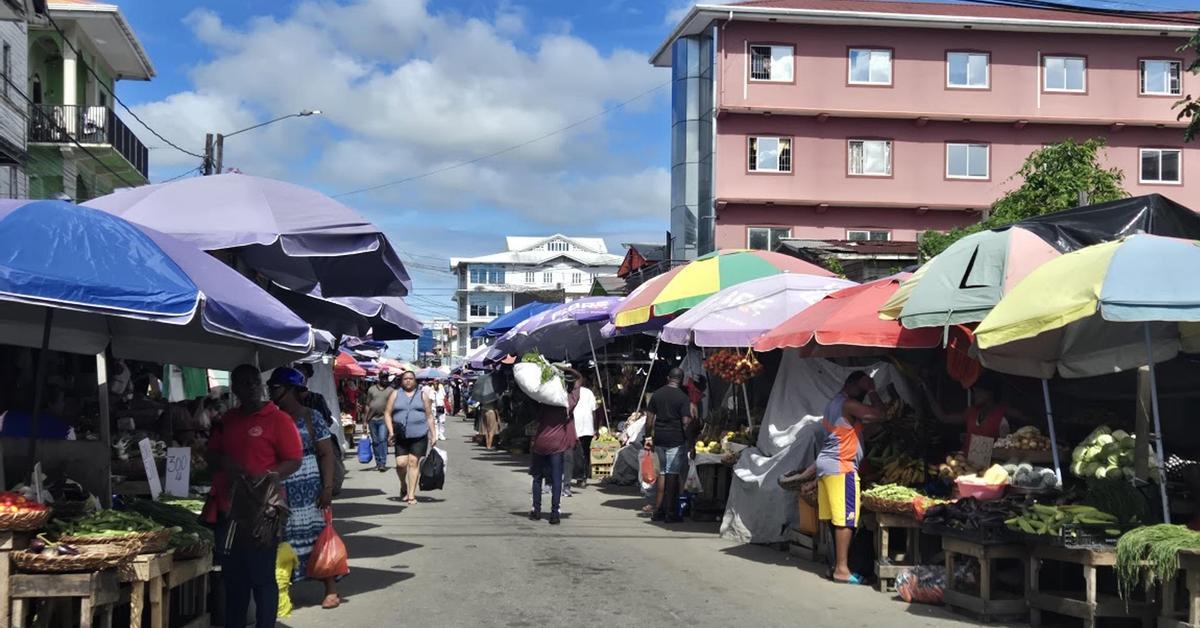
The same goes for the private sector. In this regard, Bloomberg highlights the proliferation of cranes and steel columns in the Guyanese capital, Georgetown, “above the wooden buildings from the colonial era or the vacant lots covered with vegetation,” especially the nine luxury hotels that are being built. They will not be the only ones: the authorities hope to build a total of 28 hotels throughout the country, and the Minister of Tourism herself, Susan Rodrigues, acknowledged that foreign labor is helping in that mission.
The massive arrival of Cubans, the agency says, has opened a debate in the small country, since its Government has not yet developed a comprehensive immigration policy that takes into account the economic boom. At the moment, says Bloomberg, citing a ministerial advisor on labor matters, permits are sealed “on a case-by-case basis at the request of contractors,” although the authorities foresee a constitutional reform that includes the rights of migrants.
For the moment, the good economic conditions they find on Guyanese soil seem to be enough for Cubans. Thus one of those interviewed by Bloomberg, Jorge Rondón Fernández, a 42-year-old Cuban who exchanged the classrooms for the scaffolding in Georgetown. He currently earns $1,115 a month, almost ten times more than what he earned as a teacher in Las Tunas.
The man from Las Tuscany does not hide the hardness of the work, so different from teaching classes in a school, nor what it cost him to get there, $3,000. Not only is it much less than the more than 10,000 dollars, for example, that the Cubans needed for the “volcano route,” via Nicaragua by plane and heading to the United States by land, but with much more advantageous conditions. The package contracted via coyote includes the plane ticket to Georgetown, a secured job and a month’s rent, and the payment is made one third in advance and the rest deducted from the salary.
The presence of nationals of the Island on Guyanese soil is not new, in any case, and goes beyond the export of health personnel since 1970, which has also been frequent. In 2024, the Government of Guyana hired ten Cuban engineers with “relevant skills” to help the state-owned Power and Light (GPL) solve its energy crisis.
“I was able to experience a free market,” he tells the agency. “Not like in Cuba, where people tell you to do this or that”
In those days, he left heading to the small South American country the turkish floating power plant Baris Beywhich had to abandon the port of Mariel, where it had been until then, due to the lack of funds to maintain it by the Havana regime. Then, the Guyanese president, Irfaan Alí, celebrated the arrival of the engineers from the Island and stated that he had committed to the Cuban ambassador in Georgetown for the “import” of technicians.
By not requiring a visa, Guyana is also one of the favorite destinations in which merchandise is provided to resell on the Island. mules Cubans, especially since violence spiked in Haiti two years ago.
Bloomberg interviews a “veteran” Cuban, Vaniar Gutiérrez Mustelier, who has been in Guyana for more than a decade, since before oil was discovered off the coast – in 2015, which is why Maduro’s Venezuela opened a dispute with the country over the Essequibo region. The man, 57 years old and from Santiago de Cuba, says that “the advantages of capitalism” were always a great attraction for his compatriots.
“I was able to experience a free market,” he tells the agency. “Not like in Cuba, where people tell you to do this or that.” Gutiérrez Mustelier is, in addition to being a Guyanese citizen, director of a department in the Ministry of Public Works. However, he warns in the interview that adapting to Guyana is not entirely easy: in addition to “the constant reminders that they are foreigners,” you have to get used to eating spicy food and learn to be “conservative in social situations.” And he gave as an example: “In Cuba we are used to hugging people warmly, physically, but when I arrived in Guyana and started doing it, people tried to push me away as if to say: ‘Respect my personal space.'”