Madrid/The problem of housing deficit in Cuba is aggravated over time, which deteriorates even more what was in poor condition. The authorities encrypt the necessary homes on the island in 805,583, of which 398,364 must be rehabilitated and 407,219, rebuild. Throughout the year, 3,069 subsidies were planned to lift basic housing cells, but only 3% has been completed and, in the capital, there is an accumulated of 7,972 earrings.
These and other cadastrophic indicators appear in a report published Thursday by Granma in which the communist party newspaper is not contained when describing the penalties in which many people live. The mere example with which it opens the note is illustrative, since it is Marta, a woman who hopes to be able to fix her house – arranged by Hurricane Rafael in 2024 – while sheltering her sister -in -law. Years ago, her sister had gone through the same thing, and although her case was prioritized because she suffered a disease, she received 56,000 pesos in 2020 and died in 2024 without being able to see her repaired home.
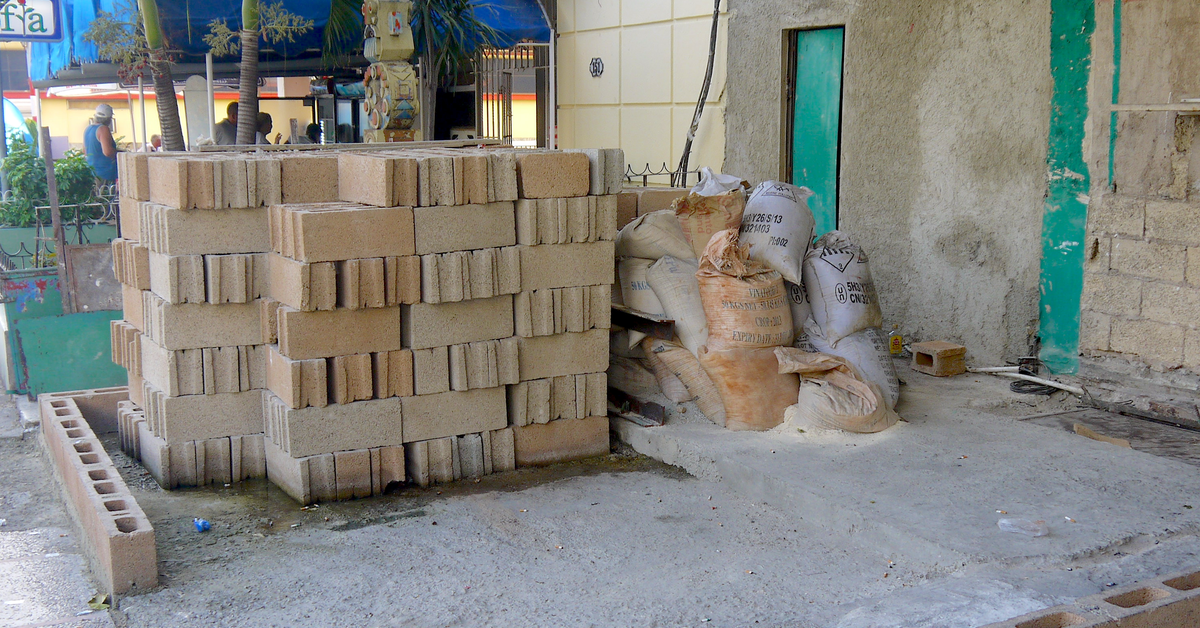
Marta’s problem – whose “furniture rot and her home is rats shelter” – is the same that affects the entire country: there are no materials to build. To the point that, the report reveals, “in Havana, much of the supply of material production is supported by non -state management forms.” Granma He called more than ten traces of the capital and only two attended, one does not arrive products since 2023, while in the other there are only aggregates, once a month and in not very good condition.
“In Havana, much of the supply of material production is supported by non -state management forms”
The note gives good account of the legislation that affects the Housing Subsidies Program, with priority for cases of affected by natural catastrophes or vulnerable persons. However, in the absence of materials that money is of no use that, in addition, it not only takes frequently to arrive, but that inflation and dollarization have reduced to nothing.
Since the regulation was approved in 2012, 155,077 subsidies have been granted and 129,150 have materialized, but 25,927 are waiting and the note does not detail how many years corresponds such a high figure. “The right thing is that the person, approximately in four months, begins to execute the work, but since the resources do not exist, the process is delayed,” says Yoanky Ultra González, housing director in Havana, one of the cities with a worse situation, due to its poor constructive condition and population density.
Elder Naples Ávila, head of the Procedure Group of the Provincial Housing Office in the capital, explains that after the order there were measures to adapt the subsidies granted and the prices of the materials were reformulated, even so, the prices are still impossible. And that, when there is a product. “Before the monetary system, the subsidized could buy in currency stores, but now the value of the dollar affects the budget and limits the completion of works,” he adds.
Granma He has consulted with architects to prepare the report, but the main conclusion does not require any specialization: with the industry in the state in which it is, it is impossible to build. “The energy deficit, the instability in the voltage that paralyzes cement plants, technological obsolescence and limitations in foreign investments have an impact on the shortage of raw materials and low productivity,” admits Maidel Leticia González González, general director of materials in the Ministry of Construction.
From this calamico situation is alive Villa Clara, a province to which Granma He dedicates his own section for the collapse suffered by his industry. The data speak for themselves: in 2020 there were more than two million blocks, some 6,000 scrubber plateaus and 1.5 million bricks. This 2025, until May, neither a single block, nor any plateau was manufactured, while the bricks stayed at 542,000.
In identical situation are the three asphalt plants of the province, which have a production capacity of 3,000 tons per month and, in everything that goes for a year, has done 3,515, which maintains the roads full of potholes. Origin and consequence of these problems, the sector has lost more than 300 highly trained workers in Villa Clara.
Although Granma Remember that “endogenous” materials are used – a plan proposed by the Ministry of Construction in 2023 for Use clay in the country, leaving marble for export-, keep pointing out that it is a local solution “and small -scale”.
In the text there is only one province that seems to have learned to face the attacks of the weather and the inability of the authorities to solve the housing problem: Guantanamo
In the text there is only one province that seems to have learned to face the attacks of the weather and the inability of the authorities to solve the housing problem: Guantanamo, which has had to do it based on blows. Affected by great hurricanes, including Matthew and Oscar in recent years, populations of the eastern end of the island keep the program at bay.
Of the 535 homes that had to be built at the beginning of the construction plan through subsidies, there are barely seven earrings in the header city. Throughout the province, the thing is slower, of the 4,191 basic cells that have been approved since 2012, there are 3,312 concluded. Maisí, Baracoa, Imías and San Antonio del Sur, are the ones that received the greatest dividends.
By force, that region has dedicated all its efforts to the sector, with milestones such as the two large producing centers – with eight presses each for floor elements -, the 63 ovens with which 6.5 million bricks are made – of local clay – and other ceramic products and the 42 mini industries that make different elements.
Despite all this, he admits Granma“He has debts with his housing fund” for “the limited availability of cement and steel.” “Rethinking this program, which reveals the interest and sensitivity of the Cuban government with those who lost everything … or are about to do so, in a context of crisis atized by inflation, it is an urgency,” he concludes.