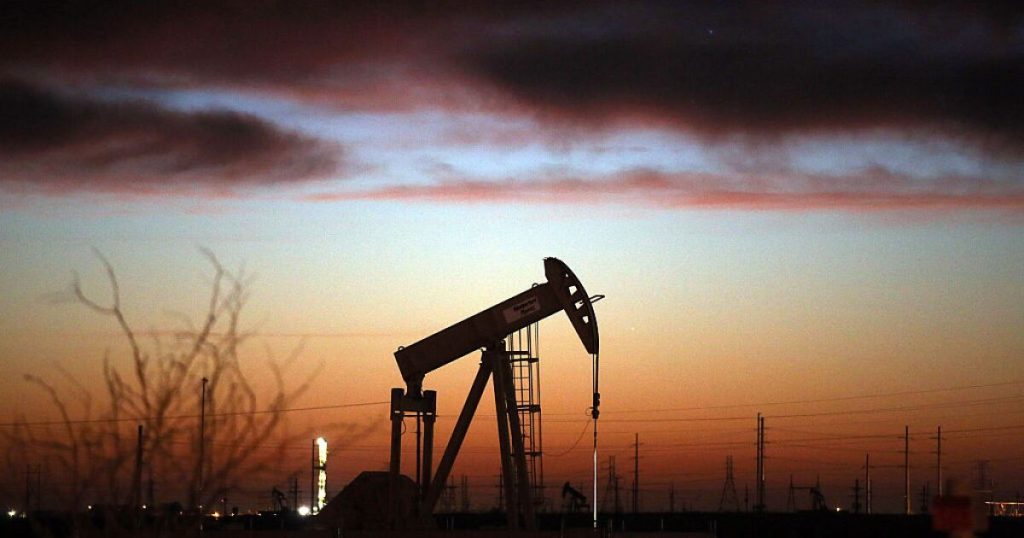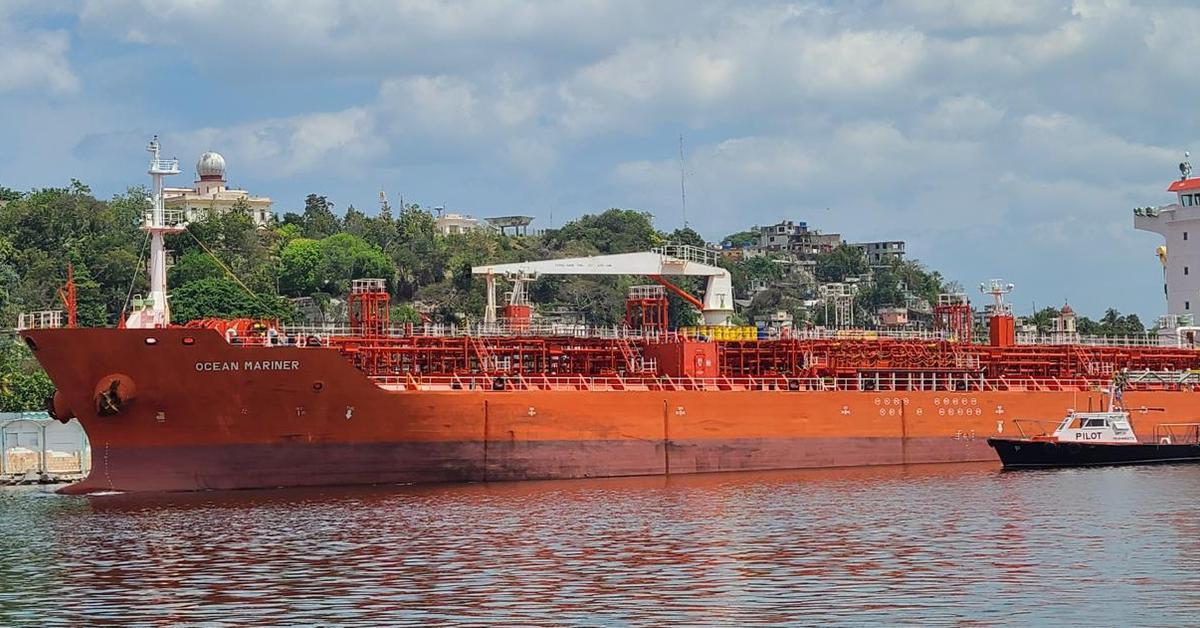
Madrid/The port of Havana is preparing to receive between Thursday and Friday the first oil tanker of the year, with about 80,000 barrels and coming from the Mexican port of Coatzacoalcos. He Ocean Marinerwhich sails under the Liberian flag, will arrive at the Island on the 8th, according to the application Marine Trafficalthough according to Vesselfinder it is the 9th when it is expected to enter the Cuban capital.
It is the same ship that arrived on December 23 with the same amount of crude oil and that forced the president of Mexico, Claudia Sheinbaum, to give explanations. To a question from the press about the payment conditions in the midst of Pemex’s debt and possible retaliation by Donald Trump for these deliveries, the president affirmed that the cooperation was historic and under governments of all stripes, as well as fully legal.
During the mandate of his predecessor from the same left-wing party, Andrés Manuel López Obrador, Gasolina Bienestar was established, a private subsidiary created in 2022-2023 with the official mission of providing service to indigenous communities, although its main activity has been to sell oil to Cuba. The company exported to the Island about 16,000 barrels of oil and derivatives per day in 2023 (about 300 million dollars, the payment method of which is unknown).
The company exported to the Island about 16,000 barrels of oil and derivatives per day in 2023 (about 300 million dollars, the payment method of which is unknown)
In 2024, the collaboration rose to 20,100 bpd, 20% more (although derivatives fell 18%), with a joint value estimated at 600 million dollars, while in 2025 the quantities fell considerably. In the first ten months of the year, exports from the state-owned Pemex to the Island stood at 5,000 barrels per day (bpd), although in November and December there were new shipments.
Now that Venezuela’s oil shipments are in the air and Mexico may become the island’s main supplier, things are shaky. Both Donald Trump and the Secretary of State, Marco Rubio, have made it clear that the cut of supply to Cuba is a consequence of the fall of Maduro that serves their interests – the death of the regime due to economic collapse – and in Mexico there are fears that the United States will react badly if the Government injects some energy into a cornered Díaz-Canel.
Apart from Mexico and Venezuela, Cuba only has two minor suppliers left: Russia, which contributed 15% of crude oil in 2025, and Algeria, with 6%, according to with an article of Financial Times.
But Russia has its own problems. As revealed exclusively The Wall Street Journalthe Kremlin has sent a submarine to escort the oil tanker that the United States began pursuing two weeks ago off the coast of Venezuela. The one who was Bella-1 It has not only changed its flag to miraculously be Russian, as was already known; also his name. Now browse with the name of Sailor and continues to try to evade Washington’s blockade against the sanctioned ships.
According to the newspaper, which cites a US official as a source, Moscow has also sent other naval means to escort the tanker. The ship, used to transport hydrocarbons from Russia, Iran and Venezuela, is empty and still unable to dock in the South American country to load. The US Coast Guard began the chase on December 21, after having boarded the Skipper –and confiscated the crude oil it was transporting, sold to China through Cuba– and the Centuriesbut he Bella-1 He refused to stop and changed his flag to seek the Russian protection he has finally found.
Russia has expressed concern about US seizures of tankers carrying its sanctioned crude and has taken the unusual step of allowing the ships to register in Russia without inspection or other formalities, according to experts consulted by the WSJ.
Moscow, according to the article, has asked Washington to stop pursuing that ship, according to three US officials, and the Foreign Ministry stated from Moscow that it was following the situation around the tanker with concern. However, the Coast Guard continues to pursue him wherever he goes, which is currently about 300 miles south of Iceland towards the North Sea.
However, the Coast Guard continues to pursue him wherever he goes, which is currently about 300 miles south of Iceland heading to the North Sea.
Meanwhile, Trump announced this Tuesday that he has reached an agreement with the “Venezuelan provisional authorities” for the supply of 30 to 50 million barrels of “high quality” oil – valued at $2.8 billion – that will be sold in the US market. The president assured that he will personally be in charge of controlling the money from the sale “to guarantee that it is used for the benefit of the Venezuelan people and the United States.”
The Department of Energy, led by Secretary Chris Wright, will be the one to execute the crude oil extraction plan immediately, although there is no public delivery deadline. Wright is scheduled to meet this Wednesday with executives from energy companies at a sector event near Miami, while officials from the world’s largest oil companies could meet with Trump at the White House this Friday to talk about investments in the Venezuelan oil sector, according to anonymous sources consulted by US media.
This Tuesday, the Bloomberg agency reported that 11 Chevron ships will head to Venezuela in January to collect oil from the country, two more than last December.