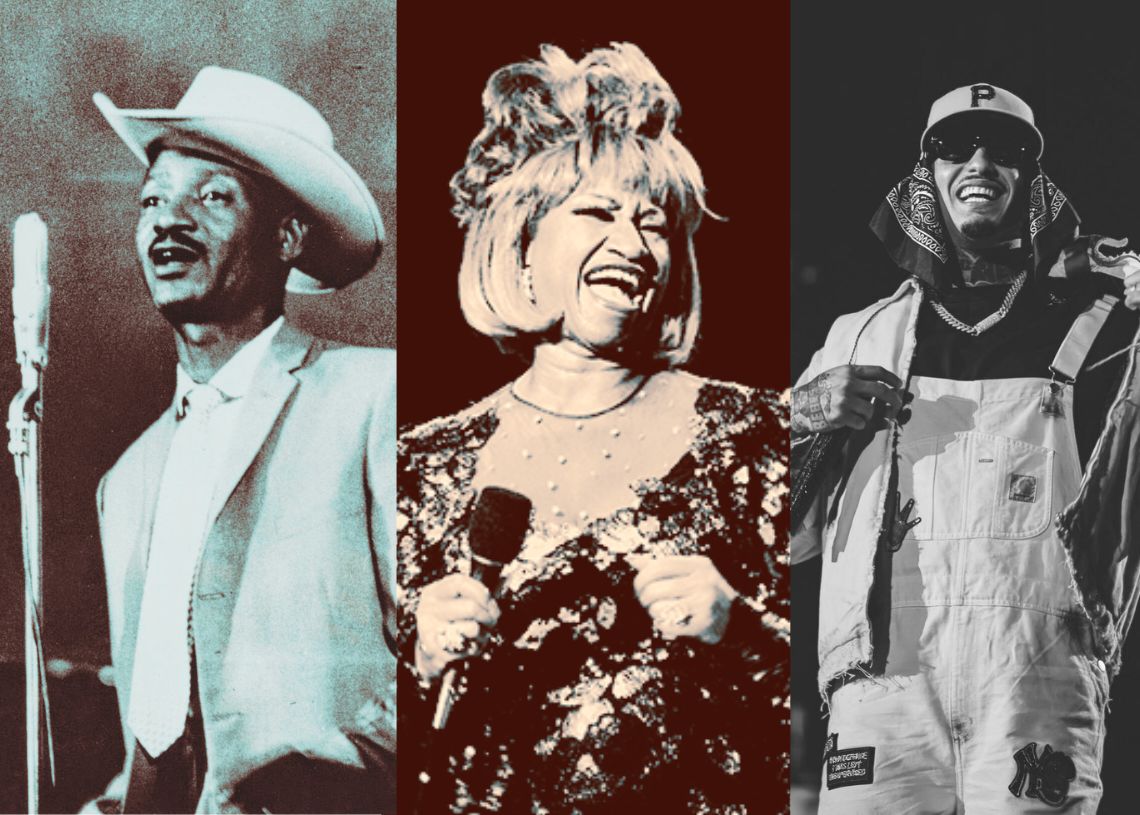
When noise aims to replace history, public conversation is distorted and cultural hierarchies are staggered in collective perception. This is exactly what happened after the recent statements of the producer and CEO of Planet RecordsRoberto Ferrante, who raised Oniel “Babeshito” to the title of “The largest Cuban artist of all time”, even above monumental figures such as Benny Moré and Celia Cruz.
His words, far from being an innocent comment, unleashed a storm that combines admiration, disbelief and deep discomfort for those who consider Cuban music an intangible heritage that is not measured only with the metric of social networks.
Benny Moré and Celia Cruz are not simple artists; They are columns that support the musical identity of Cuba. I died, with his unparalleled voice and his mastery in genres such as Son, Mambo and the bolero, left a legacy that is not only heard, but is studied in conservatories and universities.
Celia Cruz, La Guarachera de Cuba, is a global icon, with three Grammy and four Latin Grammy awards, more than 70 recorded albums, and an international projection that turned Cuban music into a cultural flag.
Their careers are not defined for a moment of fame, but for decades of sustained work and for a footprint that is still alive in generations that had not even been born when they were at the summit.
It is true that Babeshito today lives a moment of undeniable boom. His concert at the Kaseya Center in Miami and the energy that his young audience has given him massive visibility.
But here enters the first big difference that many point out: a punctual success does not equals the historical weight that represents the legacy of artists whose music has transcended the passage of time. These are different scales, different and public contexts.
The fact of filling a stadium or being Trending topic It does not automatically place an interpreter in the same plane as those who defined and expand the musical identity of a country.
Roberto Ferrante, the architect of this controversy, is not a stranger in the field of international musical production, but for many Internet users his name arose for the first time as a result of this statement.
Founder of Planet Records, has worked in the Latin market and in the development of emerging artists. However, his statement about Babeshito has been interpreted by some as a positioning and provocation strategy: a marketing play designed to generate conversation, media coverage and virality. And he got it.
Indeed, today many people talk about the subject, and the urban artist is a trend, although much of the conversation is marked by the controversy rather than by a positive consensus.
Digital metrics, as used today as a “greatness” reference, also enter the debate. On platforms such as Spotify, Celia Cruz maintains several million monthly listeners, while Babeshito moves in the rank of hundreds of thousands.
It is not that numbers are everything, but they offer an objective perspective about the current scope and global recognition. Even so, it is undeniable that we live in an era in which immediate popularity can temporarily eclipse historical names, even if the effect is passenger.
The central issue is how, as a public and as a press, we handle these types of narratives. Honesty is essential: we must differentiate between a momentary commercial success and a sustained cultural contribution over time.
We must also respect the story, understanding that each genre, context and generation deserves to be valued in its fair dimension, but without easy holders seeking clicks at the expense of collective memory.
And it is legitimate to ask questions that transcend the juncture: What does Babeshito really contribute to the musical panorama in terms of innovation? Can your work hold and resonate in 10 or 20 years as the songs of Celia and Benny do? What does it imply for Cuban music that figures as ferrant use such extreme comparisons as a marketing tool?
Celebrating the new urban wave is valid. In fact, it is necessary for Cuban music to continue evolving and conquering new audiences. But replacing in a stroke those who cemented that tradition is irresponsible.
Ferrante probably achieved what was proposed: that Babeshito’s name is on everyone’s lips. That demonstrates the power of marketing, but not the automatic equivalence between fashion and monument.
And perhaps the true debate that leaves all this is, as a society, we have begun to value the “now” digital and very little artistic endurance that makes the difference between a seasonal artist and an eternal reference.