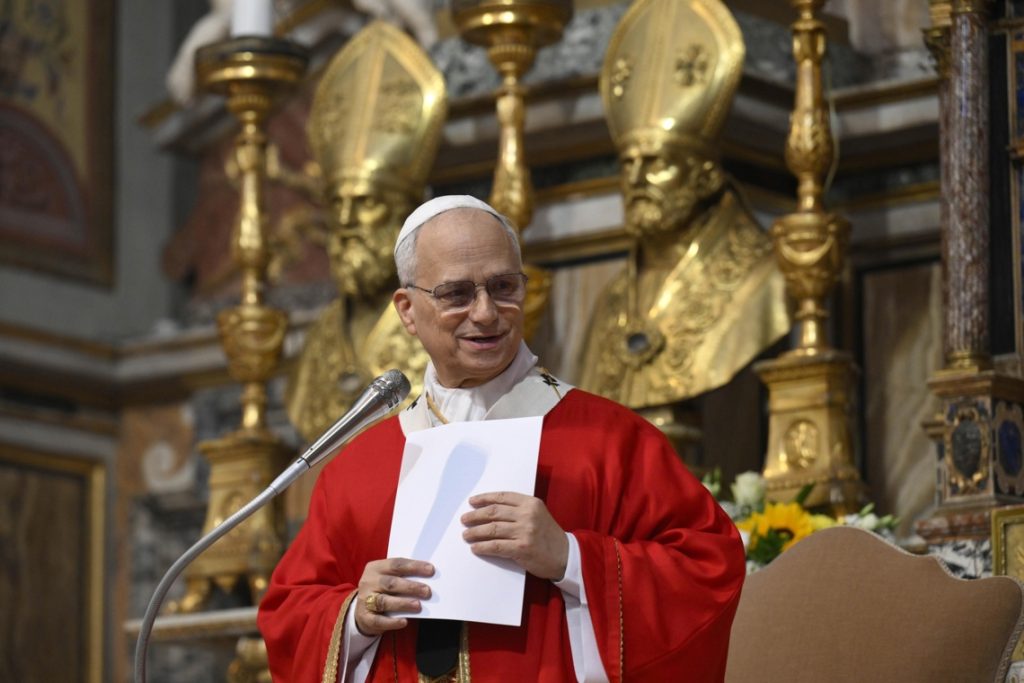
Madrid/The opening of the judicial year coincided this February with the inauguration of the new president of the Supreme People’s Court. Oscar Manuel Silvera Martínez took over this Tuesday – as announced last December before the National Assembly – Rubén Remigio Ferro, who is leaving the direction of the High Court just after signing one of the star sentences of recent years: the life sentence of the former Minister of Economy and Planning. Alejandro Gil Fernandez.
Silvera Martínez was Minister of Justice until a month and a half ago, with all that that entails. “The Revolution will always have the guarantee of an administration of justice commensurate with the dignity and courage of the people and the heroes and martyrs of the Homeland, such as those who fell in combat in the sister Bolivarian Republic of Venezuela. That is my greatest commitment and that of my colleagues in the country’s Justice Court System, which I ratify today by assuming this responsibility,” he said upon assuming his new position.
Graduated in Law “with a Gold Degree”, according to his official biography, Silvera Martínez began his career as a substitute judge in Bayamo, but he soon began to climb positions and is no stranger to the institution that he leads today, since in 2003 he served as assistant to the then president and later held the vice presidency, from where he moved to the Council of State with that position. In 2018, Miguel Díaz-Canel chose him as Minister of Justice and since then he has abandoned the judicial career in favor of politics, which in Cuba is ultimately the same thing.
More recent was another of the controversies in which he had to mediate as minister: the open war in Cuban Freemasonry.
Among the most delicate situations that Silvera Martínez has faced during her time as the Justice portfolio has been the controversy approval of the Family Codewhich had to inherit the fratricidal struggle that broke out when the Government included equal marriage in the draft of the Constitution and had to withdraw it for fear that this mention would even undermine support among its ranks. It was not easy to carry out this legislation either, already in 2022, for the same reason, although finally society has accepted the change without major shocks.
More recent was another of the controversies in which he had to mediate as minister: the open war in Cuban Freemasonry, which has lasted at least two years since the brotherhood exploded in 2023 when a robbery was attributed to the then Grand Master of the Lodge of Cuba. In troubled waters, the Ministry of Justice tried to place a like-minded person at the head of the group, causing another internal crisis that even included a period of bicephaly due to the refusal of some members to recognize the one promoted by the opposing group as leader.
Finally, Silvera gave in. last november and José Manuel Valdés Menéndez-Cuesta was recognized as the new Grand Master, ending his support for Mayker Filema Duartewho clung to office against the will of the majority.
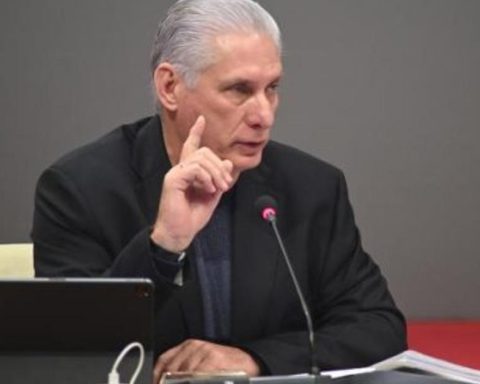
The president of the Supreme Court was surrounded yesterday by the highest authorities – some of whom have been his colleagues in Government for seven years – as established by protocol. There were Díaz-Canel, the president of the Assembly, Esteban Lazo Hernández, the vice president Salvador Valdés Mesa and the secretary of organization of the Central Committee, Roberto Morales Ojeda; among other representatives of the State and the Party.
Once the appointment ceremony was over, Silvera took the floor to open the judicial year, and highlighted, in his speech, some purely technical issues, related to the digital transformation of justice and judicial procedures, which in his opinion will help make the system “more agile, secure, effective, transparent and accessible for those involved.” He also urged to improve the systems of control, influence and care for those serving sentences outside of prison and called to “ensure ethical and incorruptible conduct”; and even asked that the headquarters of justice maintain “order, good taste and cleanliness.”
But, beyond the administrative, there was a dogmatic part that included a memory of the birth anniversary that, for the ruling party, permeates everything in this year in which the population’s concerns point more than ever in the opposite direction. “In the year dedicated to the celebration of the centenary of Commander in Chief Fidel Castro, we all have the duty to fulfill with quality the role that corresponds to us, to which we will dedicate our time and effort,” he said, before beginning to talk about the United States.
Silvera spoke of offenses, provocations and aggressions from the “enemy,” which increased with “the recent executive order signed by Donald Trump that has declared Cuba a threat and that sanctions all countries that trade oil with us.” The president of the Supreme Court pointed out that this is a “coercive measure that violates International Law and intensifies the unjust, illegal and genocidal blockade of the United States against Cuba” and, therefore, he said, “the members of the judicial bodies ratify our support for the Revolution; and we will defend it with the same courage that made it possible the historical generation led by Fidel and Raúl and that today the leadership of the country, with Díaz-Canel at the helm, carries forward. That is what we are preparing for, and we are convinced that we will win.”