Madrid/It is not just that the new Government rules on the foreign exchange market still offer many unknownsbut they can continue to deepen the systemic crisis in Cuba. That, at least, is what economist Pavel Vidal, head of the Observatory of Currencies and Finances of Cuba (OMFi), associated with the independent media The Touch.
In a report made public this Monday, the specialist analyzes how it will affect what he calls “redollarization,” whose fundamental objective is “to displace the informal market and redirect remittances and other foreign currency flows toward the formal financial system,” that is, to capture foreign currency for ruined coffers. To do this, it is based on previous similar measures and on the few new features provided by the measures announced last week.
These are, remember, only two. One, that, unlike other moments, such as partial dollarization in the nineties or the “duality schemes” that were established later, first with the CUC and then with the freely convertible currency (MLC), the private sector will now be allowed to operate bank accounts and make payments in foreign currency. The other is that the intention to build an “official exchange rate scheme” is put on the table.
The benefit that could be obtained, “punctual and fragmented,” believes the economist, “could quickly be overshadowed by the harmful effects.”
For the rest, Vidal reiterates, “it is a return to a dual monetary scheme that, in addition, preserves other characteristics that have been present since the nineties: multiple exchange rates and centralized and discretionary management of the country’s foreign currency resources.” As he explains, with the new rules the regime tries to “isolate sectors and markets from the Cuban peso and its instability” – specifically, those connected to foreign trade – and, with this, prevent “at least some parts of the economy from continuing to collapse.” However, the “punctual and fragmented” benefit that could be obtained, the economist believes, “could quickly be overshadowed by the harmful effects produced by dual monetary and exchange schemes if policies and reforms that cover the entire productive apparatus and the workforce are not generalized.”
This “redollarization” could cause three problems, says the expert: more inequality and more “distortions,” as well as “segmentations,” which would impede the growth of the economy in the long term. The first, because real dollarization does not extend only to companies connected to the export sector, but also covers the domestic market. “The majority of salaries and pensions remain in Cuban pesos while access to goods and services consumed by households is dollarized,” says Vidal. “This widens the social gap, in which families without access to remittances and other sources of foreign currency are relegated.”
As for the “distortions,” he says, they will occur because the measures are accompanied by “multiple exchange rates,” in such a way that “relative prices and costs stop “speaking the same language.” Vidal argues: “What seems profitable at one rate can be a mirage at another. This alters economic incentives and pushes for wrong economic decisions at the micro and macroeconomic level.”
Segmentation, finally, implies that “circuits and value chains are formed that are not well connected”, “two economies within one, with weak or non-existent communicating vessels”. In this scenario, an eventual official exchange market – of which there is no news yet – “could try to reduce segmentations, but there are many doubts about what degree of convertibility it will really offer to the Cuban peso and whether access to foreign currency will be truly competitive or will be interfered with by political interests and preferences in favor of the state company.”
“This encourages a dark business-bureaucratic lobby to be able to remain among those elected”
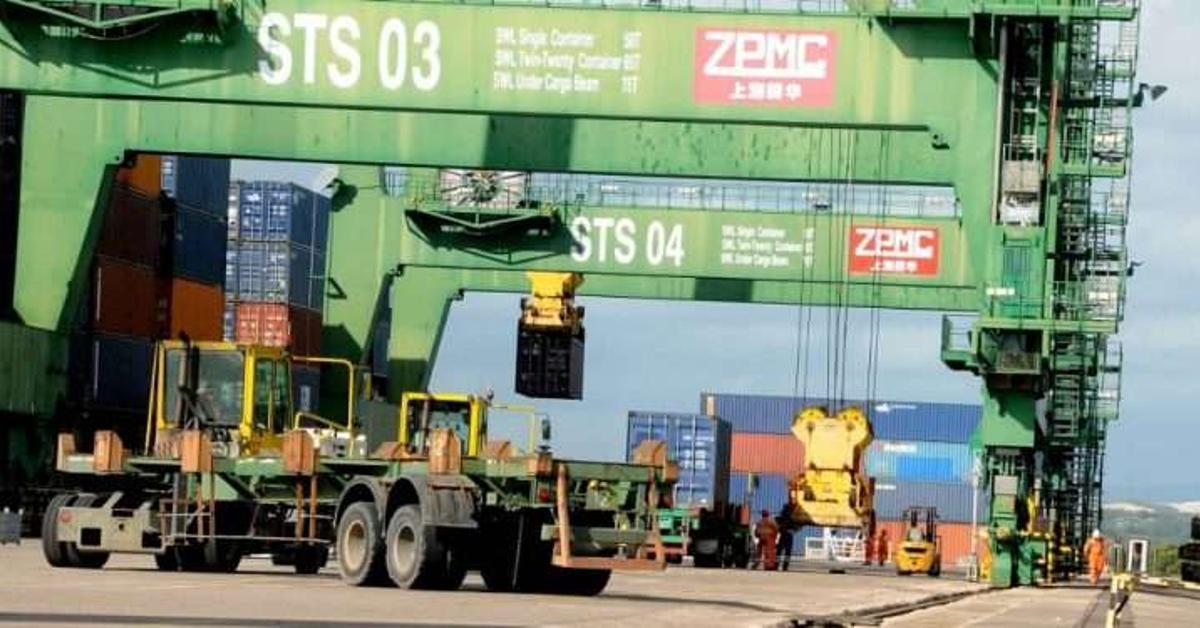
The new dollarization, the economist says, is extremely imprecise. “There are sectors where it is clearer that they will be able to use the dollar as a means of payment and reserve of value,” such as exporters, the Mariel Special Development Zone (ZEDM), foreign investors, diplomatic missions or international cooperation projects, but, he points out, “in other aspects the margin for discretion is enormous and, therefore, for arbitrariness and the distribution of privileges.”
And he continues: in the domestic market or allowing them to use dollars because they substitute imports”, because exporting “is verifiable”, but “measuring who is chained or substituting imports can be as broad or narrow as you want.”
Clearly, he asserts, not all private companies are going to be dollarized and the Ministry of Economy and Planning will decide which ones, so the conclusion is obvious: “This encourages a dark lobby business-bureaucratic to be able to remain among the chosen ones.” Most MSMEs, in short, are going to have to continue operating in national currency and, although their desire is to access “legally, safely and with greater stability” the purchase of foreign currency, without having to resort to the illegal market, and that this also entails a drop in the price of the dollar, this may not happen.
“There is a risk that the official exchange market will not be enough for everyone and will prioritize sales to state companies (the main subject of the national economy according to the Constitution),” says Vidal. “If banks have few dollars and have to decide between selling to a state company or an MSME, political bias would leave the private sector relegated.” That is, what is happening today.