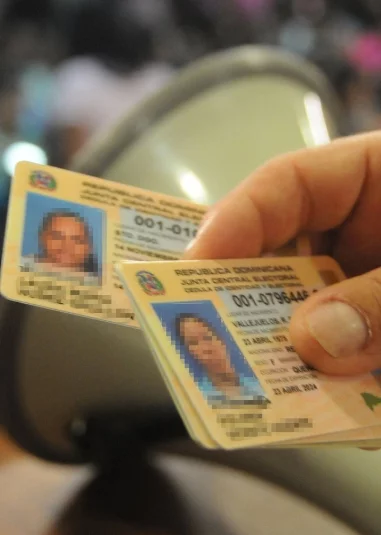
Santo Domingo.-An the project and its operational part, the Central Electoral Board (JCE) will allocate just over six billion pesos in the implementation of the new identity and electoral card.
And no, it is not an investment that can be postponed.
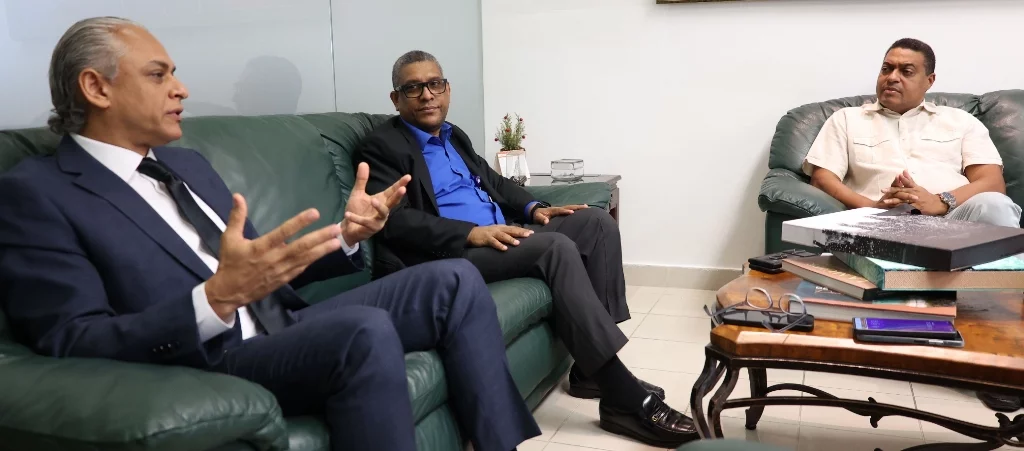
Interviewed in the day, the National Director of Cedulation, Américo Rodríguez, as well as Johnny Rivera, director of computer science, explained that plastic issuance contracts won in 2023 and that he urged to achieve a modern identity document.
The novelties
Yes, modern and that dealt with the conversation. It is so much that the new identity and electoral card will allow to explore, in the near future, the probability of a unique document that concentrates multiple credentials and services in a single support, both physical and digital.
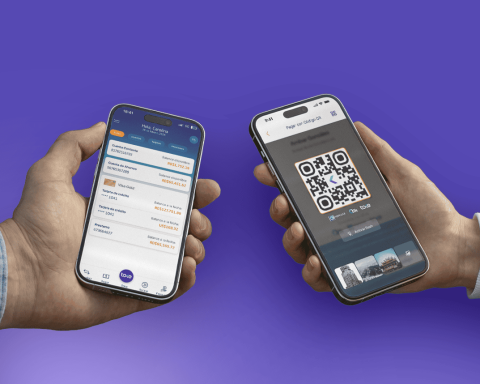
Rodríguez explained that one of the central axes will be the inclusion of a digital signature within the chip, which will allow signing contracts, requests and authorizations without the need for displacements. “We will be able to sign any type of service from the office or home, safely and quickly,” he said. This innovation will be complemented with a digital identity available on the mobile phone through an application (Wallet), whose activation will require the physical card and biometric authentication.
While Rivera stressed that this electronic version will return the absolute control over their data to the citizen. “Each person will decide what information to share. If an institution only needs to verify its name and ID number, you can show a QR code with that data, without revealing anything else,” he said.
Travel certificate
Another progress will be the incorporation of a developed travel certificate with the advice of the International Civil Aviation Organization (ICAO).
This element will act as a complement to the passport, allowing to validate identity in airports and border crossings.
“In countries such as the Autonomous Community of Catalonia and in several nations of South America, citizens can travel with their identity document because it contains a certificate that authentic the bearer,” Rivera said.
This condition will be helpful in cases of passport abroad.
Security
Fraud protection will be another pillar. The ID will be manufactured in polycarbonate and the data will be recorded with laser technology, making them virtually unalterable. “Even the chip will be protected inside the layers, avoiding damage due to wear, water or sun,” said Rodríguez.
The document will have visible elements – such as holograms and image changes when tilting – and with other invisibles that are only detected with microscope or ultraviolet light. And, to clear recurrent doubts, Rivera clarified that the chip “will not have GPS; it will not track anyone. Its function is to authenticate the identity, not to monitor.”
The tender
Three business consortiums participated by the JCE. The envelope with the economic offer will be open next week.
To guarantee quality and safety, the tender demanded the direct participation of manufacturers, avoiding intermediaries. “It is similar to ticket production: with factory specifications that are not available in the open market,” said Rodríguez. While Rivera reported that, after the award, a comprehensive training plan for cedulation personnel and technical areas will be deployed.
“The winning company will transfer knowledge so that we can operate and maintain without depending on third parties,” he said.
More than document
Both officials agreed that the new ID should not be seen only as a modern card, but as the axis of an integral system of services and security.
“We are not talking only about a more beautiful document, but of a tool that will protect identity, simplify procedures and open the door to a unique document that concentrates multiple credentials,” said Rodríguez.
The process was socialized with political parties. Initially, there were complaints about the gray scale photo that will contain the card; However, it responds to the technology applied in the impression of the document, while the original photo will remain in full color in the JCE database.
Another of the demands of the parties was that the bidders had previous experiences in issuing the document, which was verified among the participating consortia.
As a novelty, they also stressed that the document can be used virtually in a digital portfolio similar to as with credit cards and other identity documents.
Works will last twelve months
Details. Yes, the renewal of the identity and electoral card will last twelve months. The planning of the Central Electoral Board (JCE) is that citizens can change plastic in their birthday. However, the entity will enable cedulation units that will work 24 hours and issue the document regardless of the month.
Likewise, they will extend cedulation days to private and public entities, allowing their collaborators, as well as their direct relatives, to change the plastic.
Indisty, the current card will continue to function normally until the process is concluded and, only by then, the Central Electoral Board, by resolution, will discontinue its official use.