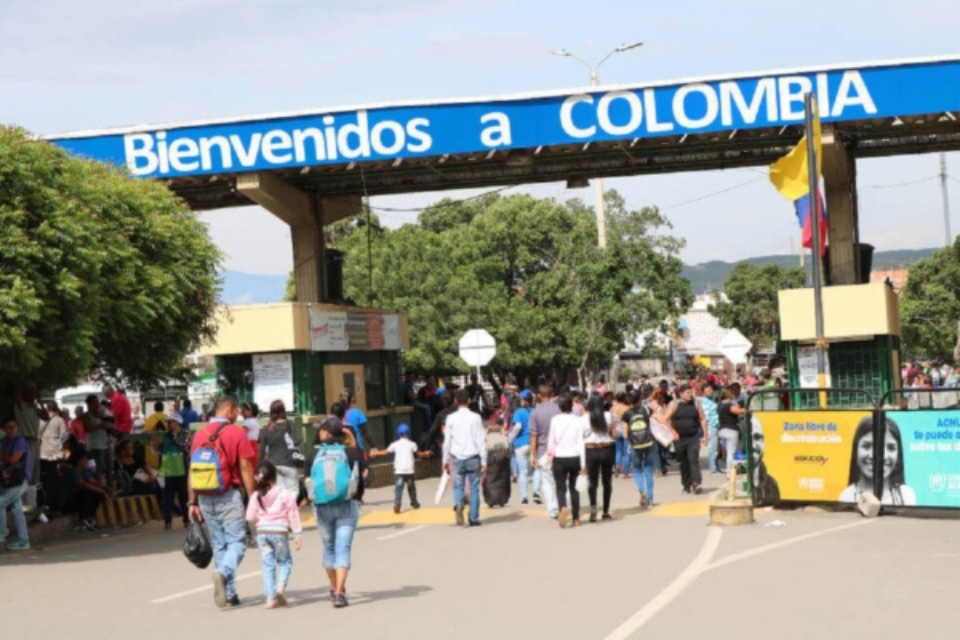
The initiative contemplates productive integration, the strengthening of bilateral trade and the joint impulse of social projects and infrastructure in the health, education, culture, tourism, transport, gas, oil and electricity sectors
The agreement between Colombia and Venezuela to create a binational economic zone on the border unleashed criticism of the Colombian opposition, which sees it as a assignment of sovereignty to Chavismo, while Gustavo Petro’s government defends it as a commitment to recover state control in historically abandoned regions.
The Memorandum of Understanding, signed on July 17 in Caracas by the Minister of Colombian Trade, Industry and Tourism, Diana Morales, and the Venezuelan vice president, Delcy Rodríguez, establishes a framework of cooperation for the implementation of the first economic zone shared between the two countries, which will be valid for five years.
The initiative contemplates productive integration, the strengthening of bilateral trade and the joint impulse of social projects and infrastructure in the health, education, culture, tourism, transport, gas, oil and electricity sectors.
Although the agreement clarifies that the creation of this binational zone does not limit the sovereignty of any of the parties or compromises budgets, made the alarms of Colombian opposition sectors and even a presidential candidate, the right -wing Abelardo de la Espriella, filed a lawsuit before the State Council.
Espriella asked the Supreme Court of the jurisdiction of the administrative contentious to cancel the agreement, arguing that the Minister of Commerce did not have the authority to sign it, since, in his opinion, “it demands the signing of an international treaty.”
*Also read: Maduro confirms that Chevron received a license to re -operate in Venezuela
Criticism of the Colombian opposition
The former president Álvaro Uribe (2002-2010) considered “unacceptable” the signed agreement “with the tyranny of Maduro” and assured in a video published in X that represents “a step forward in the delivery of the country (Colombia) to international crime.”
One of the most critical figures with Petro, Senator María Fernanda Cabal, of the same Uribe party, democratic center, stressed that if her right -wing political formation is winning in the 2026 presidential elections will reverse “Petro’s decisions that give him” the sovereignty of Colombia “the narcodicator Nicolás Maduro.”
Petro replied that “a binational zone is not to deliver the sovereignty of the homeland, is to create the social and economic conditions that allow two peoples, of blood and common history, to prosper.”
For the Colombian president, the true loss of sovereignty occurs when foreign and national mafias dominate the border population with “weapons and terror.”
The question of sovereignty
For its part, the Colombian minister Morales described the agreement as “a firm step to recover sovereignty,” and stressed that it will allow the State to intervene in historically excluded territories and foster dynamics of productive integration.
On the other hand, political scientist Sandra Borda, a professor at the University of the Andes, warned that the greatest risk of the agreement is the lack of democratic guarantees in Venezuela.
“Self -critics are not reliable partners (…) Any form of international agreement implies a partial assignment of sovereignty, and those assignments are only done when the counterpart is reliable.”
According to Borda, “none of these conditions is fulfilled in the case of the agreement that will govern this binational zone.”
With information from the EFE agency
*Journalism in Venezuela is exercised in a hostile environment for the press with dozens of legal instruments arranged for the punishment of the word, especially the laws “against hatred”, “against fascism” and “against blockade.” This content was written taking into consideration the threats and limits that, consequently, have been imposed on the dissemination of information from within the country.
Post views: 85