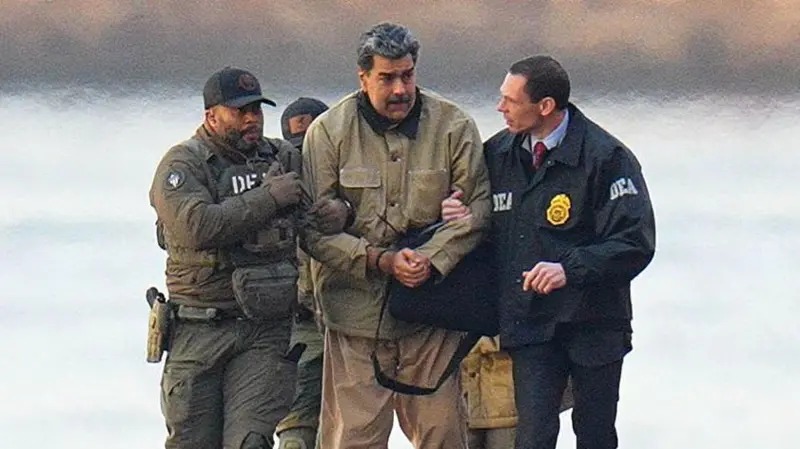
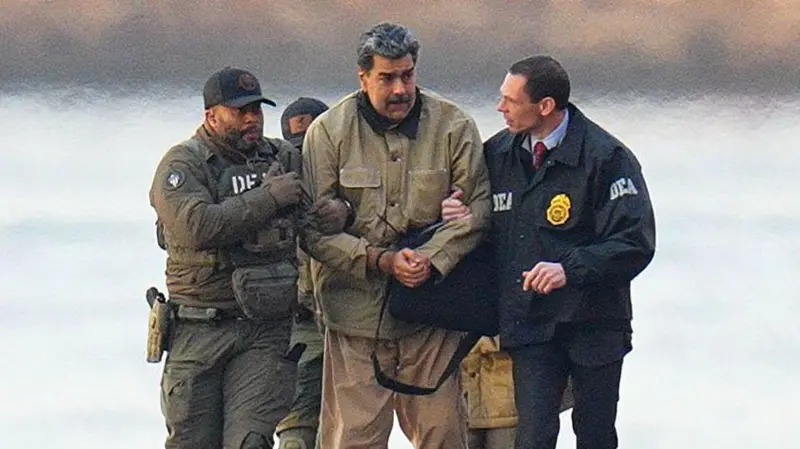
One week after the dramatic American operation in Venezuela that culminated in the capture of Nicolás Maduro, the details of the intelligence information surrounding the mission are beginning to become clear, although some mysteries still remain.
The intelligence
The mission required months of planning and intelligence gathering. The CIA is believed to have sent a team of undercover agents to Venezuela in August.
The United States does not have an operational embassy in the country, so the team could not use diplomatic cover and was operating in what is known in the intelligence world as a “restricted zone.” Their goal was to identify targets and recruit people who could provide help.
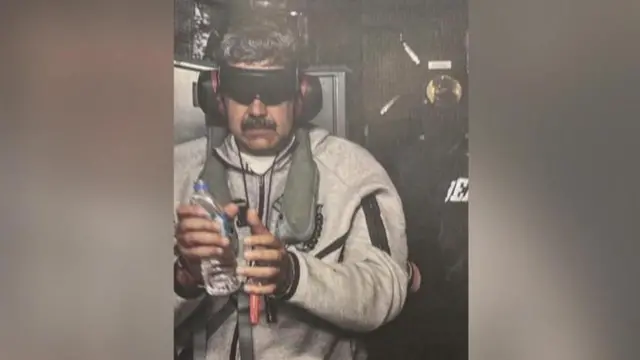
US officials They have stated that they had one source in particular who provided detailed information about Maduro’s whereabouts, which would have been crucial to the operation.
The identity of this type of source is usually strictly protected, but it was soon learned that it was a “government” source who must be very close to Maduro and be part of his inner circle to know where he would be and when.
This has led to intense speculation about who he is and what has happened to him. However, his identity has not yet been made public.
All the human intelligence collected on the ground was integrated into a “mosaic” of information to plan the operation, together with technical intelligence such as maps and satellite images.
The mission
The magnitude, speed and success of the operation was unprecedented.
“Everything worked perfectly. That doesn’t happen often,” explains David Fitzgerald, the CIA’s former chief of operations for Latin America, who also participated in mission planning with the US military.
“It is not military tactics that drive the operation, but intelligence.”
Around 150 aircraft participated in the mission, with helicopters flying just about thirty meters above the ground to reach Maduro’s compound.
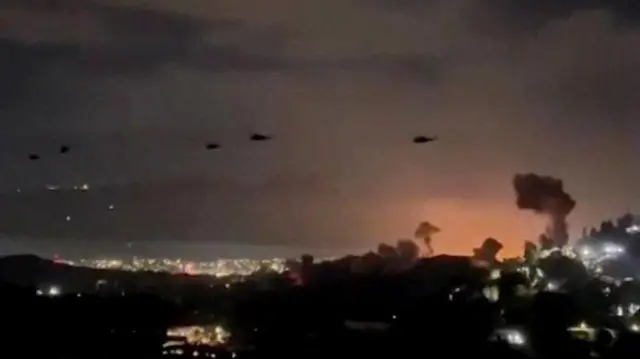
However, some mysteries still remain. One of them is how exactly the United States managed to turn off the lights in Caracas to allow the special forces to arrive.
“The lights in Caracas went out largely because of some experience we have; it was dark and dangerous,” declared US President Donald Trump.
The fact that the US Cyber Command received a public thank you for its role in the operation has led to speculation that US military hackers infiltrated Venezuelan networks in advance to disconnect the power grid at the precise moment, but details are scarce.
The failure of Chinese and Russian air defenses has also raised speculation about the type of jamming or electronic warfare technology the United States deployed in the air to support the operation.
The US Space Command, which operates satellites, also received credit for creating a “route” so special forces could enter undetected.
Stealth drones are also believed to have been deployed. The exact details of the capabilities used are likely to remain secret, but America’s adversaries will do everything they can to understand what happened.
The battle
Those who planned the complex operations say it is extraordinary that everything went as planned, something that does not usually happen. One helicopter was hit by gunfire but was able to continue flying, and no members of the US forces were killed.
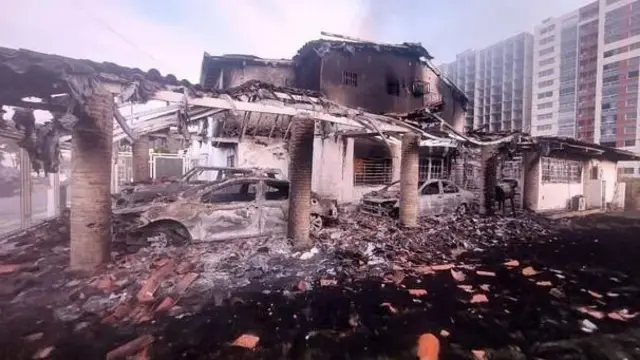
Few details are still known about the battle that took place in Maduro’s compound, Fuerte Tiuna.
The Cuban government reported that 32 of its citizens died at the hands of US forces. These were bodyguards provided by Cuba to protect Maduro. The Caribbean country not only provides bodyguards but also extensive security support to the regime.
“Within Maduro’s immediate perimeter, there were probably no Venezuelan security agents, and on the outer perimeter perhaps a mix of both,” Fitzgerald says.
The fact that they proved so ineffective has also raised questions about whether some elements of the regime facilitated the mission in any way.
US forces also managed to reach Maduro when he was trying to lock himself in a armored room, but before he could close the door.
They had blowtorches and explosives ready to open the door if necessary, but the speed of the arrest suggests, once again, an incredibly detailed knowledge of the layout of the complex.
The plan
The CIA conducted a classified assessment before the operation, analyzing what could happen if Maduro was removed.
Analysts examined several options and reportedly concluded that working with elements of the existing regime offered greater chances for stability than attempting to install the exiled opposition in power.
This helped consolidate the idea that the United States should collaborate with Delcy Rodríguez, the vice president.
It is believed that there were secret and unofficial contacts with elements of the Maduro regime before the operation to discuss how the different parties could position themselves regarding possible scenarios.
The exact details of these contacts remain a mystery, but they probably go a long way toward explaining why the mission took place, why it was successful, and what the plan is going forward.