Havana/A computer, two chairs, several stunned paper shelves and a persistent moisture smell. Thus illustrates Pablo, a former official of the Provincial Book Center of Villa Clara, the precariousness he governed in the “offices” of the Editorial Capiro: a quarter of three meters wide and two long.
Pablo, who had often in Capiro – located at the bottom of the Pepe Medina bookstore, on the side of the Vidal de Santa Clara Park – for work reasons, the place came to know well. A handful of city writers act as editors, he explains. “Everything literally is at home, not only because they have to work in their homes, but because they are edited and publish their things themselves.”
Capiro is one of the publishers that emerged in the province 25 years ago by order of Fidel Castro and that the ruling called a system of territorial editions. His goal was to give an illusion of literary prosperity after the special, characterized period – among many other shortcomings – due to the lack of paper to publish books and newspapers.
In a quarter of a century, the network – conformed by 22 publishers – has only published about five million copies (200,000 every year on average) of 7,000 titles, which is an average of only 714 copies per title. In addition, only 280 titles per year have been published throughout the country and, for each publisher, only 318 titles in its 25 years of existence.
The first specimens were the “birthday gift” that the Ministry of Culture made to Castro on August 13, 2000
Polygraphic companies at the service of territorial editions use Risograph printing technology – in fact, Riso was the colloquial name that these houses received – which allows only a small roll and the preparation of enclosure specimens, with black and white covers. The first specimens were the “birthday gift” that the Ministry of Culture made to Castro on August 13, 2000.
“Although today Villa Clara’s polygraphic technology has improved, books still have very low quality,” says Pablo. An article published Wednesday by Vanguard He is right. The polygraphic had to print at full speed, for the Havana Book Fair, copies of 50 titles, both from Capiro and other publishers, which forces workers – which still fulfill the task – to work twelve hours a day.
“They only stop for lunch,” says his chief of production and sales, Danielis Zúñiga, for whom this rhythm is a source of pride.
Among the books that must be printed, judging by a photo published in Vanguardia, is not Black Tales of Cubaby Lydia Cabrera, author censored by Fidel Castro and whose work was the most anticipated title of the year. After a momentary appearance in the table round and the notice of a presentation – just two days before the fair ends – the official press has silenced the return of the Tales To bookstores.
The editorial-political tandem is repeated in other provinces, which “make heart guts” to publish books
The editorial-political tandem is repeated in other provinces, which “make of heart guts” to publish books. “But Villa Clara is one of the most weight weight,” says Paul. With an editorial squad that charges little and must be agreed His own resources, which Capiro and the other 21 provincial publishers of Cuba exist yet “is miraculous,” he adds.
“Many of those editors and advisors have other works,” says the former official. “Some who, for example, work at the Central University of Las Villas, are forced to charge less for having two jobs, although they have no less workload either in one place or in the other.”
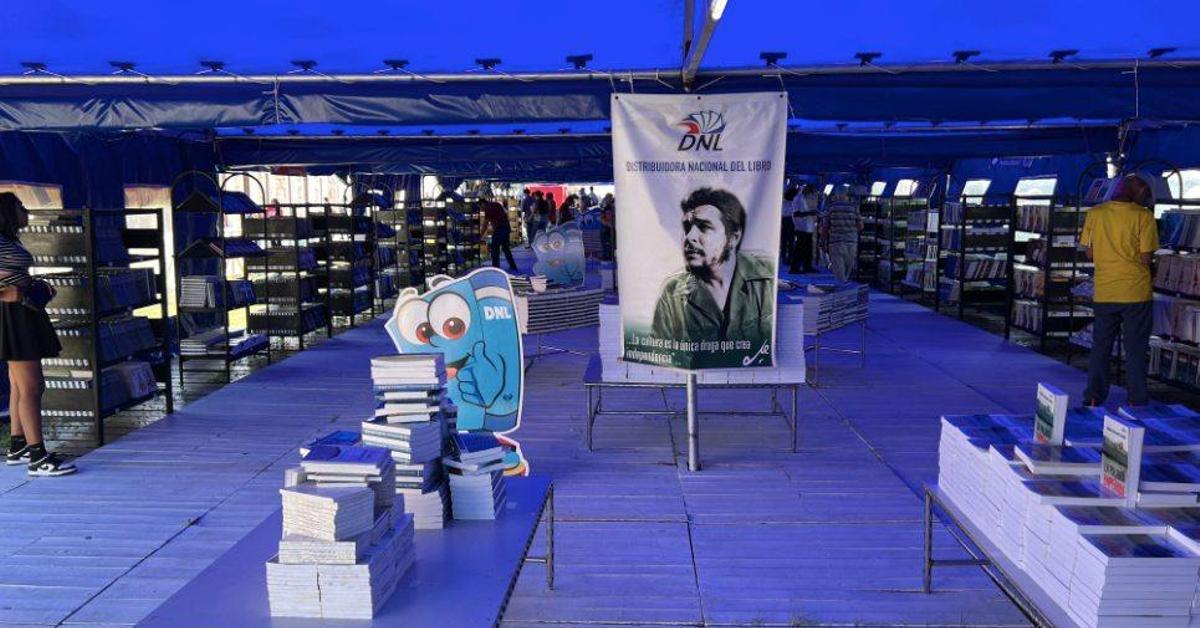
During this fair, territorial editions have a special booth as a tribute to their 25 years and also because the contribution they lead to the event is rather scarce. The director of the East publishing house, of Santiago de Cuba, and in charge of the standsaid a Cubadebate that the territorial have been again and again subject to “acute debates” for the amount of manuscripts that accumulate, and that objectively – although they accept them – will not be able to publish.
In addition to Capiro, in Villa Clara operates the thirst for beauty. Other publishers are Loynaz (Pinar del Río), Áncoras and El Abra (Youth Island), Montecallado (Mayabeque), Unicorn (Artemisa), Extramuros (Havana), Matanzas, Vigía and Aldabón (Matanzas), Queen of the Sea ( Cienfuegos), luminaire (sancti spíritus), holguín and la luz (holguín), sanlope (the Tunas), Ávila (blind from Ávila), Acana (Camagüey), Santiago, Bayamo, Ortho and the Sea and the Mountain (Granma).