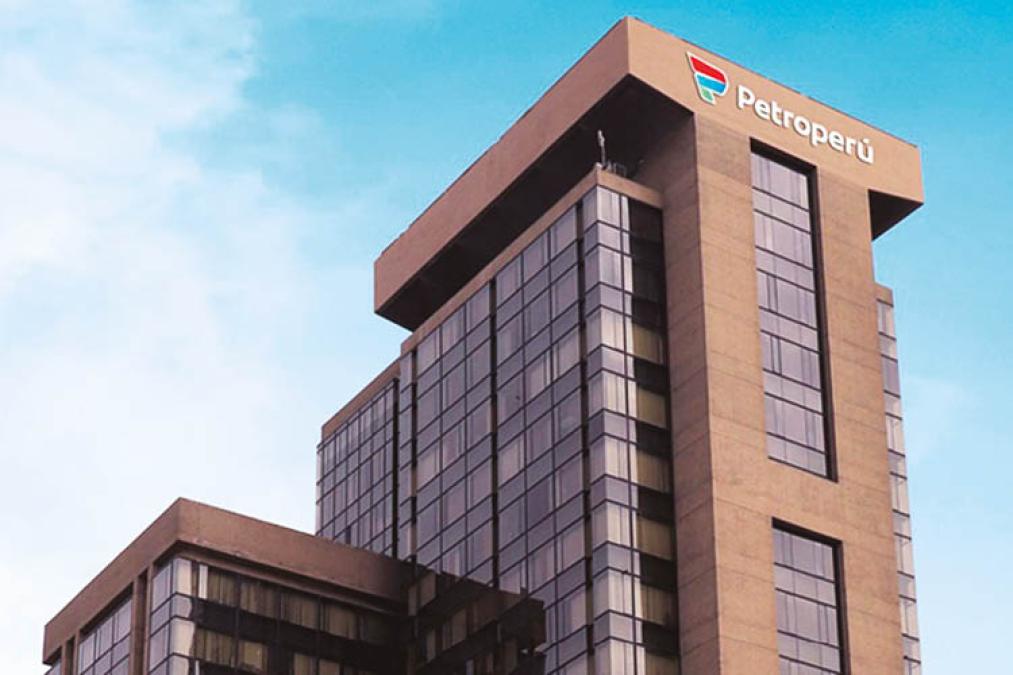
The crisis in Petroperu It continues while there is suspense due to the possibility of a new change in the board of directors. The almost 12 lost months of the company under the direction of Alejandro Narváez continue to take their toll today and people feel it that way. For this reason, an Ipsos survey for Perú21 revealed that more than half would prefer that the state company be sold to a private company or that it be liquidated and stop operating. Only 26% consider that they should continue receiving help from the State (see table).
For the former president of the public company, Carlos Paredes, the pollster’s information shows that Peruvians are more aware that the company has had poor management with “disastrous results” that ultimately takes its toll on all Peruvians.
“In the short time that the next board will have, it must make Petroperú a different company with a different corporate governance and have a financial and productive solution for the company. Petroperú cannot continue to be managed by the same people,” he commented.
For this reason, he considered that those in charge of making this restructuring and these changes must have contracts that are protected by a legal framework that allows this transformation to be achieved. To this must be added, as he considered, the fact that transparency must be promoted and the truths that they wanted to hide about the situation of the company in some administrations must be made known.
“This new board must be given complete freedom to provide a diagnosis and propose a direction for the oil company. There must be a plan that takes into account what was proposed in Oliver Stark’s board. We must work with the board in that sense,” he said.
Expensive and useless refinery
The situation of the public oil company is not recent, but it has undoubtedly worsened over the years. The president of the Apoyo Consultoría board of directors, Gianfranco Castagnola, explained that part of this crisis is due to the way it was decided to invest in the Talara refinery. It should be noted that this project was initially estimated at US$1.1 billion, but its cost rose to more than US$6.0 billion.
“The irresponsible way in which it was decided to invest in a new refinery – under the euphemism of modernization – and, even worse, the recent administration that only dedicated itself to requesting resources from the Treasury for hundreds of millions without making the necessary adjustments to seek to make it viable, have achieved something unthinkable a while ago: that the majority of the population becomes aware of the bad idea of having state-owned companies and that they prefer that Petroperú be privatized,” he explained.
Likewise, he considered that it is necessary to carry out an investigation due to the financial disaster that the project that was promoted by former President Ollanta Humala meant. Furthermore, he pointed out that the case of the oil company should be a lesson for the State not to try to “play at creating a company with other people’s pockets,” taking into account that all Peruvians pay for the company’s losses.
“I believe that taxpayers deserve an explanation for this financial disaster. An investigation should be carried out into how the decision to execute such a project was made, why it went so badly and why the recent administration (with Alejandro Narváez at the helm) was able to receive so many resources without making the minimum restructuring effort,” he highlighted and expressed his concern that this Government should start this route as soon as possible because, each day that passes without adjustments or restructuring, causes the amount that we will all pay to grow.
And Gianfranco Castagnola pointed out that the cost of the Talara refinery could have been used for other purposes, such as schools, health centers, police stations, installation of water and sewage for people who today lack these services.
For the representative of Apoyo Consultoría, the starting point is the change in corporate governance and control systems. Thus, the company could be placed under the scope of the National Fund for Financing State Business Activity (Fonafe).
“It seems that the company today responds to the interest of only a small privileged group that resists any change, lives off the State’s bottle and blames the rest of the world for its poor results, such as the climate, ports, the BCR, and does not assume responsibility for its terrible management,” he said.
Losses
As of September of this year, that is, before Alejandro Narváez leaves, the state company’s losses amounted to US$355 million (around S/1.2 billion). The company’s justification for this result is the operational restrictions derived from port closures due to anomalous waves, which had an impact on the operation of the Talara refinery and did not allow the normal supply of crude oil to the refinery and the normal supply of its production to terminals and plants.
In addition, they assured that there was a negative impact due to the downward trend in international prices of crude oil and derivative products, which impacted the realization of inventories.
Meanwhile, Fitch Ratings warned that Petroperú’s persistent governance and profitability problems have required cash transfers and guarantees from the Government, and represent an ongoing risk in the future.
Receive your Perú21 by email or WhatsApp. Subscribe to our enriched digital newspaper. Take advantage of the discounts here.
RECOMMENDED VIDEO