In the memory of my friends Jorge Arrans,
Gastón Joya SR, Rafelito de la Torre and Angel Quintero.
It was in July 1981. On the holidays of my third year of hydraulic engineering. A World Cup was pending, a term that all the university students of my time know. And nothing more and nothing less than technical drawing. I think I am one of the few students from Cujae who took that subject to World. It was not due to ignorance or lack of perspective. It was simple: I didn’t deliver practical work.
Technical drawing classes were the six teaching hours of Mondays. I arrived broken from so much trova and bohemia, copied the teacher’s instructions and with it I was already mounted on the 190 on my way to my bed. Although in my house I had a table with beveled glass, which served as a guide for my T rule, and alba paper and 2B pencils and even Centropen, I never returned to the tasks. And that teacher, who lived in Cojímar, did not forgive my life.
Despite my mother and my sister’s alerts, I enrolled in mid -July at my first departure from Cuba. My first trip outside the national territory took me to the sea, to the Gulf of Mexico.
Following the trail of my elders I wanted to reissue, on a smaller scale, that initiatory journey of Silvio aboard the “Poltava”, a trawling motorcycle by the Atlantic -type stern, built in the Veb shipyards of Stalsund, East Germany and renamed in 1969 as Playa Girón.
The “Gulf Fleet”, founded in 1963 and successor to the old “Fleet of the Alto de la Habana”, was not of the “Cuban Fishing Fleet”, which had more than 100 steel helmets, drag-gngeser types, factories and tankers. In the 70s this fleet came to capture more than 200 thousand tons in fisheries such as Newfoundland in Canada, in Callao Peru and in front of the Atlantic coasts of Africa.
They say that the United Nations Convention on the Law of the Sea, in which Cuba was a signatory and voted in his favor, was the coup de grace of the fishing claims of Cuba. The 12 nautical miles of territorial sea became 200 nautical miles of exclusive zone. Cuba, who had the infrastructure, lost his fisheries.
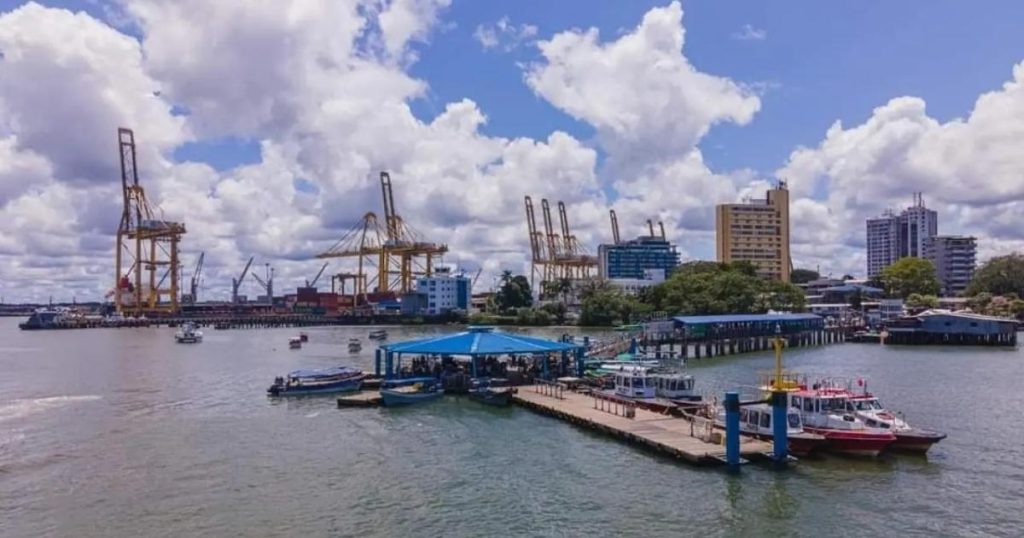
The “Gulf fleet”, which was based at the Paula docks, was much more modest in terms of draft, capture and number of ships.
He operated in the fishing vessel known as Banco de Campeche and was engaged in the capture of Cherna and Pargo from above. His ships were almost all of the “Lambda 75” type (although there were some “ëta”, “sigma” and “ro”) at the beginning of 23 m of length and 6.25 m of manga, with a 250 hp engine and a speed of 10 knots. They were made of wood and were built in the Victoria de Girón shipyards in Cárdenas from 1961.
Although they had two shark and some used drag networks, most were freezing palangreros. They acted as mother ships; Each loaded 6 auxiliary boats with “Volvo Penta” engines where two fishermen were slaughtered, they threw three spells of 40 hooks with dead silver bait.
The work was cyclical and super complex. The capture that was not Pargo or Cherna (sometimes a bus or an Aguají fell) was for domestic consumption, although what chopped the most was a fish very similar to the toad or skysccace known as Serafín and that was not ate (will it be?).
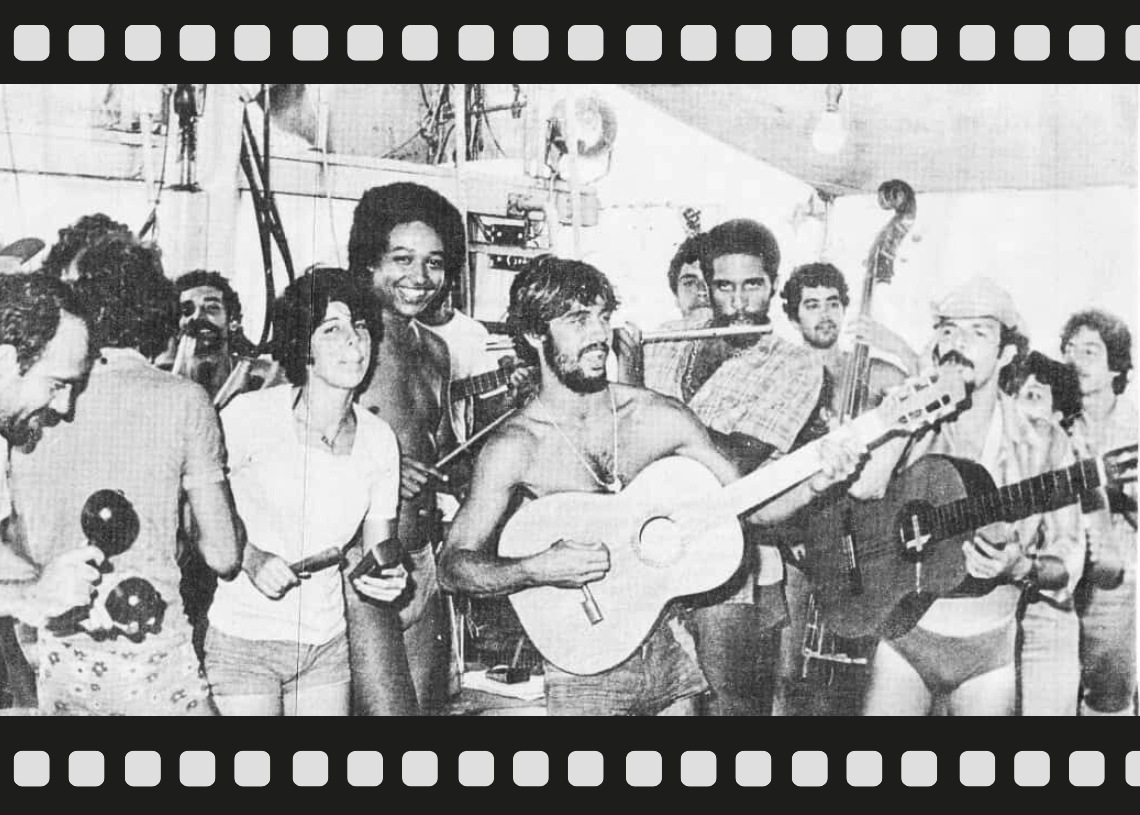
In that fishing and artistic adventure were pointed, in addition to a server, the Alina Estévez troubadour – from whom I never knew -, the Angel Quintero (EPD) troubadour and the Guaycán and relaxation groups. In addition, the journalist Juana María Vega and photographer Manuel Torreiro de Rebel youth; Jorge Julio González (Yoyi) and Rubén Jiménez, journalist and photographer of the Mar and Fisheries Magazine.
We were a lot of neophytes in a little boat, driven by daddy, the employer, his assistant – I don’t remember his name – and the chef Juanito. (I remember a time later a download at Juanito’s house, in the San Isidro, where I personally met Sara González).
As soon as we left that afternoon of the port of Havana, it began to affect us the cinetosis, the appearance of nausea for linear and angular acceleration and deceleration in a repeated way.
A “bichero” that hung from a railing of the maneuvering cover was won from one place to another, with the more angle the sea. It was a kind of dizziness marker and we baptized him as a “meneometer.”
According to Papito, the employer, the discomforts would last about 3 days until the body adapts to the sea fluctuations. There were three methods to counteract the symptoms: the simplest was to get horizontal when the dizziness pressed. The other was medicating; At that time an antietic pill called Gravinol was used, somehow it also knocked you down. But according to Juanito, the cook, the best method was to take rum, because then both dizziness were canceled with each other. And that was the most popular of all. Obviously.
Although there was a cabin with 21 literas almost all of us slept in mats on the maneuvering deck, a kind of mezanine where fishing arts were placed.
Since this lambda was not task that cover was empty. We used a small bathroom to that we had to serve with water from the sea through a cube tied with a rope to the lateral railing. I preferred to use it at dawn. In the morning a sneakers used to reward the sizes of the pieces with applause. We bathed with a hose that pumped salt water and used special soaps that left your body as if you had immersed yourself in fat.
The “activities” consisted of reaching the fishing area of a Lambda and making a concert to fishermen. They arrived in their boats of throwing the flap and settled in some banks and in the railings of our boat.
Daddy and his assistant were serving them for round (the most popular rum of those years) and we do. Alina Estévez began, who was accompanied by a four Venezuelan, and then I came.
I confess that at that time I was “hard.” It was not easy to digest me. My songs were somewhat ruspid and cryptic, but perhaps because of the round and remoteness they were assimilated. I always closed my part singing Guillermina Camarioca by Pedro Luis Ferrer, with the help of the three of Pepe Ordás, the double bass of Gastón Joya SR (EPD), perhaps keys and maracas of Tato Ayres or Manolo and the bongo of Julio César Varcárcel Gregorio, members of Guaycán.
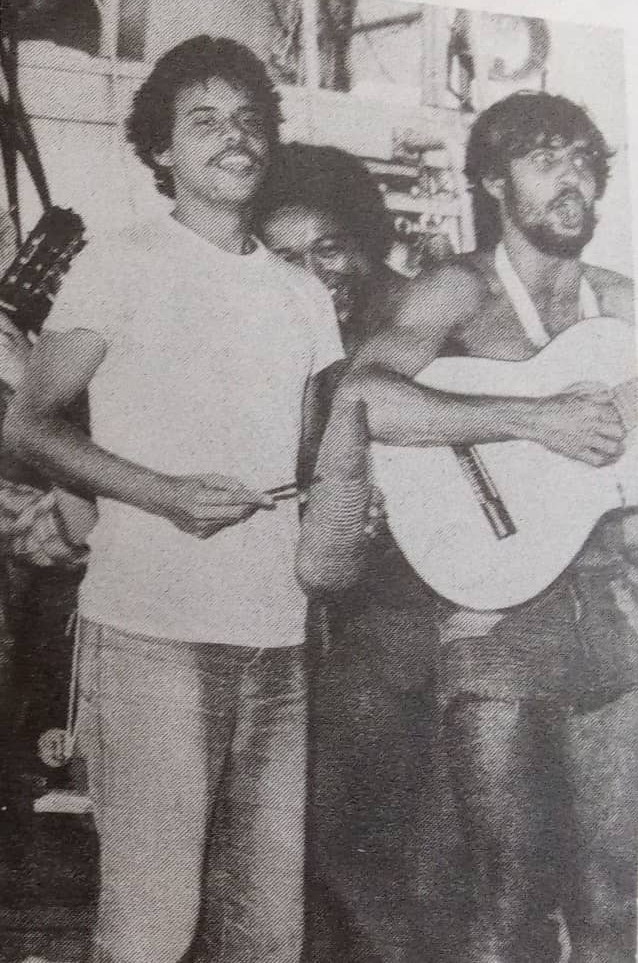
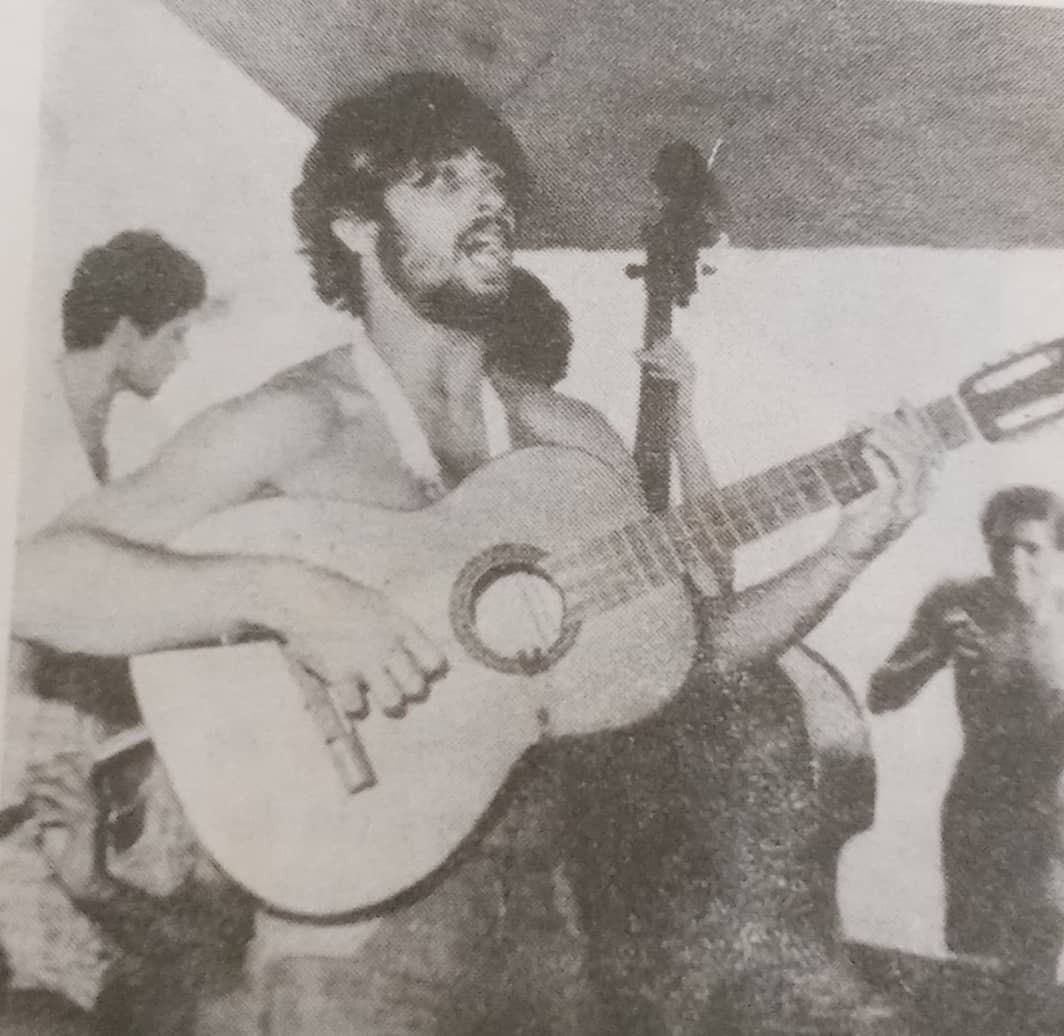
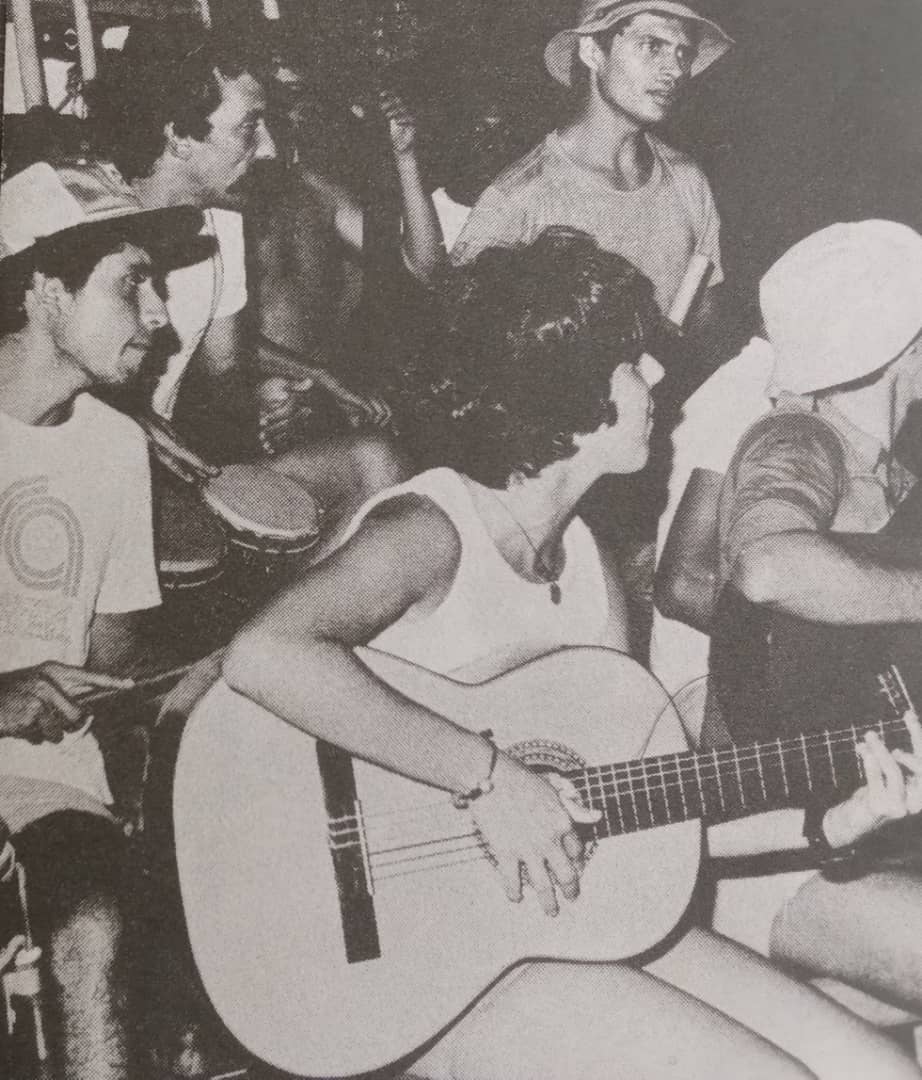
Then came Angel Quintero whose songs “La Cathedral” and “Cañonazo de las 9” were safe successes. There I heard for the first time the songs of his Opera Trova “where love grows”, which was later an event directed by Armando Suárez del Villar and with the performances of Ovidio González, Mayra de la Vega, Luis Alberto García and Hilario Peña, among others.
The ARIA-I do not know whether to call this-of the delivery of the correspondence in Angola (in the theater it was interpreted by Ovid-Luis Alberto and by Hilario Peña) was assumed by Jorge Enrique Mendoza and Rafelito de la Torre (EPD) with tremendous grace and with great acceptance of the fishing public. “Look how my Jimaguas have grown, my wife sent photographs, they are pretty, they are pretty, authentic creatures of joy.” Look how my jimaguas have grown, this is an event, that forms the platoon and throw savings, that here is a double father and without inventions, yes sir, just as me …
The relaxation group, which later melted with free song (that of Havana, that of Mundy, Yiyo and Super Luis, because there was another in Camagüey), it was a “Latin American group” of students of the ISRI. I believe that the first courses of this institute were for diplomatic service workers, who were no longer so young, and I remember Raúl Rojas, Olguita and especially Jorge Arrans, who later was a culture of culture in the National Ballet of Cuba and in Artex.
They had a super original repertoire, and even used costumes and choreographies, as in the song “Sam Go Home”. It is the only group of the trova to which I heard Haitian folklore repertoire.
Guaycán (which in Taino tongue means toilet or pega fish) was another group of fans, which competed in the FEU festivals for the “Fajardo”, where Pepe Ordás studied physical education. They were integrated, in addition to Pepe, Jorge Enrique Mendoza in the solo voice, at the time Law Student (it is the unmistakable raw voice of the chorus of “Son for you”), Gastón Joya SR (dynastic surname of Cuban music) on the double Guanabacoa). A certain air of authenticity in the Latin American song was given by the Chilean cousins Tato Ayres and Manolo, because they got along with the Andean rhythms and instruments (say Bombo Leguero, Charango, Quenas and Zampoñas). A separate for Mayra Ibarra, talented multi -instrumentalist, inspired composer and with a very fine sense of humor.
In the first meeting we had with the fishermen, while some inconvenience was fixed in the intervention of Guaycán, Mayra came up to tell a joke, the story of “the purple socks.” He was apotheosic. Mayra jokes became the main attraction of that “artistic brigade.” The fishermen baptized her as “the tremendous” and recommended, through radio messages, the future crews to visit.
At that time he was part of Guaycán, the Jugglar Camagüeano Rafael de la Torre (Rafelito), perpetrating the foundational group of the New Trova Movement in Manzanillo, in 1973. Although his work as a troubadour was already known, he added strength with the boys of Guaycán and I believe that during his stay in the group he felt a growth at the musical and scenic level. His comic bis and his charisma were important on issues such as “The perfect song” (Héctor Zumbado/Pepe Ordás) and “Sara Mondongo”.
Rafelito was rediscovered by virulo, who took him to the nascent national team of shows. His participation in the musical “Welcome Colón” catapulted him to the fame of mouth to mouth. Although he was never media, his name on any poster was safe success.
I have always said that with his departure to Mexico, in 1991, Cuba lost a very complete artist who would have helped revolutionize musical theater. After Mexico he went to live in Argentina where he died from COVID-19 in 2021, about to turn 70.
In that we were, fishing for our media, taking round and downloading our own and others’ songs. Rehearsing “Boga guitar to the sea” (Rafael de la Torre/Pepe Ordás) with which we closed the presentation for fishermen.
But a thought was around us and ate the coconut. Except Tato and Manolo, for obvious reasons, and Rafelito who had participated in the War of Angola, the others had never been in the “foreigner.”
There was a protocol that, if there was a storm, our Lambda had to be crowded in Isla Mujeres. We all prayed to the deities of the sea to send us some storm, some little storm that put us in danger and step on the land of a lonely Islite (still Isla Isla Women was not a tourist paradise) to be able to say that we had been “outside.”
We were softening our claims, we only asked daddy to bring the ship enough to see the coastal strip, as well as Silvio sighted the city of Agadir in Morocco or Walvis Bay in the old Africa of the Southwest; But he in his thirteen.
I guess daddy, Juanito and the navigator preferred to be brought the brave sea before reaching the boring island. I do not know how they managed to convince him, but one night the pattern towards the coast of Quintana Roo. I, who didn’t know anything and a half in a note, went to my mat of the maneuvering cover. In the early morning I heard a tremendous excitement. My mother, I thought, what a party they are being sent.
The next day they were all euphoric. There were already (technically) state in the “foreigner”, and they had all consigned in their newspapers by scoring latitude and length. At 3 and 20 in the morning, as Malka Epiphany, they were able Cabo Catoche.
Postscript: On my return I could approve the Technical Drawing World Cup.