Havana/Cuba is going through a wave of febrile illnesses that, according to the Ministry of Public Health, responds mainly to an outbreak of chikungunya. However, on social networks the official diagnosis is discussed with growing distrust, while testimonies of severe clinical symptoms, unexpected deaths and symptoms that, according to numerous doctors and patients, do not fit the usual description of arboviruses proliferate.
The publications of the Avilanian doctor Reinaldo Verona Bonce – with decades of work in tropical medicine – have catalyzed a conversation that, in a few hours, spread throughout the Island. In an extensive analysis spread on Facebook, the doctor states that “the lethality present in our country is incompatible with the historical records” of chikungunya and that the current transmission patterns “deny the epidemiology of arboviruses.”
A particularly disturbing point in the debate is the unusual severity of the symptoms in minors, something that several doctors consider incompatible with a typical chikungunya outbreak. “My son was in therapy with bronchopneumonia and shortness of breath. What does a mosquito have to do with this clinical picture? I also saw babies with the same thing,” warned mother Karina Silveira after her son’s hospitalization. For Dr. Verona Bonce, the appearance of critical conditions in newborns and adolescents “is unprecedented in arboviral diseases in the Caribbean.”
The doctor maintains that, while medical literature describes chikungunya as a generally benign virus, in Ciego de Ávila “daily mortality has gone from an average of 12 to 14 people to 34 in 24 hours.” At the same time, he denounces the absence of conclusive diagnostic tests: “Without PCR for everyone, there is no possible diagnosis,” he insists.
The Avilanian doctor especially questions the speed with which the disease has spread. “A female mosquito does not sicken an entire country in weeks; entire families become infected at the same time, and if you visit a sick person, you get sick. That cannot be explained by a vector,” he wrote, referring to the Aedes aegypti.
“The spread, contagion and severity coincide more with a respiratory transmitted virus than with an arbovirus”
The reappearance of symptoms in people who had already suffered from chikungunya is another point that worries doctors and citizens. Medical literature indicates that this virus usually generates long-lasting immunity, with recurrences considered exceptional. However, several users describe the opposite. “I am seeing that people who have already had it on mission, now present the virus again… if they should have immunity. This leaves many questions,” wrote Neyda Nocedo, a Cuban who worked in Venezuela during previous outbreaks.
Other health professionals have begun to express similar doubts. Marisabel Delgado Quintero, doctor at the Antonio Luaces Iraola General Hospital, comments: “The spread, contagion and severity coincide more with a respiratory-transmitted virus than with an arbovirus. No mask or distancing has been recommended, nor was the initial outbreak contained in Matanzas.” In his opinion, the scenario is too reminiscent of the first months of the covid-19 pandemic.
Hypotheses about a possible respiratory pathogen – or the simultaneous circulation of several viruses – are not new, but have gained strength due to the lack of official information. Verona Bonce himself points out that there is no feedback between the Pedro Kourí Institute of Tropical Medicine (IPK) and the provinces, and that the results of the dengue tests are not being confirmed or explained.
Among the most controversial theories emerged that of Ulises Camacho, an Internet user who asked “not to be scandalized” with his approach. As he writes, “the long-term effects of all the covid vaccines that were hastily applied in Cuba need to be reviewed.” In his opinion, the fact that the current epidemic seems to be concentrated exclusively on the Island – without similar outbreaks in the rest of the Caribbean or Latin America – would indicate that “there must be a very specific factor that is causing this only here.” His words sparked an intense discussion. While some users were grateful that “someone brought up the issue,” others recalled that there is no scientific evidence linking vaccines to the current outbreak, and warned about the risk of turning uncertainty into unfounded suspicions.
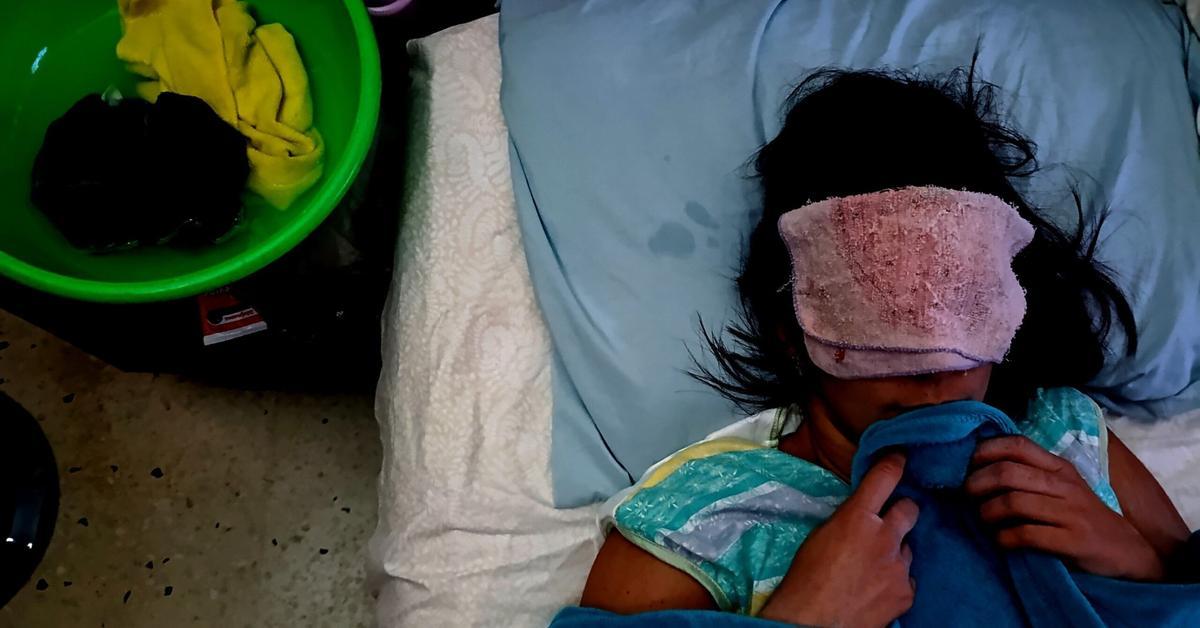
Beyond the scientific debate, hundreds of users have shared their personal experiences. Many describe prolonged symptoms, relapses, intense joint inflammation, rash generalized and, in some cases, respiratory distress or severe pneumonia.
Daniela, a young woman from Havana, relates: “I had a fever of 39, swollen glands, a lump in my groin, pain in my wrists and heels, a rash from my face to my feet. I had no respiratory symptoms. My mother’s friend had the same thing and died three days later from ‘pneumonia’.”
The variety of symptoms fuels the feeling of uncertainty. No one knows exactly what is circulating, and the health system – already hit by shortages and lack of personnel – is not offering answers. Many patients claim that they were sent home without diagnostic tests and without clear clinical criteria.
Concern is multiplying in communities where several deaths are reported in a few days. A user from Holguín, Leyza Beatriz Lorenzo, laments the death of two girls: “No one says anything, no alerts, no quarantines. It’s what they should already do.”
“They gave the virus a name, but I think no one knows what it is”
Another testimony comes from Mayabeque. Herminia Santana, a worker in front of a funeral home, describes a continuous flow of burials: “There hasn’t been a relief for more than a week. When Covid didn’t happen, we didn’t see this.” Reporters from 14ymedio have been able to corroborate it, visiting cemeteries and funeral homeswhere they have noted a much greater influx than usual.
In Ciego de Ávila, a doctor comments anonymously that the hospitals “have therapies full of children and adults with fulminant pneumonia and arrhythmias,” and that the current protocols “do not respond to the picture we are seeing.”
These experiences do not confirm a real increase in mortality – given that the Government does not publish transparent statistics – but they do reveal a social perception of the crisis. The lack of transparency from the Ministry of Health has created a vacuum that is filled with speculation. Verona Bonce himself warns that his hypotheses do not seek to generate political alarm but to call on medical logic: “The idiots are already coming out saying that this is the fault of imperialism. It is science, reasoning. If a quarantine was carried out in Matanzas three months ago, this would have been closed.”
What is clear is that the disease affects a huge percentage of the population. In Los Palos, Mayabeque, Rosita Betancourt describes a bleak panorama: “90% of us have the virus. I have been experiencing unbearable pain since October 12. I went to the doctor, without a test, they told me it was the virus.”
The general frustration is summed up in the comment of Maguy Díaz, who has been ill for twelve days: “They gave the virus a name, but I think no one knows what it is.”
While the Government maintains a uniform message – “it is chikungunya” – the citizen debate shows an epidemic that behaves like nothing Cuba has seen before, in a country with a weakened health system and public trust at historic lows. The doctor Verona Bonce closes one of his messages with a phrase that is already repeated throughout the Island: “Everything speaks in favor of person-to-person contagion. Not by a vector. So… what are we talking about?”