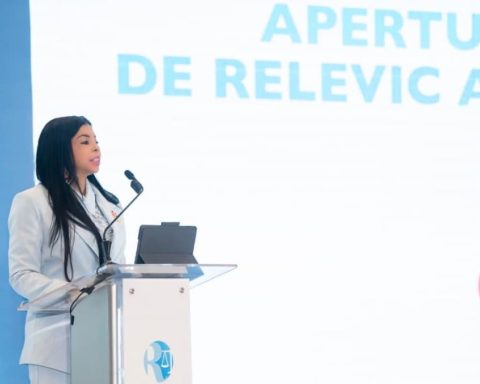
The lawyer Carlos Salcedo warned that The new Criminal Code that is intended to be approved in Congress, far from representing a national consensus as a result of the plural dialogue, contains deliberate omissions and ideological biases that compromise their constitutional legitimacy and its effectiveness as a criminal policy.
He said that the approval in the Senate of the aforementioned bill constitutes a legal milestone in a country that has operated for more than a century with a clearly outdated nineteenth -century regulations against social transformations and new criminal modalities.
Carlos Salcedo: The new Criminal Code puts fundamental rights at risk
However, he reiterated that: “Far from representing a national consensus as a result of the plural dialogue, deliberate omissions and ideological biases that compromise their constitutional legitimacy and its effectiveness as a criminal policy.
He recalled that he has always argued that “the country needs a modern criminal code, but not one that deliberately excludes the rights of vulnerable sectors or reproduces institutional impunity structures.
He said that in substantive terms, the project presents relevant advances, since criminal figures are ranked in force in current criminal legislation, such as feminicide, sicariate, hate crimes, workplace harassment and sexual harassment, as well as aggravated administrative corruption.
The exclusion of abortion reflects harmful conservatism and contradicts women’s dignity and rights
“These provisions respond to sustained social claims and place the country on a path of normative adaptation with respect to the regional and global context. News are also introduced in the criminal responsibility of legal persons, although even in a limited way and without sufficiently robust institutional architecture,” he said.
He said that, however, the express exclusion of the decriminalization of abortion in the three grounds – Rishgo for the life of women, fetal unfeasibility and pregnancy product of rape or incest – constitutes, as it has reiterated, “a claudication against dogmatic conservatism that injures fundamental rights of women and compromises the constitutional coherence of the legal system”.
“This exclusion contradicts enshrined principles such as human dignity, equality and the right to health, and places the Dominican Republic in contempt in the face of its international commitments,” said Salcedo.
“From a criminal policy perspective, he has warned about the dangerous continuity of a predominantly punitive criminal model, without a comprehensive strategy for prevention or rehabilitation. The code continues to see jail as the only destination of the criminal conflict,” he said.