Santo Domingo.-President Luis Abinader said that the Haitian crisis has ceased to be a immigration issue to become a national security problem, due to the growing control maintained by criminal gangs over much of the territory of the neighboring country.
“We do not have only a migratory problem. We have a national security problem with the Haitian issue,” said the president, referring to the situation that is lived especially in Port -au -Prince, where he said 90 % in the south of the country is in the hands of criminal organizations.
Abinader said that the threat is not distant, because these bands have already reached areas such as Caobas and Mirebalais, located just 60 kilometers from the border with the Dominican Republic, within the Department of Artibonito.

“They have already arrived at the center of Haiti,” he warned during his participation in the weekly lunch of the Corripio Communications Group.
The Dominican government has been repetitive in claiming greater action of the international community.
Deteriorated relationship
The president said that by assuming power in 2020 his government tried to normalize relations with Haiti.
“The first thing I did was try to channel a dialogue with then President Jovenel Moïse,” he said, recalling the agreements signed in that period.
However, the situation changed dramatically after the murder of the Haitian president in 2021.
“From there there has been a progressive deterioration of security in Haiti. There is no situation as difficult as we currently face,” Abinader said.
The head of the State called on all sectors of the country to assume the issue with a vision of the nation, above partisan interests. “This is not a pure and simple migratory issue, it is a national security issue,” he reiterated.
Abinader valued the support of former presidents Leonel Fernández, Danilo Medina and Hipólito Mejía, who said they have demonstrated “a patriotic sense” by sending representatives to the meetings convened by the Economic and Social Council (CES).
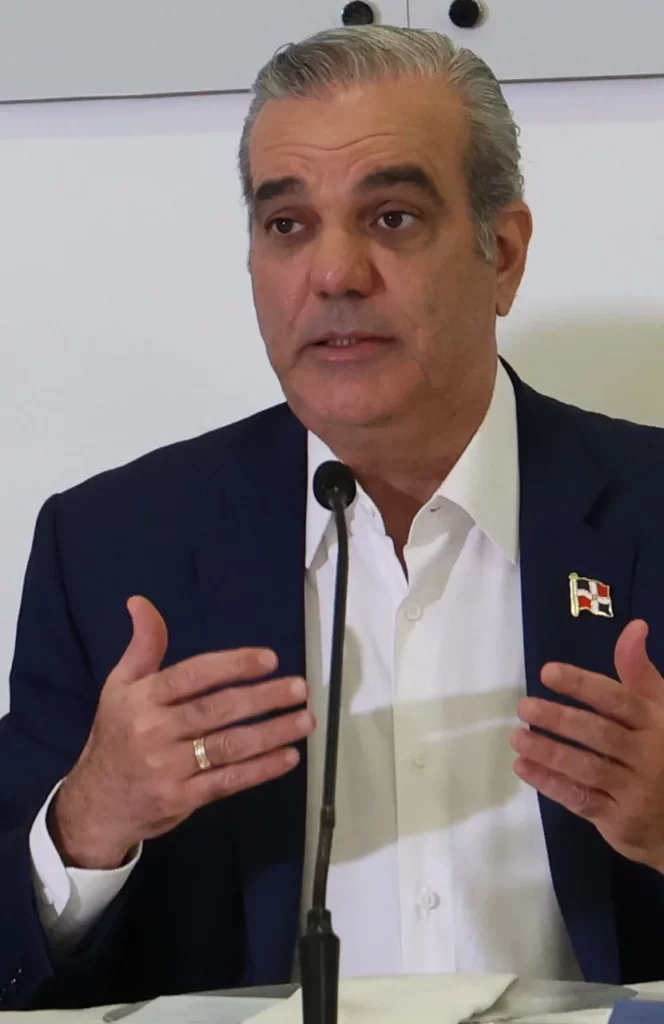
He also reported that consultations with political parties and civil society representatives will conclude this week and that from the next one joint proposals will be evaluated to strengthen security.
He valued the commitment of former presidents Hipólito Mejía, Danilo Medina and Leonel Fernández with the need to preserve the country free with the Haitian crisis. The meeting he had with all three last May 14 took more than three hours of conversation.
Police reform
The President of the Republic acknowledged that, although there are cases that require correction within the process of transformation of the National Police, the institutional reform in progress represents significant advances for the country and must be maintained as a permanent effort beyond 2028.
Abinader responded about criticism in the actions of the members of that institution and doubts about the effectiveness of the process, and reiterated that no reform can guarantee immediate and absolute changes.
“When there are human beings, you cannot guarantee that there will be no failures. But the reform has advanced a lot and must continue,” Abinader said in responding.
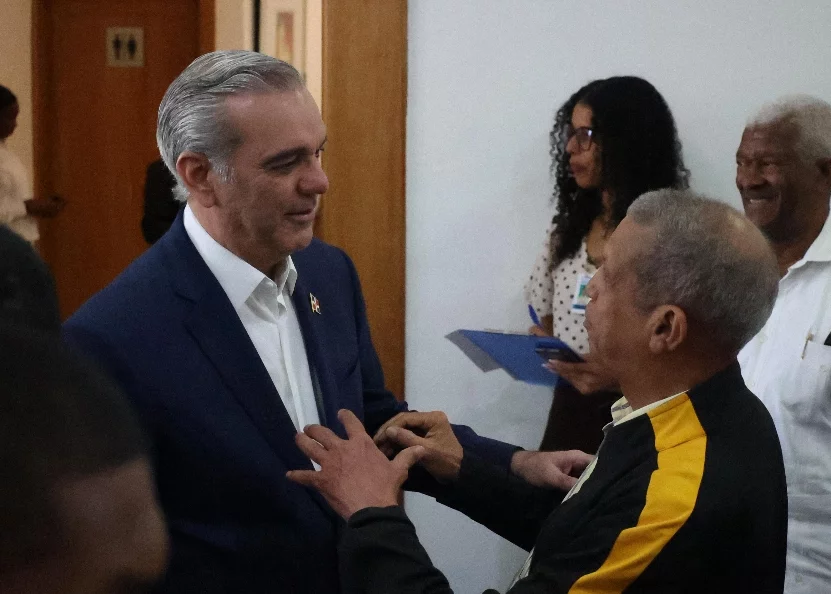
The Head of State explained that some agents still drag practices from the past, after having worked for decades under a different system, but insisted that the institutional transformation process has not stopped.
Other reforms
– Wages
He stressed that structural reforms have been implemented in key areas such as health, with the affiliation of two million people to Senasa, and the increase to the minimum wage.
*By edilí arias/Joan Vargas