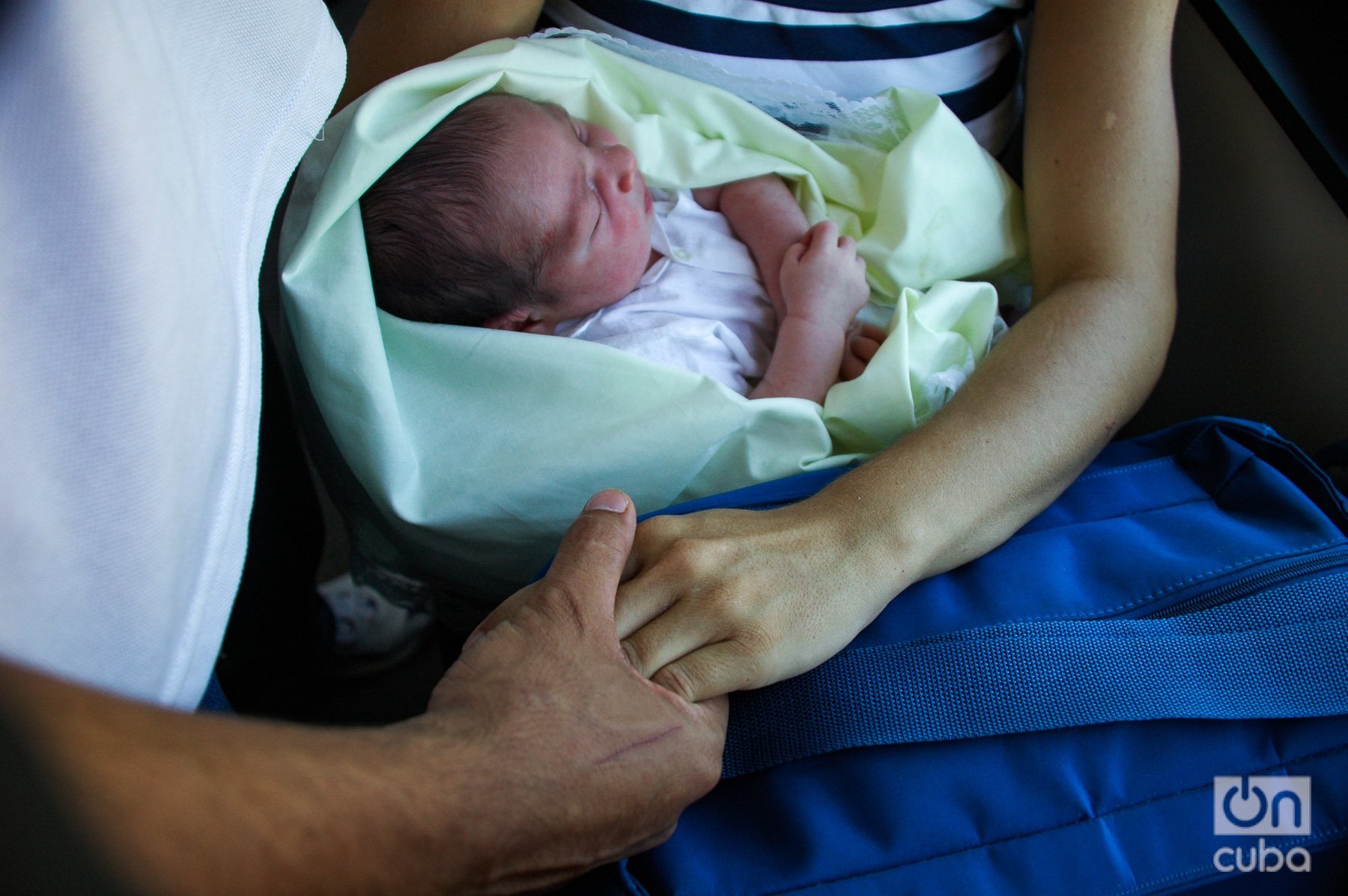
The Government of Cuba reported this Thursday that 2025 will close with a rate of infant mortality of 9.7 per thousand live births, which represents a significant increase in a key indicator of public health on the island.
The information was announced by the Prime Minister of Cuba, Manuel Marrero, when speaking in the plenary session of the National Assembly of People’s Power, where he recognized the “deterioration” of this health indicator.
Marrero did not offer figures on the maternal mortality rate registered this year, which increased by 4.9% in 2024 compared to the previous year, in line with the Ministry of Health (Minsap).
A year ago, in the same scenario, The Government reported an infant mortality rate of 7.1thus repeating the 2023 rate. However, this year the final figure for 2024 was rectified upwards to place it at 7.4.
And in July of this same 2025, said indicator increased to 8.2as José Ángel Portal Miranda, head of the Minsap, before the Cuban parliament.
The infant mortality rate reflects a significant increase compared to the minimum levels reached by the island in recent decades – which even reached 4.0 before the pandemic – and which placed it at the head of the Americas.
Population down
In his speech, the head of the Government also confirmed that the Cuban population was reduced from 9.7 million inhabitants at the end of 2024 to around 9.6 million currently. He also explained that the projection for the next 25 years is for it to continue decreasing to 7.7 million.
The aging trend is also expected, with an increase in the population over 60 years of age and more from the current 25.7% to 36.4% by 2050, notes a report from EFE.
The indicators maintain the island as one of the oldest countries in the region. The Cuban population has decreased, due to migration and the annual persistence of a greater number of deaths than births, according to official data.
Marrero presented to the Cuban deputies a detailed report on the government program designed in response to the serious crisis that the country is going through.
Within the social area objectives included in said plan, Marrero admitted that the housing construction plan “is not being met” due to “the low production of construction materials, the deficit of cement and steel.”
In this sense, he called for transforming the containers used for maritime cargo into homes, as a “viable alternative for this social problem.”
Cuba remains mired in a “complex scenario” marked by economic difficulties and an energy crisis—with no long-term solution—to which is now added the health crisis, derived from the current chikungunya and dengue epidemic.
EFE / OnCuba