Havana/The Government of Cuba announced this Saturday that it will finance half of the prices of the construction materials that it will sell to those affected by Hurricane Melissa in the eastern end of the Island.
The decision, adopted by the Council of Ministers, was published in the Official Gazette and specifies that the measure was taken “with the objective of providing economic and social protection to families whose homes were totally or partially affected” by the hurricane.
Those people whose income “is not sufficient” will be able to access bank loans or request subsidies for the purchase of construction materials, according to the official communication.
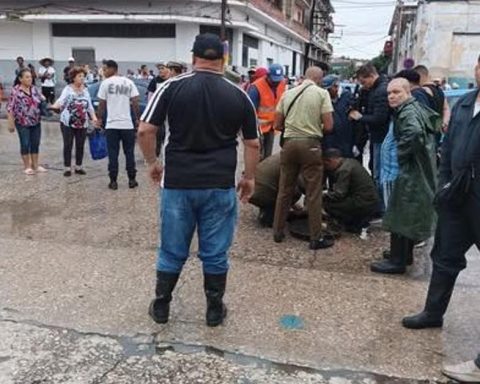
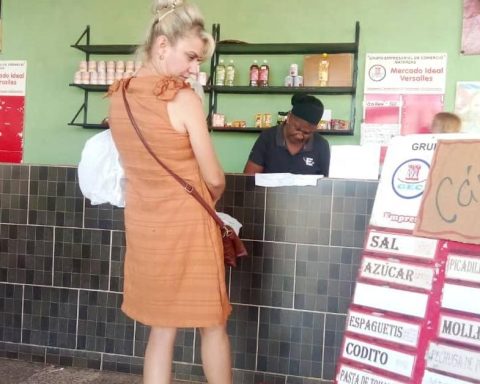
The measure, however, will be difficult to apply in reality. The stores for the sale of construction materials show a desolate panorama throughout the entire Island. The lack of cement, steel, bricks, blocks and elements for electrical or sanitary installations has turned these businesses into practically empty premises.
The traces for the sale of construction materials show a desolate panorama throughout the entire Island
The deficit of these products in national currency contrasts with the varied offer in foreign currency and through digital portals designed for emigrants to buy in dollars, from toilet bowls to plastic pipes, for their relatives in Cuba.
Melissa made landfall in Cuba at dawn last Wednesday in the southeast and left seven hours later in the northeast, accompanied by winds of up to 200 kilometers per hour and rain that left up to 400 millimeters in some points.
Although at the moment there is no preliminary assessment of damage by the Cuban Government and no fatalities have been reported, the Ministry of Construction (Micons) said on Friday that there were a total of 16,464 homes damaged, of which 1,142 were partially damaged.
The preliminary report from Micons, published on state television, added that Melissa left at least 1,318 total housing collapses, the loss of 5,279 roofs – completely – and another 8,666 with partial destruction.
The thousands of people affected by this type of phenomena increase over time in the country, due, in large part, to the fact that the State has been incapable of providing construction materialsand where their production is supported by non-state forms of management. “The energy deficit, voltage instability that paralyzes cement plants, technological obsolescence and limitations on foreign investments have an impact on the shortage of raw materials and low productivity,” said Maidel Leticia González González, general director of Materials at the Ministry of Construction, last September.
Thousands of Guantanamo residents still have their houses damaged by the passage of Hurricane Oscar, more than a year ago
An example is the thousands of Guantanamo residents who still have their homes damaged by the passage of the Hurricane Oscarmore than a year ago. In a report on the ravages of Storm Imelda last September – which left two dead and two missing – the governor of Guantánamo, Alis Azahares Torreblanca, explained that, “although progress has been made” in the reconstruction After Oscar, “the biggest problems are concentrated in roofs, which are requiring nearly 20,000 asbestos cement tiles and about 5,000 zinc tiles.”
Another example was aired by the prime minister himself, Manuel Marrero Cruz. In July 2023, during a meeting to discuss the recovery of homes damaged by Hurricane Ian in late September 2022, he said there were “delays” in rebuilding damaged infrastructure. In almost 10 months, in Pinar del Río, the most affected province, barely 32% had been rebuilt, and in Granma, 24% of the housing infrastructure was destroyed.