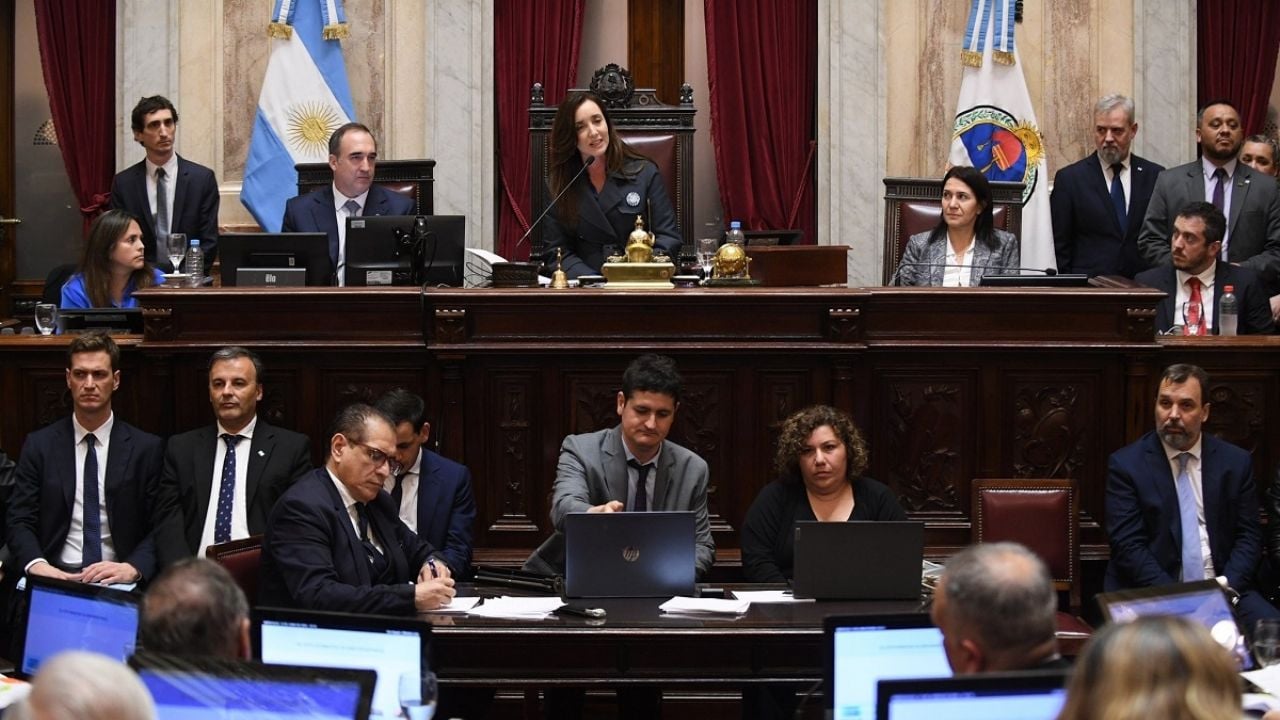
He Government He has faced a new setback in Congress by failing to gather the necessary votes to advance with the session aimed at dealing with the bill known as “Clean file” This initiative, which seeks to prohibit the candidacies of people convicted of crimes of corruption in the second instance, was suspended after hours of fruitless negotiations and in the midst of a political climate marked by tensions and cross accusations.
The session for “Clean file”, Initially convened for Wednesday, April 9, it was promoted by the Block of Freedom advances as an answer to the recent failures of the Senate, including the rejection of the specifications of the judges of the Supreme Court.
However, the lack of consensus and political calculation led to the ruling Government.
The clean file project requires a special majority of 37 votes in the Senate for approval, given its electoral character. However, the ruling party, which has its own 34 senators, failed to ensure the necessary support of other blocks.

The opposition, on the other hand, was divided, with sectors that questioned the viability of the project and others that indicated the lack of preparation of the ruling to guarantee the quorum and the votes. The decision to suspend the session was taken after intense negotiations that extended until late at night.
According to legislative sources, the fear of not reaching the quorum since the project was rejected led the ruling party to opt for the postponement. This measure, although it avoids an immediate defeat, reveals the difficulties of the government to articulate an effective legislative strategy and to build consensus in a highly fragmented congress.

Implications
The project of Clean file It has generated an intense political and social debate in Argentina. Its defenders argue that the initiative is a necessary step to combat corruption and strengthen transparency in the political system. However, their detractors question technical and legal aspects of the project, pointing out that it could violate constitutional principles such as the presumption of innocence and the right to be elected.
In this context, the suspension of the session not only represents a setback for the ruling party, but also an obstacle to the progress of an initiative that has been subject to multiple failed attempts in Congress. The lack of consensus and internal tensions between the political blocks reflect a complex legislative landscape, where party priorities and electoral calculations often prevail over the background debate.
Followers in Google News And in our channel of Instagramto continue enjoying the latest news and our best content.