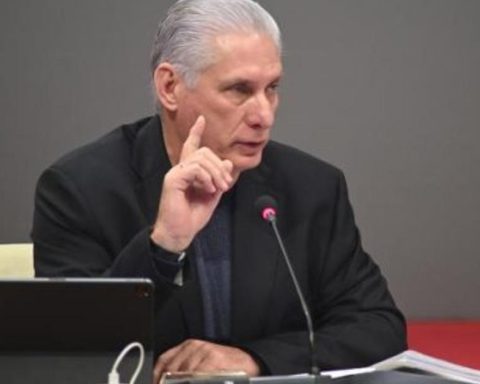
Havana/The Cuban health authorities admitted this Tuesday that there is “a sustained increase in cases of chikungunya” and that the epidemiological situation in the country “continues to be marked by the active circulation of the dengue virus”, with serotype 4 predominating in most territories. The new report offered this Monday by the Vice Minister of Public Health, Carilda Peña García, however, does not mention figures of infections or deaths associated with these diseases.
According to the report, during the last week a “significant increase in non-specific febrile syndromes” was reported, with 109 municipalities – almost two-thirds of the country – that increased medical care for this cause. “The positivity of the IGM test (a blood test that measures the amount of immunoglobulin M, an antibody to combat infections caused by bacteria and viruses) for dengue also increased, which shows active transmission in several provinces,” said Peña García.
The official said that Guantánamo, Matanzas, Sancti Spíritus, Ciego de Ávila and Villa Clara have the highest rates of suspected cases, and called on people who have any symptoms to “not stay sick at home.” The official insisted that “they must go to health centers,” although many testimonies on social networks reveal the shortcomings they face in caring for patients, such as the use of medications or serums that have expired for more than a year, or lack of medical personnel. Furthermore, laboratory limitations complicate the virus detection and its evolution.
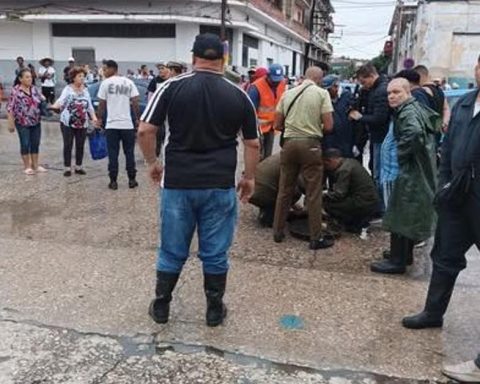
Testimonials on social networks reveal the shortcomings they face in caring for patients, such as the use of expired medications or serums.
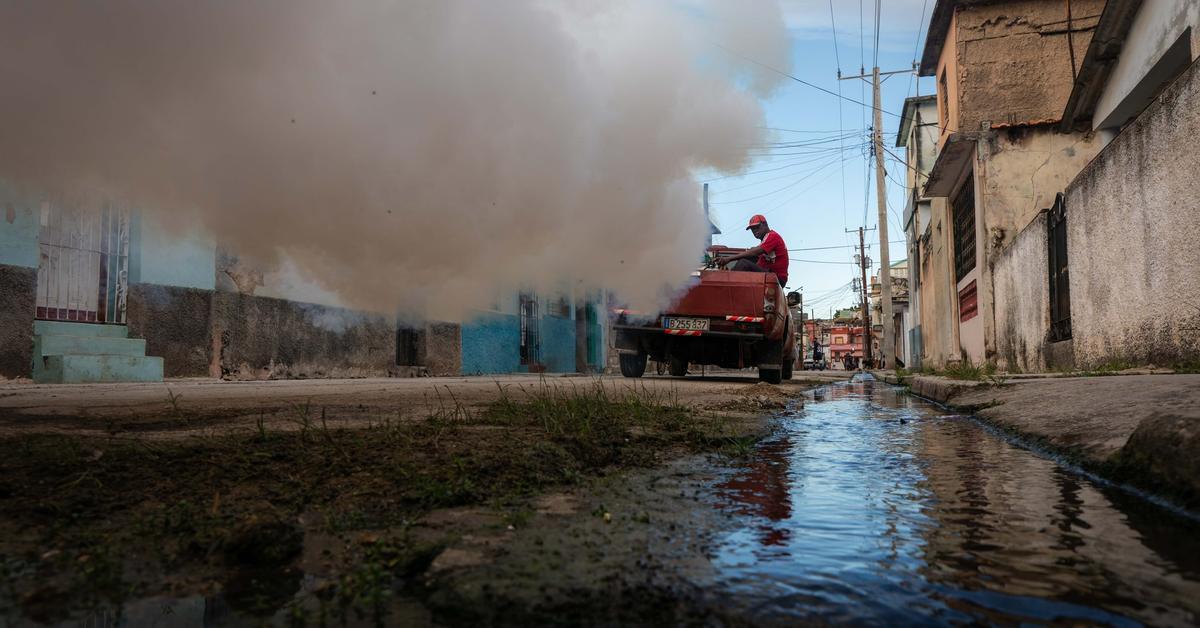
Even so, Peña García assured that the anti-vector surveillance and fight campaign “has been reinforced” with the mobilization of workers and resources, as happened in Havana, where this Monday a brigade of nurses from Santiago de Cuba arrived to support hospital centers where cases affected by arboviruses are treated.
Regarding the cases of chikungunya, Dr. Daniel González Rubio, infectious disease specialist at the Pedro Kourí Institute of Tropical Medicine, said that the fever “is not new, but it can leave symptoms for months, and therefore the treatment must be supervised by medical personnel.” He added that, “although most cases are self-limited and have a favorable evolution, some patients can develop serious complications, especially if they are older adults or suffer from chronic diseases such as diabetes, osteoarthritis or cardiovascular conditions.”
In none of the officials’ interventions was the health crisis facing the country quantified. Multiple cases of deaths of people, in many cases young, who presented some febrile symptoms. One of them happened in Havana, where a 35-year-old man lost his life at the Manuel Fajardo Hospital, from a massive heart attack. His mother was the one who exposed the case and assured that the young man “had had the virus that is out there for two days.” On October 24, user Ariadna Mena Rubio wrote that her father “had died from the virus.”
Until last week, the authorities had only acknowledged, after weeks of silence, without giving a figure on the health situation, that there had 13,071 “specific febrile cases”, possibly related to the current outbreaks.
There was evidence of an “increase in all territories of the country” of dengue, chikungunya and oropouche
Carilda Peña García herself assured in statements to state television that there was evidence of an “increase in all territories of the country” of dengue, chikungunya and oropouche, and added that seven people were in “critical condition,” although this Monday she did not update their status.
The official stated that on the Island there is an incidence of febrile cases of 24.3 per 100,000 inhabitants, but the data provided to the Pan American Health Organization (PAHO) segregated by disease raise the rate for dengue to 59.6 per 100,000. In addition, the number of serious cases since the beginning of the season was officially 71, with at least three people dying until October 15, although the profile of the dead was not specified or in which territories they resided.